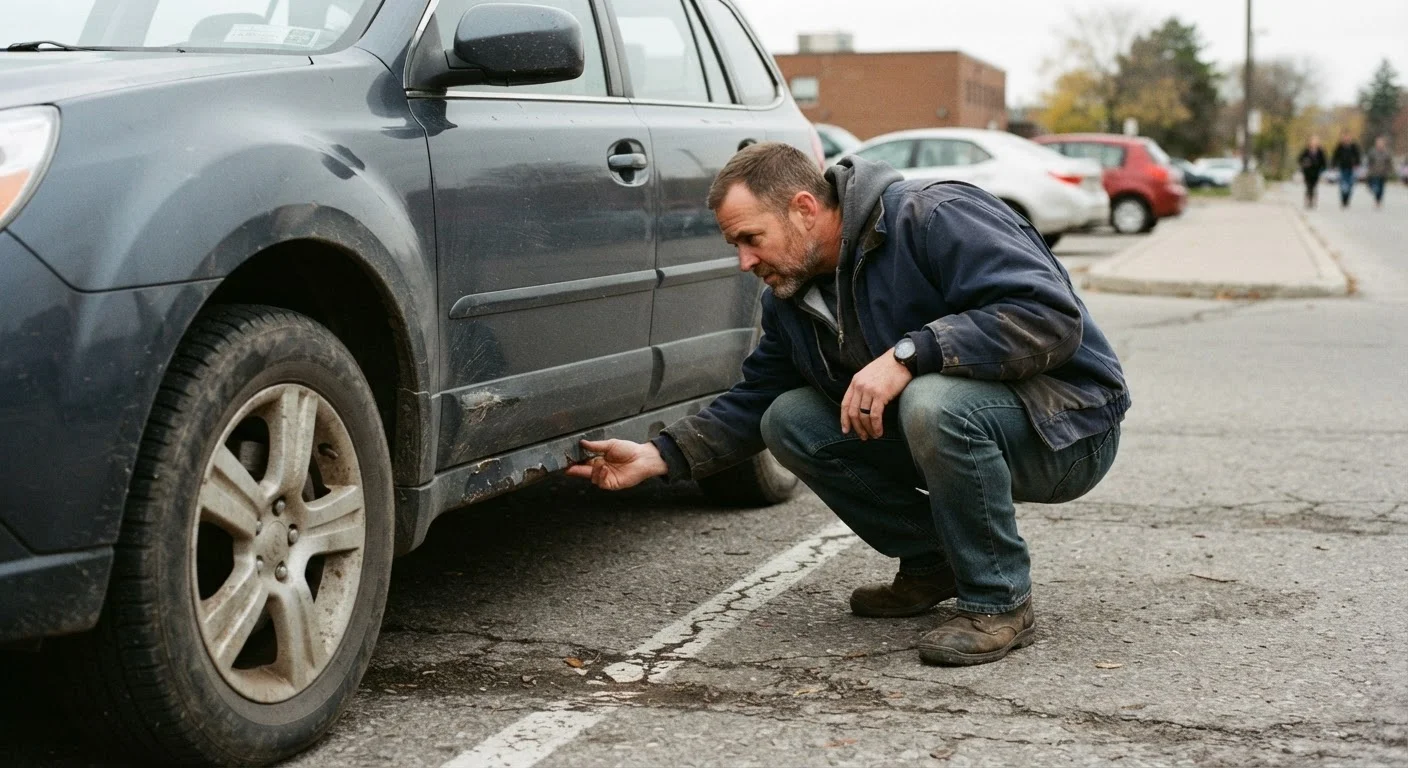
Always inspect a used car in daylight and on a flat, dry surface for the clearest view of bodywork and undercarriage.
Run a vehicle history report using the VIN before the in-person visit - not after.
A pre-purchase inspection by an independent mechanic typically costs $100-$200 and can reveal hidden issues.
Missing or inconsistent paperwork is a red flag, not a minor inconvenience.
A cold-start test is one of the most revealing engine checks you can do - always arrive before the seller warms up the car.
45–90 min
Summary
28 items · 45-90 minutes on-site
Why This Checklist Exists
Buying a used car is one of the larger financial decisions most young adults make. Unlike buying new, there's no factory warranty standing behind the transaction - what you see (and miss) is what you get. The good news: a systematic inspection dramatically reduces the chance of an expensive surprise. This checklist walks you through every major area to examine, in a logical sequence you can follow on the day.
Pulls accident history, title status, odometer data, and open recalls using the car's 17-character VIN before you visit.
Required
NHTSA Recall Lookup (nhtsa.gov)
Free government database to check whether any open safety recalls affect the specific vehicle.
Required
Flashlight or phone torch
Essential for inspecting the engine bay, undercarriage, and door jambs clearly.
Optional
OBD-II diagnostic scanner
Reads stored fault codes from the car's onboard computer - can surface hidden issues the seller hasn't disclosed.
Required
Independent mechanic (pre-purchase inspection)
A qualified mechanic can inspect the car on a lift and identify structural, mechanical, or safety concerns you cannot see yourself.
Required
Notepad or notes app
Track everything you observe and questions to ask the seller so nothing slips through the cracks.
The Inspection Checklist
Work through each group in order. Do the exterior walk-around before opening the hood - your first impressions of panel gaps and paint consistency are easiest to form before you start touching things. Bring a notepad or use your phone's notes app to flag anything worth asking the seller about.
Before You Arrive
Run a vehicle history report using the car's VIN (Vehicle Identification Number) through a recognized service such as the NMVTIS database or a provider that draws from it - look for accident history, odometer rollbacks, salvage titles, and open recalls.Must
Check the NHTSA recall database (nhtsa.gov) for any open safety recalls on the make, model, and year.Must
Schedule the inspection for daytime so you can see paint, rust, and fluid stains clearly - avoid inspecting at night or in a dim garage.Must
Ask the seller not to warm up the engine before you arrive; a cold start reveals far more about the engine's condition.Must
Exterior and Body
Walk the full perimeter and look for panel gaps that are uneven - consistent gaps indicate the car hasn't been in a significant collision; irregular gaps can mean poor repairs.Must
Check each panel for mismatched paint color, orange-peel texture differences, or overspray on trim and rubber seals - signs of a repaint after accident damage.Must
Crouch at each corner and sight along the body panels for ripples or waves that suggest hidden filler beneath the paint.Must
Inspect the wheel arches, rocker panels (the strips under the doors), and lower door edges for rust - surface rust is cosmetic but bubbling or flaking through the metal is a structural concern.Must
Check all glass - windshield chips in the driver's sightline may fail a state inspection; cracks in any glass typically worsen with temperature changes.Should
Under the Hood
With the engine cold, check the oil dipstick - oil should be between MIN and MAX marks and appear amber to dark brown; milky or frothy oil suggests coolant contamination, a serious red flag.Must
Check the coolant reservoir level and color - it should be translucent green, orange, or pink depending on type, not rusty or oily.Must
Look for corrosion on battery terminals, cracks in belts, and any obvious fluid leaks on the engine block or beneath the car.Must
Start the engine cold and listen for unusual noises - ticking, knocking, or rattling on startup that fades after warm-up can indicate worn components.Must
Check for smoke from the exhaust after startup: blue smoke indicates burning oil, white smoke (that doesn't clear quickly) can mean coolant burning, black smoke suggests a rich fuel mixture.Should
Interior and Electronics
Check every powered feature - windows, mirrors, air conditioning, heater, infotainment screen, and all dashboard warning lights (they should all illuminate briefly on startup then go off).Must
Smell the interior for mildew or mustiness, which can indicate a flood-damaged vehicle - also check carpets and the trunk floor for water stains or damp padding.Must
Sit in every seat, test belts for smooth retraction, and check that all doors open and close properly from inside and outside.Should
Verify the odometer reading is consistent with the vehicle history report and the wear on the pedals, steering wheel, and seat bolster.Must
Test Drive
Drive at highway speed if possible - listen for vibrations, pulling to one side, or shudder under braking, which can indicate wheel balance, alignment, or brake rotor issues.Must
Test the brakes with a firm stop from around 35 mph in a safe area - the car should stop straight without pulling or grinding.Must
For automatics, confirm that gear changes feel smooth and there is no hesitation, slipping, or clunking; for manuals, check that the clutch engages smoothly without slipping.Must
Turn the steering wheel to full lock in both directions at low speed (e.g., in a parking lot) and listen for clicking or grinding from the CV joints.Should
Documentation
Verify the VIN on the dashboard, door jamb sticker, and title all match - mismatches are a serious fraud indicator.Must
Review the title for any lien holder listed - a private seller cannot legally transfer clean title if there is an outstanding auto loan unless the lender is paid off at or before closing.Must
Ask for service records - a documented maintenance history gives you confidence the car has been maintained to schedule; gaps are worth asking about directly.Should
Confirm the seller's name matches the name on the title - if it doesn't, ask for a clear explanation before proceeding.Must
Never Skip the Independent Mechanic Check
A pre-purchase inspection by an independent mechanic - one with no connection to the seller or dealership - is the single most protective step you can take. Expect to pay roughly $100-$200 for a comprehensive inspection. That cost is minimal compared to a transmission repair ($1,500-$4,000) or a hidden frame issue that surfaces after you've signed. Any seller who refuses to allow an independent inspection should be treated as a serious red flag.
For anything that raises a concern - unusual noises, oil residue, rust in structural areas - don't try to diagnose it yourself on the spot. Book a pre-purchase inspection with an independent mechanic before finalising the deal. This is standard practice and any reasonable seller will agree to it. For a sense of what a mechanic will examine, see what a qualified mechanic inspects during a routine service.
Cars & Driving Editorial Team is the collective byline for our editorial team and contributor network. Articles published under this byline or an editorial pen name are researched, written, and reviewed according to our editorial standards for clarity, consistency, and independence before publication.
Disclaimer: The content provided on our blog site traverses numerous categories, offering readers valuable and practical information. Readers can use the editorial team’s research and data to gain more insights into their topics of interest. However, they are requested not to treat the articles as conclusive. The website team cannot be held responsible for differences in data or inaccuracies found across other platforms. Please also note that the site might also miss out on various schemes and offers available that the readers may find more beneficial than the ones we cover.