

Key Takeaways
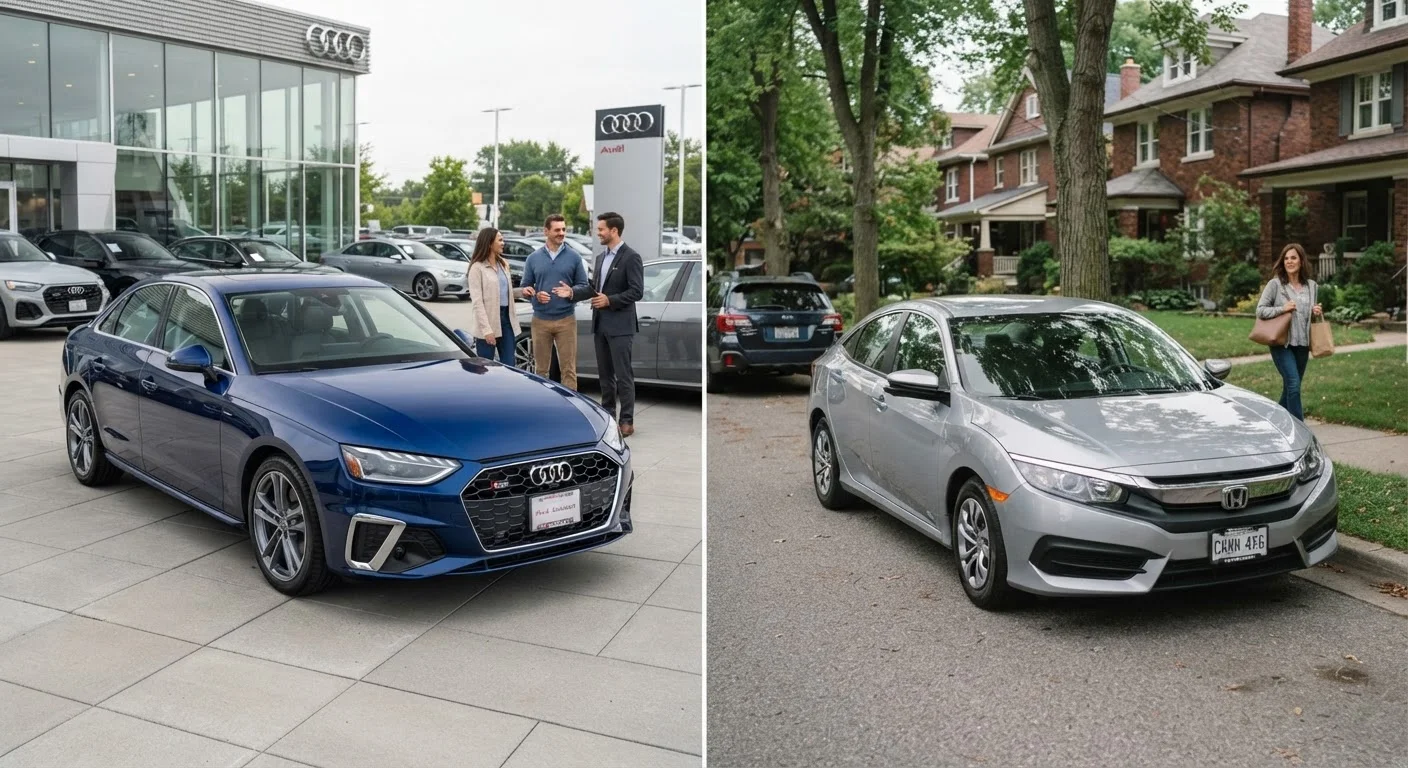
Option A
New Car
The full-warranty, zero-history starting point.
Best for: Buyers who want predictable costs, the latest safety tech, and no surprises in the first few years.
Option B
Used Car
The depreciation-adjusted, value-forward alternative.
Best for: Budget-conscious buyers comfortable doing some homework and absorbing occasional repair costs.
If you plan to keep the vehicle for seven or more years
New Car
Spreading depreciation over a longer ownership period reduces its per-year impact, and you benefit from the full warranty and lower early maintenance costs.
If you want the lowest possible purchase price and monthly payment
Used Car
A two-to-four-year-old vehicle has already absorbed the steepest depreciation drop, meaning your dollar goes further on day one.
If repair unpredictability is your biggest concern
New Car
Factory warranty coverage - typically three years bumper-to-bumper and five years powertrain - protects you from most major repair bills early on.
If you want used-car pricing with some warranty protection
Used Car
A certified pre-owned (CPO) vehicle offers manufacturer-backed inspection and extended warranty coverage at a price below new.
If you have limited upfront funds and need financing
New Car
New car loans often carry lower interest rates than used car loans, which can partially offset the higher purchase price over the loan term.
Where the Money Actually Goes: Depreciation
Depreciation is the single largest cost in car ownership - and the factor that most dramatically separates new from used. A new vehicle typically loses around 20% of its value within the first year of ownership and close to 50% within five years, according to data tracked by automotive valuation services. That means a $35,000 new car could be worth roughly $17,500 by year five - a loss of nearly $17,500 regardless of how carefully you maintain it.
When you buy a used car that is already two to four years old, the original owner has absorbed that steepest part of the depreciation curve. You step in at a flatter point on the curve, meaning slower value loss going forward. For a deeper look at how this mechanism works, see why your car loses value the moment you drive it away.
| Criterion | New Car | Used Car |
|---|---|---|
| Purchase price | Higher sticker price | Lower upfront cost |
| Year-one depreciation | ~20% value loss | Curve already flattened |
| Warranty coverage | Full factory warranty included | Limited or none (CPO excepted) |
| Typical loan APR | Generally lower | Generally higher |
| Near-term repair risk | Low - covered by warranty | Moderate - depends on history |
| Insurance cost | Higher (higher replacement value) | Lower (older models cost less) |
| Technology & safety features | Latest standards | Varies by model year |
Warranty and Repair Costs: The Hidden Budget Line
New cars typically come with a manufacturer's bumper-to-bumper warranty lasting around three years or 36,000 miles, plus a powertrain warranty of five years or 60,000 miles. During that window, most major mechanical failures cost you nothing beyond the purchase price. For a first-time owner with no repair fund built up, that coverage is genuinely valuable.
Used cars are a different calculation. Unless you buy a certified pre-owned (CPO) vehicle - which undergoes a manufacturer-approved inspection and includes an extended warranty - you are buying the vehicle's repair history along with it. A used car with 60,000 miles may need brake work, new tires, or suspension components within the first year of ownership. These are normal wear items, but they can add $500-$2,000 in unexpected costs if you haven't budgeted for them.
~20%
First-year depreciation on a new car
Automotive valuation data consistently shows new vehicles lose around one-fifth of their value within the first twelve months of ownership.
~50%
Value lost by year five on a new vehicle
By the five-year mark, a new car typically retains only about half its original purchase price, making the early years the most costly for depreciation.
$100-$150
Typical pre-purchase inspection cost
An independent mechanic inspection before buying a used car is a widely recommended step that can reveal mechanical issues worth far more to fix.
The smart move before buying any used car is a pre-purchase inspection by an independent mechanic. It typically costs $100-$150 and can surface issues worth far more than that. See our used car inspection checklist for a practical walkthrough of what to check.
Financing, Insurance, and the Full Picture
Loan interest rates matter. Lenders typically offer lower annual percentage rates (APRs) on new car loans than on used car loans because new vehicles represent less collateral risk. As a general illustration: if a new car loan carries a 6% APR and a comparable used car loan carries 9%, the difference in total interest paid over a five-year term can be several thousand dollars - partially closing the gap between the vehicles' sticker prices.
Insurance costs also shift between new and used. New vehicles usually cost more to insure because they cost more to repair or replace. However, if a used car is old enough that you drop comprehensive and collision coverage, your premiums can drop meaningfully - though that decision carries its own financial risk if the car is damaged.
When you add up purchase price, depreciation, interest, insurance, maintenance, and fuel, the picture looks quite different from the sticker price alone. Our article on the true cost of owning a car beyond the sticker price breaks down every cost category in detail. For ongoing upkeep habits that apply to both new and used vehicles, the Car Maintenance 101 hub is a useful starting point.
The Certified Pre-Owned Middle Ground
Certified pre-owned (CPO) vehicles are used cars that have passed a manufacturer-approved multi-point inspection and come with an extended warranty. They cost more than a standard used car but less than new, and they reduce the repair unpredictability that concerns many first-time buyers. CPO programs are offered directly through franchise dealerships and vary by manufacturer in terms of what is covered and for how long - always read the specific CPO contract terms before assuming coverage.
Once you've made your decision, your first year of car ownership checklist walks through the key tasks and deadlines that come up in the first 12 months - from setting up insurance to scheduling your first service. And if you're still weighing the decision, things first-time owners wish they'd known covers the overlooked costs that tend to surface only after signing.
This article provides general financial information for educational purposes only and is not personalised financial or purchasing advice. Costs and rates vary by location, credit history, and individual circumstance. Consult a qualified financial professional before making significant financial decisions.