

Key Takeaways
Why Drains Block and What You're Actually Dealing With
Most household drain blockages fall into a few predictable categories. In bathrooms, the culprit is almost always a combination of shed hair and soap scum that gradually narrows the pipe. In kitchens, it's typically cooking grease that cools and solidifies just past the drain, trapping food particles over time. Understanding what's causing the blockage helps you choose the right method rather than defaulting to the wrong tool.
The good news is that most clogs sit within the first few feet of pipe - well within reach of basic tools you likely already own or can find inexpensively. If you're new to home upkeep generally, our guide to home maintenance for complete beginners provides a useful foundation for understanding how your home's systems connect.
Know When to Stop and Call a Pro
If multiple drains are slow or backing up at the same time, you likely have a main sewer line blockage - a job for a licensed plumber. Similarly, if you notice foul sewage smells, gurgling sounds from other fixtures, or water backing up into a toilet, stop DIY attempts immediately. These symptoms can indicate a more serious blockage or a structural pipe issue that requires professional diagnosis.
What You'll Need Before You Start
Gather your supplies before you begin so you're not hunting for tools mid-job with wet hands. Having everything at arm's reach also means you can move through the steps efficiently without the clog re-settling.
What you will need
Cup Plunger
Creates suction pressure to dislodge soft blockages near the drain opening in sinks and bathtubs.
Hand Drain Snake (Auger)
A flexible cable that reaches deeper into the pipe to physically break up or retrieve hair and debris clogs.
Drain Strainer or Hair Catcher
Fits over the drain opening to catch hair and debris before they enter the pipe - useful for ongoing prevention.
Needle-Nose Pliers
Useful for pulling out visible clumps of hair or debris just below the drain cover.
Step-by-Step: Clearing the Blockage
Work through these steps in order - each one is less invasive than the next, so you may solve the problem before reaching the final step. Most bathroom sink and shower clogs are resolved by steps one through three.
Remove and clean the drain cover
Put on your rubber gloves. Unscrew or pop off the drain cover - most twist counter-clockwise or simply lift out. Use needle-nose pliers or a bent wire to pull out any visible hair, soap scum, or debris sitting just below the surface. This alone clears a surprising number of slow drains. Rinse the cover and set it aside.
Try a baking soda and vinegar flush
Pour about half a cup of baking soda directly into the drain, followed by half a cup of white vinegar. The fizzing reaction helps break up soap residue and light organic buildup. Cover the drain opening with a cloth or stopper for five minutes to keep the reaction working downward, then flush with a full kettle of hot (not boiling) water.
Plunge the drain
Fill the sink or tub with just enough water to cover the rubber cup of the plunger. Place the cup over the drain opening, ensuring a firm seal. Push down and pull up sharply - aim for 15-20 rapid strokes. The alternating pressure is what dislodges the clog. Lift the plunger quickly on the final upstroke. Run water to see whether drainage has improved.
Use a drain snake for deeper blockages
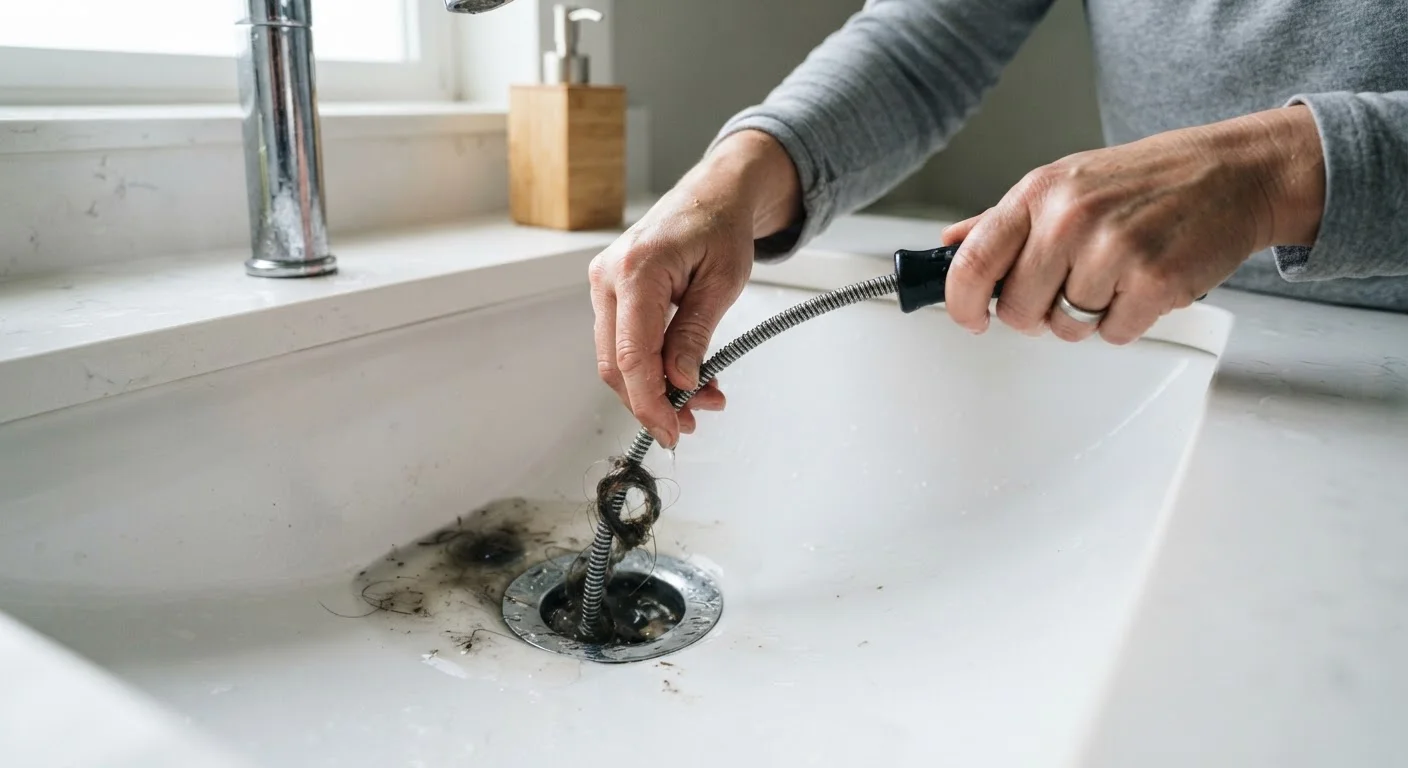
Feed the end of the drain snake into the drain opening and turn the handle clockwise as you push it forward. You'll feel resistance when it reaches the clog. Continue rotating to either break up the blockage or hook into it. Once you feel the resistance ease or you've snagged the clog, pull the cable back slowly while continuing to rotate. Remove any debris and discard it.
Flush and test the drain
Run hot water for two to three minutes to flush any remaining loosened debris through the pipe. Watch the drainage speed carefully - it should now drain clearly and quickly. Replace the drain cover. If the drain is still slow but improved, a second round of plunging or snaking often resolves the remainder of the blockage.
Avoid Chemical Drain Cleaners Routinely
Chemical drain cleaners can generate significant heat and may warp or weaken PVC pipes with repeated use. They are also hazardous to skin and eyes, and their residues can harm waterways. Reserve them only as a last resort before calling a plumber, and never use them after using a plunger - any remaining chemical can splash back dangerously.
Keeping Drains Clear Going Forward
Once the drain is flowing freely, a small amount of routine care goes a long way. Install a mesh drain strainer to catch hair and debris before they enter the pipe. Once a month, flush each drain with a kettle of hot water to clear any soap buildup before it accumulates. In the kitchen, avoid pouring cooking grease or oil down the drain - collect it in a container and dispose of it in the trash instead.
Prevention Takes Less Than Five Minutes
Fitting an inexpensive drain strainer in every shower and sink is the single most effective way to prevent future blockages. Pair this with a hot-water flush once a month and you'll rarely face a serious clog. These habits are covered in our broader guide to home maintenance habits that prevent costly problems.
Staying ahead of small maintenance tasks like this is what separates a home that runs smoothly from one where problems compound. For a broader look at the habits that prevent the most costly home repairs, see our article on home maintenance habits that prevent expensive problems.