

Key Takeaways
Start here
Why Home Maintenance Matters
Next
Safety First: Alarms, Shutoffs, and the Basics
Then
Monthly Habits Every Beginner Should Build
When you're ready
When to DIY and When to Call a Professional
Final step
Building Your Maintenance Routine
Why Home Maintenance Matters
Living independently for the first time means your home's upkeep is now your responsibility - and that's less intimidating than it sounds. Home maintenance isn't about being handy; it's about paying attention consistently. Small, regular actions prevent the kind of failures that turn into expensive emergencies: a neglected HVAC filter strains the whole system, an untested smoke detector may be silent when it matters most, and a slow leak behind a wall can quietly become a mold problem.
The good news is that the tasks that matter most are almost all simple, low-cost, and learnable in an afternoon. Think of maintenance the same way you'd think of car upkeep - routine check-ins protect a significant investment and keep things running smoothly. For a similar approach applied to vehicles, the preventive maintenance roadmap for a first car shows how the same habit-building logic applies.
HVAC filter
A replaceable screen inside your heating, ventilation, and air conditioning system that traps dust, pollen, and debris to keep air clean and the system running efficiently.
Circuit breaker
A safety switch in your electrical panel that automatically cuts power to a circuit when it detects an overload, preventing fires and damage.
Main water shutoff
A valve that stops all water flowing into your home when turned off - critical to know in the event of a burst pipe or plumbing emergency.
Carbon monoxide detector
A sensor that alerts you to the presence of carbon monoxide, a colorless, odorless gas produced by faulty heating equipment that can be life-threatening.
Caulk
A flexible, waterproof sealant applied around gaps near windows, doors, tubs, and sinks to block drafts, moisture, and pests.
Preventive maintenance
Regular, proactive upkeep tasks performed on a schedule to prevent small issues from becoming expensive problems.
Safety First: Alarms, Shutoffs, and the Basics
Before anything else, make sure you can answer these three questions about your home:
- Where is the main water shutoff? Knowing this valve's location before a pipe bursts is the difference between a damp inconvenience and a flooded floor.
- Where is the electrical panel? Your breaker box controls every circuit in your home. Label each breaker clearly - a piece of tape and a marker is all it takes.
- Are your detectors working? Test smoke detectors and carbon monoxide detectors monthly by pressing the test button. Replace batteries at least once a year, or whenever a low-battery chirp starts.
These aren't optional tasks. They form the non-negotiable safety foundation of any home, whether you own or rent.
Never DIY Gas, Structural, or Panel Work
Tasks involving gas lines, your main electrical panel, load-bearing walls, or roofing typically require permits and licensed tradespeople in most U.S. jurisdictions. Attempting these without proper training or permits can create serious safety hazards and may affect your homeowner's insurance coverage. Always verify local permit requirements with your municipal building department before starting any significant project.
Monthly Habits Every Beginner Should Build
Consistency beats intensity in home maintenance. A few focused minutes each month accomplishes far more than a frantic annual catch-up. Here are the habits worth anchoring into your routine:
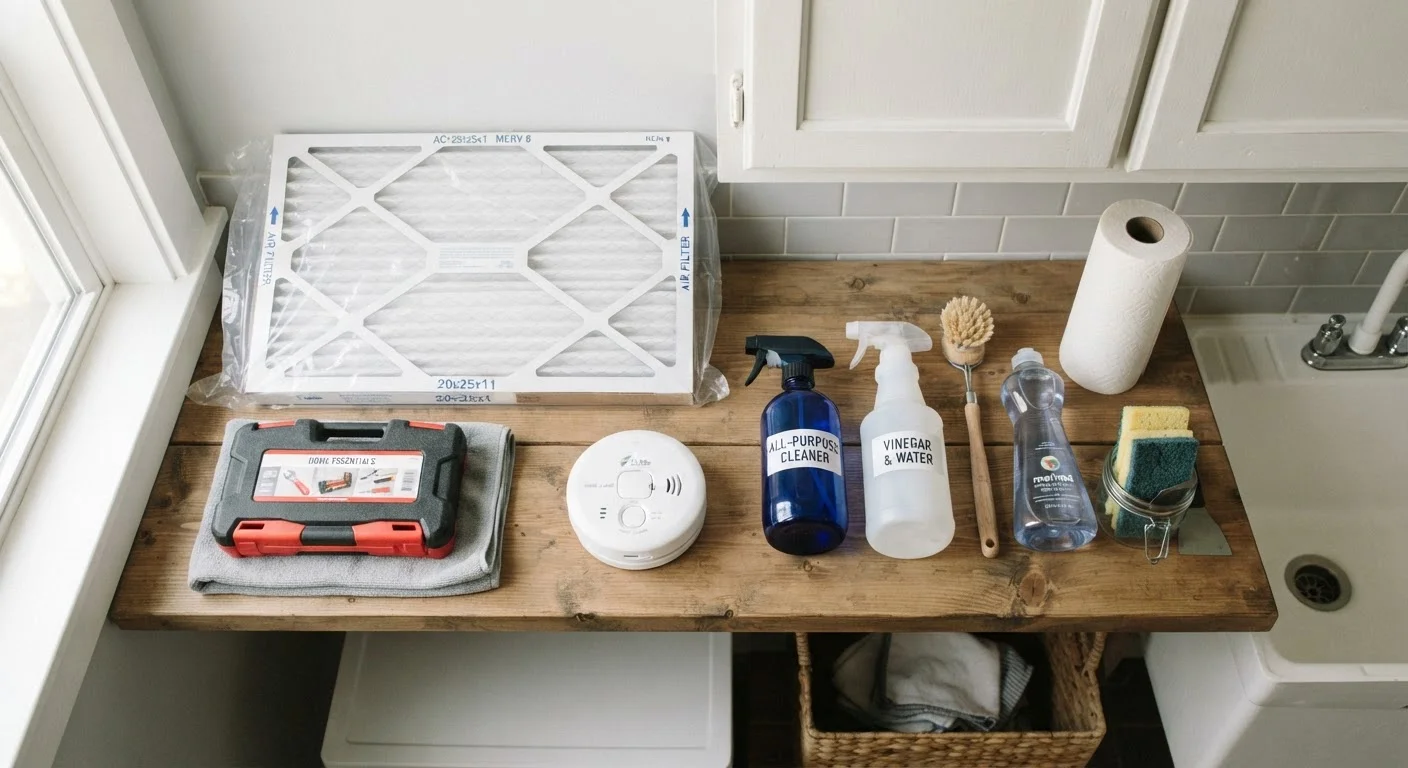
- Check the HVAC filter. A clogged filter restricts airflow, reduces heating and cooling efficiency, and can cause the system to overheat. Most standard filters need replacement every 1-3 months.
- Run water in unused fixtures. If a sink, shower, or tub hasn't been used in a while, run it briefly. This prevents drain traps from drying out, which can allow sewer gases to enter the space.
- Look under sinks for moisture. Open cabinet doors and glance at the pipes. A small drip caught early is a five-minute fix; left alone, it becomes a cabinet replacement and a mold remediation project.
- Clear dryer lint. A clogged lint trap is a leading cause of household fires. Clean it after every load, and inspect the dryer vent hose every few months for buildup.
Set a Phone Reminder for Filter Changes
Create a recurring reminder in your phone's calendar every 60-90 days labeled 'Check HVAC filter.' When the reminder fires, pull the filter out and hold it up to a light source - if you can't see light through it, it's time to replace it. This two-minute check can extend your system's lifespan noticeably.
For a broader view of what to check across the whole year, our guide to habits that prevent expensive problems goes deeper on prioritization.
When to DIY and When to Call a Professional
One of the most valuable skills a new homeowner or renter can develop is knowing where their limits are. A large category of tasks - patching small holes in drywall, replacing a showerhead, caulking around a tub, swapping a light fixture - are well within reach for a careful beginner with basic tools and a good tutorial.
However, certain categories should always go to a licensed professional:
- Anything involving gas lines or gas appliances
- Work inside your main electrical panel (beyond simply resetting a tripped breaker)
- Structural changes to walls, floors, or the roof
- Any work that requires a municipal permit
If you're not sure whether a job needs a permit, a quick call to your local building department costs nothing and can prevent costly problems later. The first-time DIYer's guide is a solid starting point for understanding safety and scope before you begin any project. And if you're renting, the question of who's responsible for what repairs is worth understanding clearly - see our breakdown of renter vs. homeowner repair responsibilities.
Renters: Check Your Lease First
If you rent, some maintenance tasks outlined here may be your landlord's responsibility. Review your lease carefully and report problems in writing to create a paper trail. For a detailed breakdown, see what renters should know about home maintenance.
Building Your Maintenance Routine
The most effective home maintenance system is a simple one. A basic calendar - digital or paper - with recurring reminders for filter changes, detector tests, and seasonal walkthroughs is all you need to stay ahead of most issues.
Start with the weekend checklist for first-time homeowners to work through foundational tasks in your first few months. Then graduate to a seasonal maintenance schedule that adjusts what you inspect based on the time of year - gutters before winter, AC before summer, and so on.
Assemble a basic tool kit early. You don't need much: a hammer, screwdrivers, pliers, a tape measure, and a utility knife handle the vast majority of everyday tasks. With the right habits, the right tools, and the confidence to call a professional when a job genuinely warrants it, you'll find home maintenance far more manageable than it first appears.