

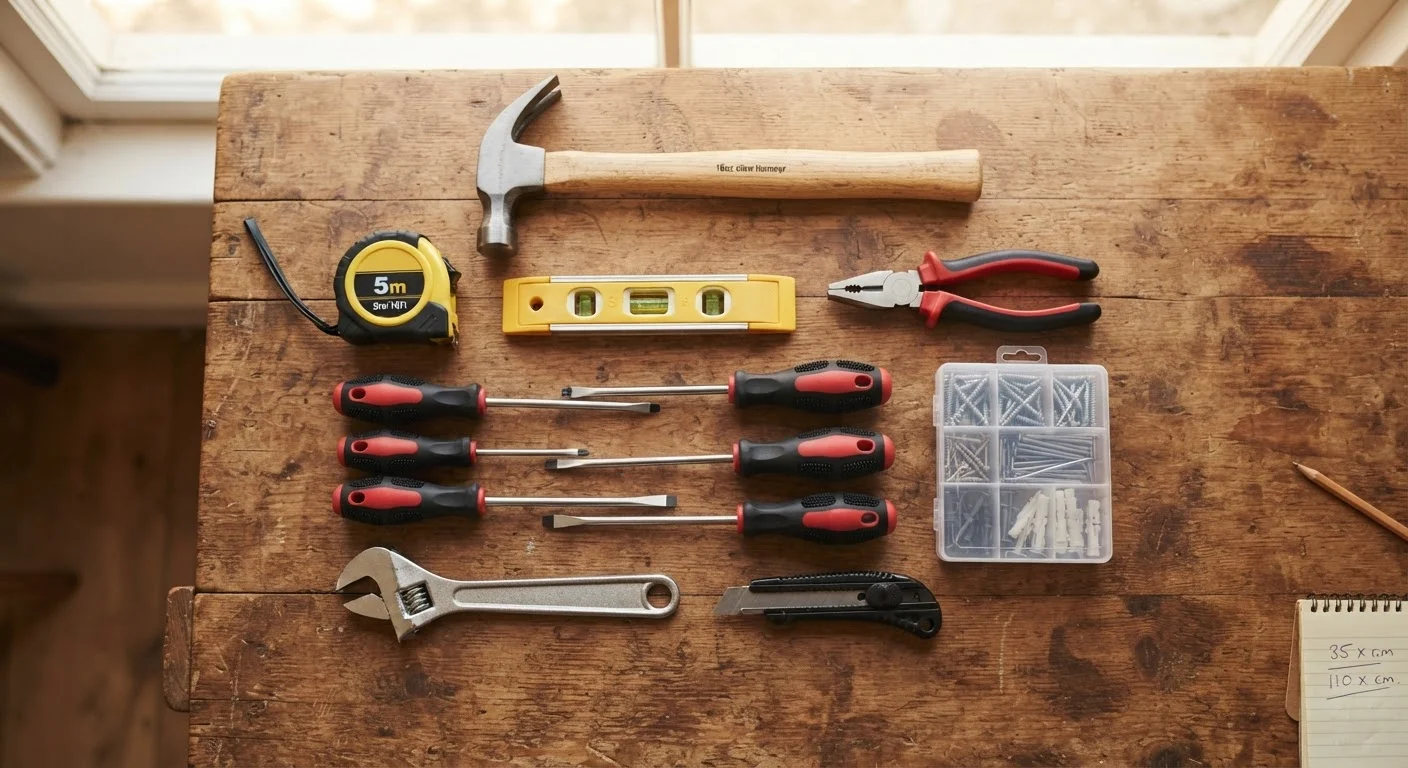
| Minimum starter tools | 12 core items |
| Most versatile single tool | Cordless drill/driver |
| Recommended hammer weight | 16 oz (general purpose) |
| Tape measure length | 25 ft recommended minimum |
| Spirit level size | 24 in for wall work |
| PPE always required | Safety glasses + work gloves |
Why a Lean, Purposeful Tool Kit Beats a Crowded One
First-time homeowners and renters often make one of two mistakes: buying too little and improvising dangerously, or panic-buying a cartload of gadgets that gather dust. The smarter path is a lean, purposeful starter kit - a short list of versatile hand tools that cover the widest possible range of everyday tasks without draining your budget.
Before adding anything to your kit, it helps to understand how professionals think about tools: each item should justify its floor space by solving multiple problems. A good claw hammer, for example, drives nails and pulls them, opens paint cans, and functions as a wedge. If a tool only does one niche thing, it probably belongs in the rent-it-later category. See our guide to renting vs. buying tools for a detailed breakdown of that decision.
| Minimum starter tools | 12 core items |
| Most versatile single tool | Cordless drill/driver |
| Recommended hammer weight | 16 oz (general purpose) |
| Tape measure length | 25 ft recommended minimum |
| Spirit level size | 24 in for wall work |
| PPE always required | Safety glasses + work gloves |
The Core List: Twelve Tools Worth Owning from Day One
Below is the working list every beginner should assemble before tackling any project. These tools address the tasks that come up repeatedly in routine home maintenance, furniture assembly, hanging items, and minor repairs.
- Claw hammer (16 oz) - the standard weight balances driving power with control for general use.
- Flathead screwdriver (medium) - still essential for slotted screws, prying, and scraping tasks.
- Phillips-head screwdriver (No. 2) - the most common screw drive type in furniture and fixtures.
- Cordless drill/driver - doubles as a screwdriver and a drill; transforms hours of hand-screwing into minutes.
- Measuring tape (25 ft) - longer than it seems necessary; you will use every inch of it.
- Spirit level (24 in) - catches wonky shelves and crooked picture frames before they become permanent.
- Utility knife - cuts drywall, packaging, carpet, and caulk lines cleanly.
- Needle-nose pliers - grip wire, pull staples, reach into tight spaces.
- Adjustable wrench (10 in) - handles most nuts and bolts without needing a full socket set.
- Hacksaw - cuts metal, plastic pipe, and bolts; inexpensive and dependable.
- Stud finder - locates the framing behind drywall before you drill, protecting both walls and wiring.
- Safety glasses and work gloves - non-negotiable personal protective equipment for any task involving tools.
A Note on Electrical and Gas Work
A starter hand-tool kit is appropriate for general repairs, hanging, assembly, and minor maintenance. It does not qualify you for electrical panel work, gas line repairs, structural modifications, or anything requiring a building permit. For those tasks, always hire a licensed professional and verify your local code requirements before starting work.
Once you have this foundation, you will be well-prepared for the tasks in our weekend project checklist for first-time homeowners.
What to Skip - and What to Add Later
A circular saw, an oscillating multi-tool, and a random-orbital sander are genuinely useful - but they belong in a second-phase kit, once you know the specific projects you'll take on. Buying them speculatively means money tied up in equipment you may never use.
The same goes for specialty screwdriver types (Torx, square-drive, Robertson): buy them when a project demands them, not before. A basic bit set for your cordless drill covers most of those needs anyway.
Storage matters too. A sturdy canvas tote or a compact toolbox keeps everything accessible and prevents tools from getting damaged. Loose tools thrown in a drawer go blunt faster and cause injuries when rummaged through.
For outdoor and garden projects, a separate short list of garden-specific tools applies - see our first-timer's garden guide for that rundown. Keeping home and garden tools separate helps you locate the right item quickly and keeps dirt and rust out of your indoor kit.