

Key Takeaways
Our Verdict
For one-off projects, renting is almost always the smarter financial move - especially for large, expensive, or specialty equipment you won't reach for again. Buying makes more sense when the tool is versatile, affordable, and will genuinely earn its shelf space across future projects. Most first-timers benefit from a hybrid approach: own the basics, rent the rest.
Renters, first-time homeowners, or anyone tackling an occasional project who wants to keep costs low and avoid cluttering their space with rarely-used equipment.
The Core Question: How Often Will You Really Use It?
Before spending money on any tool, ask one straightforward question: how many times in the next three years am I likely to use this? If the honest answer is once - or even twice - renting is almost certainly the more practical choice.
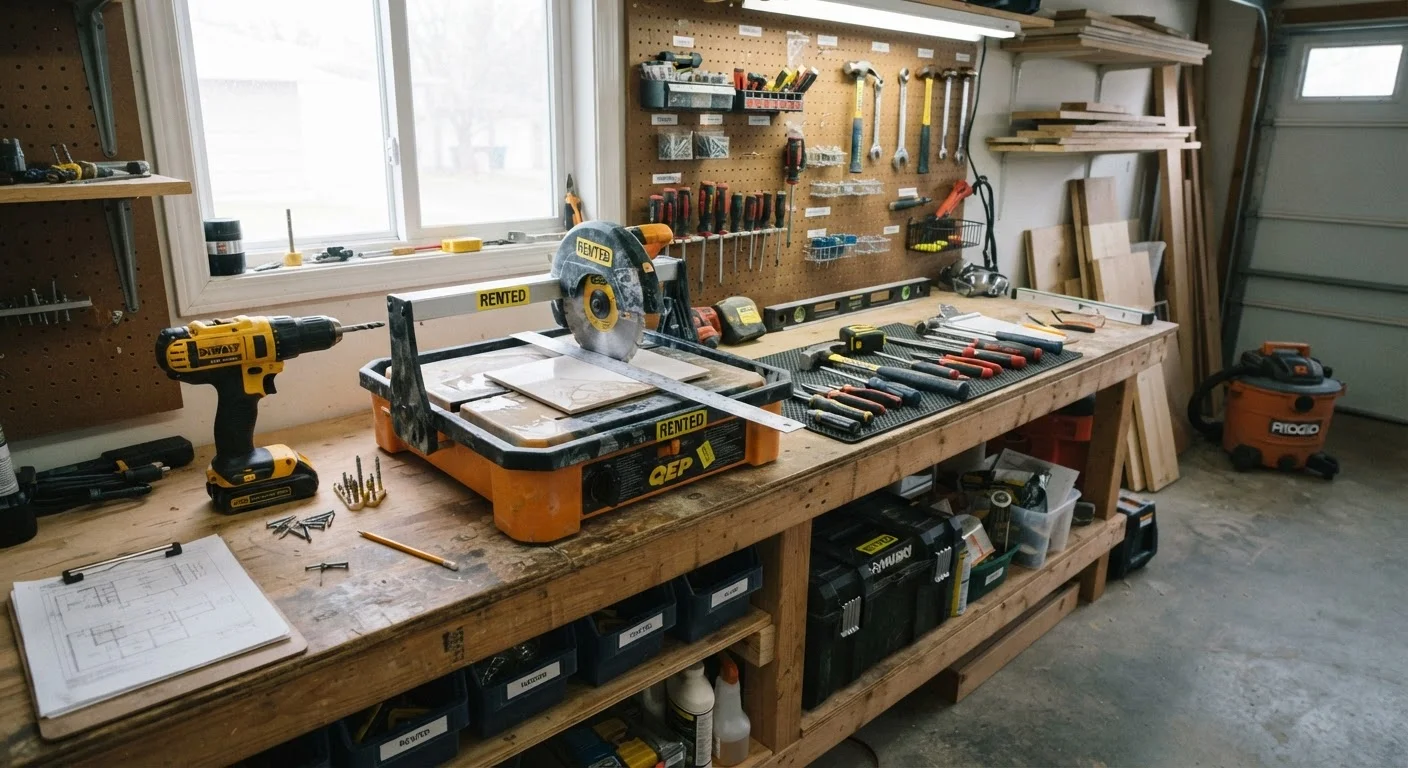
Power tools built for specific tasks, like a tile wet saw, a floor sander, or a rotary hammer drill, can cost several hundred dollars to purchase outright. Hardware stores and dedicated equipment rental centers typically charge a fraction of that for a day or weekend rental. For a single bathroom retile or a one-time concrete anchor job, it rarely makes sense to own the tool.
On the other hand, a cordless drill or a circular saw earns its purchase price quickly. If you're building a raised garden bed this spring, putting up shelving later in the year, and assembling flat-pack furniture in between, a versatile tool pays for itself through repeated use. See our guide to starter tool kits for a realistic list of what's worth owning from day one.
The Case for Renting: Lower Upfront Cost Isn't the Only Benefit
The obvious argument for renting is price. But the advantages go beyond the initial dollar comparison.
~$25-$75
Typical daily rental rate for common power tools
Rental centers generally price day rates for tools like sanders, rotary hammers, and tile saws in this range, compared to purchase prices of $150-$600+.
3x
Estimated break-even uses for a purchased tool
As a general rule of thumb, a tool purchased at full price typically breaks even in cost compared to renting after approximately three comparable rental periods.
When you rent, you also sidestep storage requirements - a real constraint in apartments or homes without a garage or workshop. You don't need to worry about long-term maintenance, blade replacements, battery degradation, or calibration. If the equipment malfunctions mid-project, the rental center swaps it out. That peace of mind has real value for a first-timer who doesn't yet know how to diagnose a tool problem.
Rental also gives you access to professional-grade equipment you wouldn't realistically buy. An electric pipe snake, scaffolding, or a pressure washer can transform a difficult job - and the rental version is often more capable than a budget consumer model would be.
When Renting Costs More Than It Saves
Renting has meaningful downsides that don't always show up in the initial price comparison. Rental fees are typically charged by the day or half-day, and projects almost always take longer than expected. A two-day rental can double your projected cost if materials are delayed or you hit an unexpected complication.
There's also the logistics overhead: driving to pick up the tool, returning it on time, and coordinating your project schedule around rental windows. For anyone without reliable transportation, this alone can be a significant friction point. If you're weighing whether to tackle a job yourself at all, our DIY vs. tradesperson framework can help clarify the decision before you commit.
Check What the Rental Includes
Some rentals include blades, bits, or safety gear; others do not. Always confirm what consumables and accessories are included before finalizing a rental, and ask the rental center to demonstrate basic operation if you're unfamiliar with the equipment. This can prevent both safety incidents and accidental damage fees.
Additionally, first-time users should be aware that some rental centers require a deposit and may charge fees for returned equipment that shows damage - even minor wear. Read the rental agreement carefully before signing.
A Practical Decision Framework
Use these criteria to guide your choice on any given tool:
- Purchase price vs. rental cost: If one rental equals more than 25-30% of the purchase price, reconsider buying - especially if a second use is plausible.
- Project timeline: Longer or uncertain timelines favor ownership. Short, well-scoped jobs favor renting.
- Storage space: No garage or dedicated storage? Factor in the hidden cost of clutter.
- Skill level: Unfamiliar with the tool? Renting lets you try before committing. Before picking up any power tool for the first time, review what every first-time DIYer should know.
- Future projects: Planning a larger renovation later? A tool you rent today might be worth buying ahead of that project.
For renters specifically, it's also worth knowing which home maintenance tasks fall to you versus your landlord - our overview of renter home maintenance responsibilities can prevent you from investing in tools for jobs that aren't yours to do.