

Key Takeaways
Start here
Assessing Your Space Before You Buy Anything
Next
Understanding Your Soil
Then
Choosing What to Grow First
Getting equipped
Essential Tools for a First Garden
Ready to plant
Planting, Watering, and What Comes Next
Assessing Your Space Before You Buy Anything
The single most common beginner mistake is buying plants before understanding what the available space can actually support. Spend one week simply observing your yard or outdoor area before touching a trowel.
Track sunlight across the day: most vegetables and flowering annuals need six or more hours of direct sun. A spot that looks bright in the morning may be in deep shade by afternoon. Note where water pools after rain - persistent wet patches signal drainage problems that will rot roots. Check access to a water source, since hauling a heavy watering can across a large yard gets old quickly.
For a fuller planning framework before committing to any layout, see what to plan before you build or plant anything. It's worth working through that checklist before you break ground.
No yard? You still have options
Ground-level space is not a requirement for a first garden. Containers, window boxes, and small raised beds on patios or balconies can support a surprisingly productive growing season. Our container gardening guide covers exactly this scenario with practical, space-efficient approaches.
Understanding Your Soil
Plants eat through their roots, and what those roots find determines almost everything. Healthy garden soil is loose, dark, and slightly crumbly - it holds moisture without becoming waterlogged and contains the organic matter that feeds plant growth.
Most first-time gardeners inherit soil that is compacted, nutrient-poor, or both. An inexpensive soil test - available through county cooperative extension offices or garden centers - tells you your soil's pH (acidity or alkalinity) and its major nutrient levels. Most vegetables prefer a pH between 6.0 and 7.0. Amendments like compost, aged manure, or lime can bring soil into range before you plant.
Compost is the workhorse amendment for beginners: it improves drainage in clay soils, adds water retention in sandy soils, and feeds beneficial microorganisms. You can purchase bagged compost or start making your own with kitchen scraps. Our guide to composting at home walks through the process from scratch.
Soil pH
A measure of how acidic or alkaline your soil is, on a scale from 0 to 14. Most vegetables grow best in the slightly acidic range of 6.0 to 7.0.
Compost
Decomposed organic matter - food scraps, leaves, plant trimmings - that improves soil structure and feeds plants naturally when mixed into garden beds.
Hardiness Zone
A geographic classification (used by the USDA in the US) that indicates average minimum winter temperatures, helping gardeners choose plants suited to their climate.
Germination
The process by which a seed sprouts and begins growing into a seedling, triggered by moisture, warmth, and sometimes light.
Mulch
A layer of material - such as straw, wood chips, or shredded leaves - spread over soil to suppress weeds, retain moisture, and regulate soil temperature.
Direct sowing
Planting seeds directly into the garden bed outdoors, rather than starting them indoors first and transplanting seedlings later.
Amendment
Any material mixed into soil to improve its physical properties or nutrient content, such as compost, sand, lime, or aged manure.
Choosing What to Grow First
Ambition is good; overextension in year one is not. Choose plants that match your current skill level and give you visible feedback quickly enough to stay engaged.
Reliable beginner crops include:
- Salad greens (lettuce, spinach, arugula) - harvest in as little as 30 days, regrow after cutting
- Radishes - ready in 3-4 weeks, excellent for understanding germination and spacing
- Zucchini - fast-growing, productive, hard to ignore if it needs water
- Green beans - minimal care once established, good for learning trellising basics
- Cherry tomatoes - more forgiving than large-fruiting varieties, satisfying yields
For a realistic look at what a first vegetable plot will actually produce, read growing vegetables in a small garden before you finalize your planting list.
Start with just three or four crops
Resist the urge to grow ten different things in year one. Mastering a handful of crops - understanding their water needs, spacing, and harvest timing - teaches you far more than managing a chaotic mix of struggling plants. Once you've had a successful season, add one or two new crops the following year.
Essential Tools for a First Garden
You do not need a full shed of equipment. A focused starter set covers nearly every task in a small to medium first garden, and quality matters more than quantity.
Core hand tools worth having:
- Hand trowel - for transplanting seedlings and digging small holes
- Hand cultivator (fork) - for loosening soil surface and working in amendments
- Garden hoe - for weeding and creating furrows for direct-sown seeds
- Watering can or hose with an adjustable nozzle
- Kneeling pad - underrated but genuinely useful for extended ground-level work
For a broader rundown of hand tools useful across home projects, our starter tool kit guide is a good reference. Buy durable tools with solid handles from the start - flimsy options break at the worst times and rarely save money in the long run.
Planting, Watering, and What Comes Next
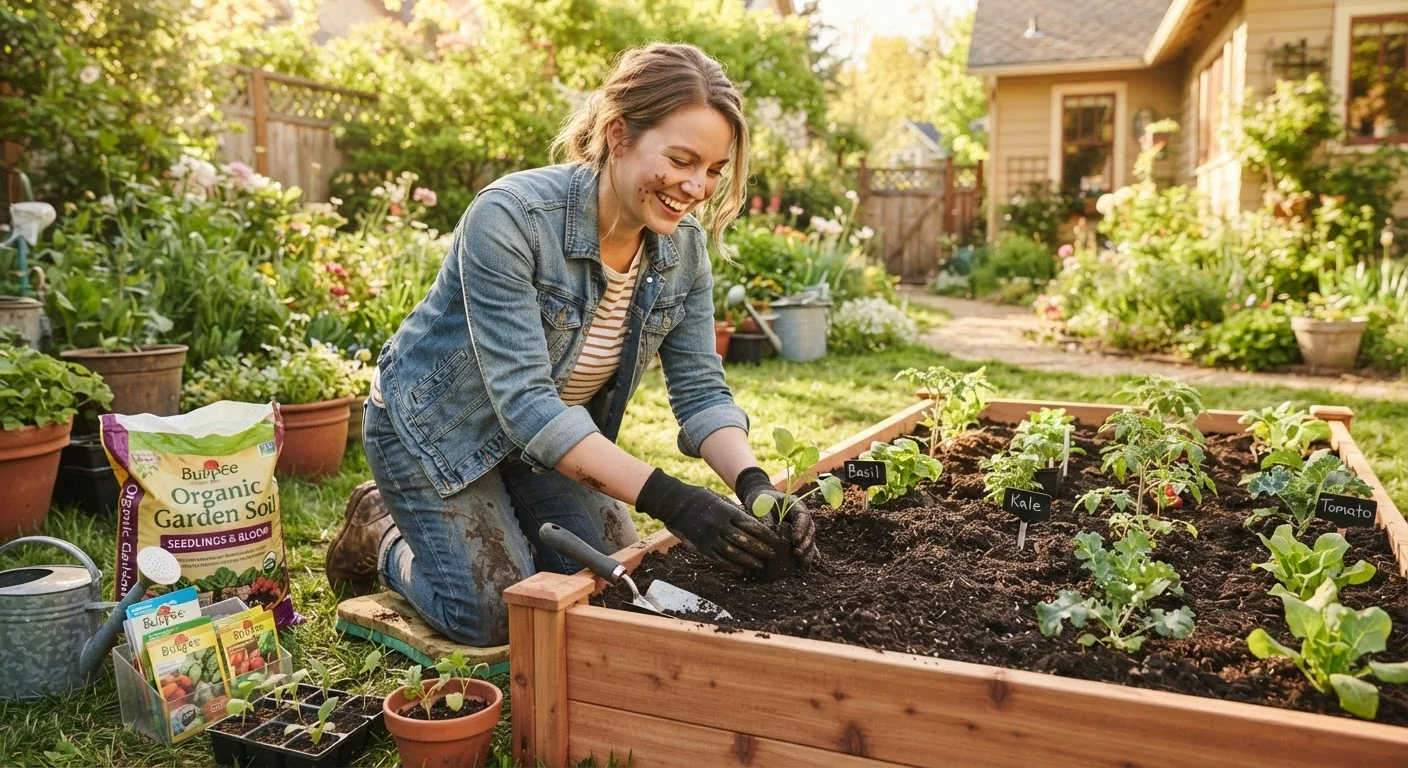
With your space assessed, soil prepared, plants chosen, and tools in hand, planting day arrives. Follow spacing guidelines on seed packets and plant labels - crowding is one of the most common first-year errors, and it reduces airflow, invites disease, and limits root development.
Water transplants in immediately after planting to settle soil around roots. For ongoing care, aim for about one inch of water per week. Water at the base of plants, ideally in the morning, so foliage dries before evening. Consistent moisture matters more than frequency: erratic dry-then-soaked cycles stress plants and invite problems.
Expect weeds. Pulling them young - before they set seed - is far easier than managing an established weed population. A thin layer of mulch (straw, wood chips, or shredded leaves) suppresses weeds, retains moisture, and moderates soil temperature.
Gardening is a skill that builds season over season. Keep notes on what worked, what didn't, and when you planted each crop. Our month-by-month gardening calendar is a useful companion once your first beds are in the ground.