

Key Takeaways
Summary
22 items · 30-60 minutes
Why Planning Comes Before Everything Else
It's tempting to head to the garden center or order patio pavers the moment warm weather arrives. But outdoor living spaces that feel right-and hold up over years-almost always start with a thinking phase, not a buying phase. Rushed decisions lead to patios that flood, plants that die in the wrong light, and structures that violate local codes.
This checklist walks you through the essential questions to answer before you spend a dollar or dig a single hole. Think of it as a first-timer's due diligence - the same disciplined approach that applies whether you're planning a garden corner or a full backyard overhaul. If you're also in the habit of checking your financial footing before committing to big projects, you might find the mindset familiar from resources like personal finance checklists.
Work through each section below at your own pace. Some items take five minutes; others may require a call to your local municipality or a weekend of observation. All of them are worth it.
Measuring tape (25 ft or longer)
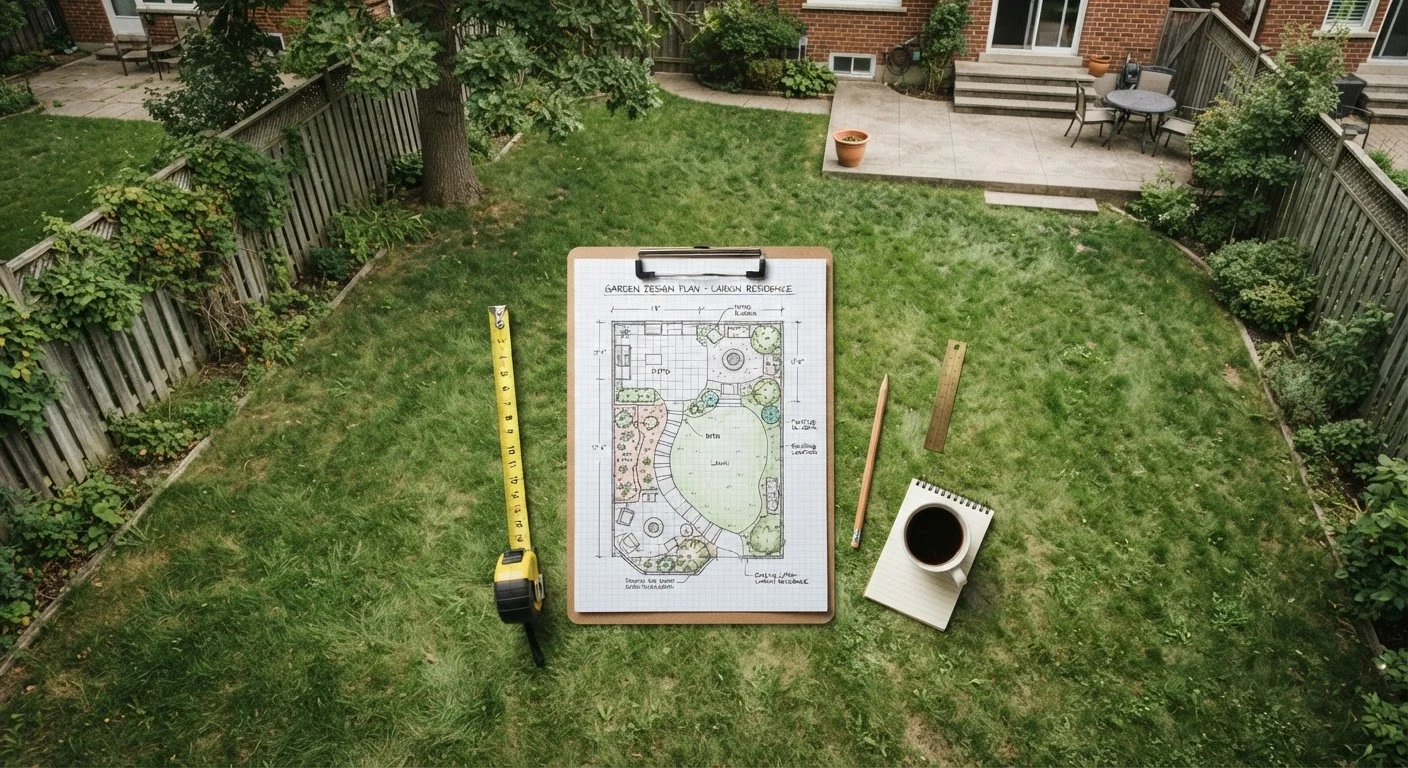
Accurately measure your outdoor space to create a scaled sketch of the area.
Graph paper or free online space planner
Draw a simple layout of your space to visualize placement of features before committing.
Soil test kit
Assess pH and basic nutrient levels so you know what amendments your soil needs before planting.
Compass or compass app
Determine cardinal directions to accurately map sun exposure throughout the day.
Local zoning and permit resources
Look up your municipality's building codes and permit requirements before planning any structures.
USDA Plant Hardiness Zone map
Identify your climate zone so you can select plants that will survive your local winters.
Camera or smartphone
Document your space across different times of day and weather to track light, shade, and drainage patterns.
Understanding Your Space and Its Conditions
Before you can decide what to build or plant, you need an honest picture of what you're working with. Most beginners skip this step - and most beginner mistakes trace back to that skip.
Site Assessment
Regulations and Permissions
Purpose and Use Planning
Budget and Phasing
Once you understand your site's conditions, you'll be in a much stronger position to choose the right layout. For example, knowing whether your soil drains well is one of the key factors in deciding between raised beds and in-ground planting - a choice our guide on raised beds vs. ground planting walks through in detail.
Always Call Before You Dig
Digging without knowing what's underground is one of the most dangerous-and common-beginner mistakes. In the US, dialing 811 connects you to a free service that marks underground utility lines before excavation. This call is required by law in most states and should happen at least a few business days before any digging begins. Striking a gas or electrical line is a serious safety hazard and can carry significant legal and financial consequences.
Defining Purpose, Budget, and Phases
A clear sense of how you want to use your outdoor space will anchor every design decision you make. An entertaining patio has different priorities than a quiet reading garden or a productive vegetable plot.
This is also the stage to be honest about money and time. Outdoor projects routinely exceed initial estimates, so building in a buffer - and a phased plan - keeps the project manageable. If you're working with a small or balcony-style space, container gardening on a balcony or patio may be a more practical starting point than a full ground-level build.
Permits Are Not Optional
Many homeowners skip permits to save time or money, but unpermitted structures can create serious problems: they may need to be torn down, can complicate home insurance claims, and often must be disclosed-or removed-during a property sale. Requirements vary widely by location, so contact your local building or planning department directly. When in doubt, ask first - it's a free conversation that can save you significant trouble later.
For a broader roadmap from zero to a functioning garden, see our first-timer's complete garden roadmap.