

Key Takeaways
Option A
Raised Beds
The structured, controlled-environment approach.
Best for: Beginners dealing with poor native soil, limited mobility, or small defined spaces who want faster early results.
Option B
Ground Planting
The low-barrier, low-cost traditional method.
Best for: New gardeners with decent existing soil, larger plots, or a tight startup budget who are willing to invest time in soil improvement.
If you have compacted, clay-heavy, or contaminated soil
Raised Beds
You can fill the bed with a quality growing mix immediately, bypassing years of soil amendment work. This gives your plants the best possible start without battling difficult native conditions.
If you have a tight startup budget
Ground Planting
Digging and amending an in-ground plot costs a fraction of purchasing lumber and filling a raised bed. Even adding compost and basic tools keeps costs low in year one.
If you have back pain or limited mobility
Raised Beds
A bed built to 12-18 inches tall (or higher) dramatically reduces the need to kneel or bend, making regular tending significantly more comfortable.
If you want to grow across a large area
Ground Planting
Scaling up in-ground growing simply means digging more ground. Expanding raised beds requires buying more materials, which adds cost quickly.
If you want the quickest path to a productive first season
Raised Beds
Pre-filled with quality growing mix, a raised bed lets you plant almost immediately and usually delivers reliable results in the first year with less troubleshooting.
What You're Actually Choosing Between
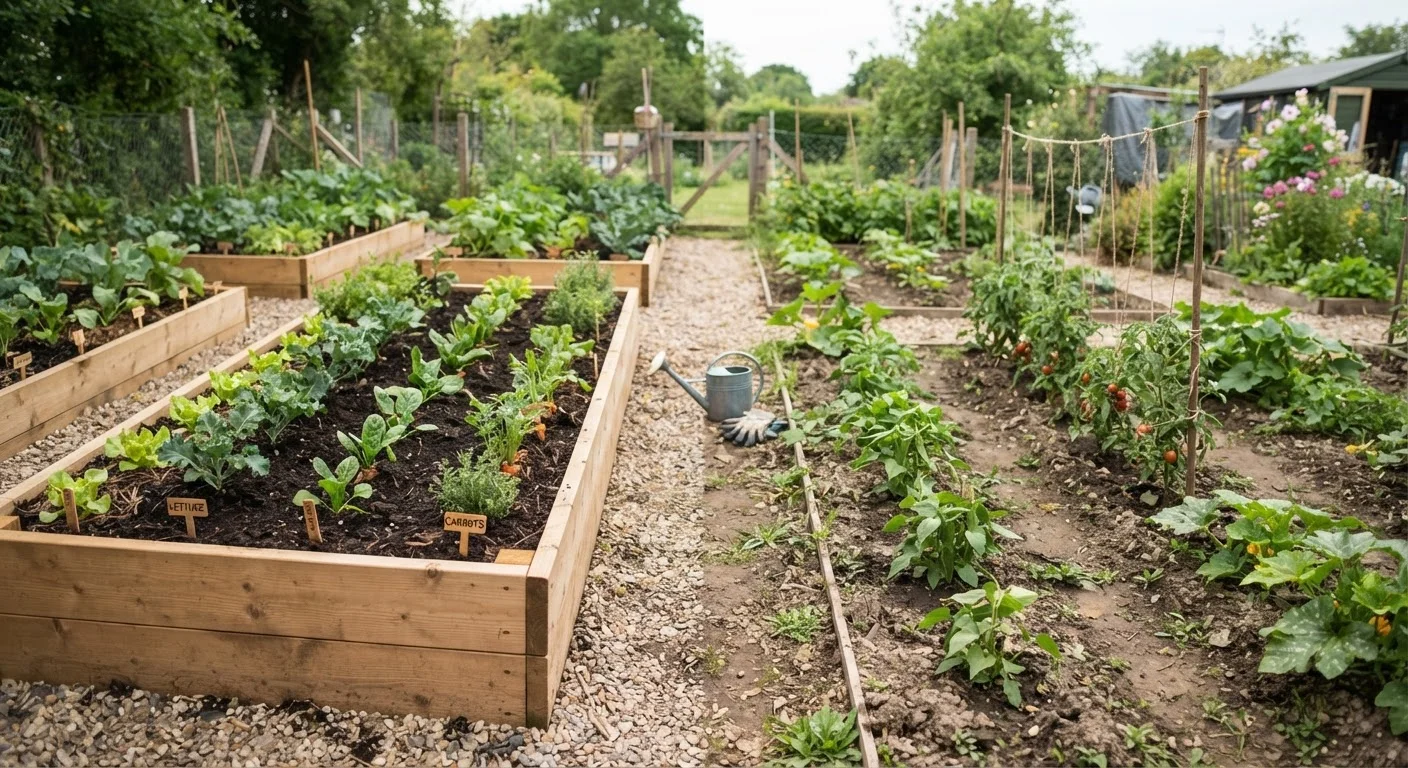
When you decide to start a vegetable or flower garden, one of the first real forks in the road is whether to build up or dig in. A raised bed is a contained growing structure - typically built from wood, galvanized steel, or composite material - that you fill with a custom growing mix. Ground planting (also called in-ground planting) means working directly with the native soil in your yard, amending it as needed.
Both approaches grow food and flowers just fine. The difference lies in how much setup effort each demands upfront, how much it costs, and how forgiving each is for someone who is still learning. If you're just getting started, our first-timer's complete roadmap covers the broader planning picture before you commit to either method.
| Criterion | Raised Beds | Ground Planting |
|---|---|---|
| Startup cost | Moderate to high (materials + fill) | Low (compost + basic tools) |
| Soil control | Complete - you choose the mix | Limited by native soil quality |
| Setup effort | Build, fill, then plant | Dig, amend, then plant |
| Drainage | Excellent by design | Varies - often needs improving |
| Weed pressure | Generally low | Can be significant early on |
| Scalability | Costly to expand | Easy and inexpensive to expand |
| Spring warmup speed | Faster (elevated bed warms quicker) | Slower in cold climates |
| Long-term soil health | Needs regular replenishing | Improves steadily with amendments |
Setup Cost and Effort: The Honest Numbers
Raised beds have a higher barrier to entry. Materials alone - lumber, corner brackets, landscape fabric for the base, and enough quality growing mix to fill the bed - can add up considerably depending on bed size. A single 4×8 foot bed filled to 10-12 inches deep requires a meaningful volume of growing medium. That said, you only do this work once, and the payoff is planting into ideal conditions from day one.
Ground planting asks very little financially at the start. If your soil is workable, you may only need a spade, a bag or two of compost, and some basic amendments. The investment is more often in time and physical effort: breaking up compacted earth, removing grass or weeds, and working organic matter through multiple layers. In many yards, native soil is compacted, nutrient-poor, or has drainage problems - improvements that can take more than one season to fully take hold.
10-12 in.
Minimum recommended raised bed depth for most vegetables
Shallower beds restrict root development for crops like carrots, tomatoes, and beans, which commonly need at least this depth.
~30%
Estimated reduction in weeding time in raised beds vs. in-ground
Because raised beds are filled with imported growing mix rather than disturbed native soil, they typically harbor far fewer weed seeds at the outset.
2-3 seasons
Time to significantly improve poor native soil through amendment
Soil scientists and extension horticulturalists generally note that meaningful structural improvement in compacted or clay-heavy soil takes multiple growing seasons of consistent organic matter addition.
One practical middle ground worth knowing: you can start very small with either approach. A single 4×4 raised bed or a modest 6×6 ground plot gives you enough space to learn without overcommitting resources.
Day-to-Day Growing Experience
Once you're past setup, the two methods feel quite different to maintain. Raised beds tend to have fewer weeds because you're not disturbing weed-seed-laden native soil, and the defined edges make it easy to spot and pull what does appear. Drainage is generally better too, reducing the risk of waterlogging - a common issue that kills more beginner plants than almost anything else.
Ground planting does reward patience. In year two and beyond, a well-amended in-ground bed often develops richer microbial life and better moisture retention than a filled raised bed, which can dry out faster in summer. Mulching - applying a layer of organic material like wood chips or straw to the soil surface - helps both methods retain moisture and suppress weeds. See our guide to garden mulch trade-offs for a clear breakdown of how and when it helps.
For beginners choosing what to grow, the method matters less than realistic expectations. Our year-one vegetable gardening guide walks through what's achievable regardless of which approach you use.
A Note on Soil Testing
If you're unsure whether your native soil is worth working with, a basic soil test (available through many cooperative extension services and garden centers) will tell you pH, nutrient levels, and texture. This data costs relatively little and can save you a full season of guesswork. If results show severe compaction, extreme pH, or contamination, a raised bed becomes a much clearer choice.
Long-Term Thinking: Which Grows With You?
If gardening becomes a genuine hobby, you'll eventually want more growing space. Ground planting scales almost freely - dig another patch, amend it, and plant. Raised beds scale too, but each new bed means more materials and more growing mix to source and pay for.
It's also worth considering what else you might want to grow over time. Understanding annuals versus perennials will shape how you think about either growing setup, since perennials particularly benefit from stable, undisturbed ground. Raised beds suit annuals extremely well; deep-rooted perennials can outgrow a shallow bed's depth.
Finally, if outdoor space is limited rather than soil quality being the problem, it's worth knowing there's a third path: container gardening on a balcony or small patio can supplement or even replace either method entirely for renters or those with no ground access at all.
The honest answer is that most dedicated gardeners eventually try both. Starting with whichever removes the most friction for your specific situation - your soil, your budget, your body - is the right call for year one.