

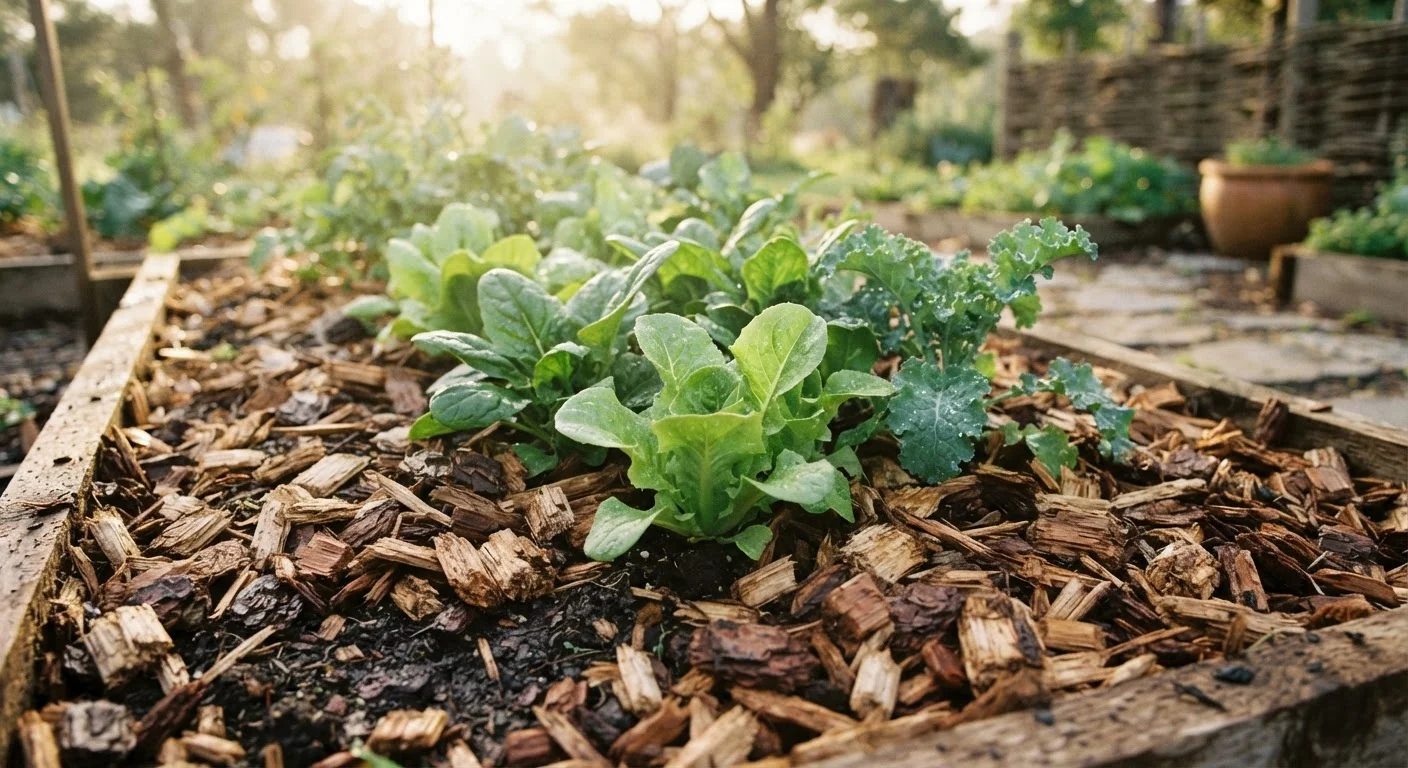
Key Takeaways
Reduces watering frequency significantly
Mulch slows evaporation from the soil surface, which can meaningfully reduce how often you need to water - particularly useful during dry spells or for gardeners with limited time.
Suppresses most weed growth
A 2-3 inch layer blocks sunlight from reaching weed seeds, preventing the majority from germinating. This is one of the most time-saving benefits mulch offers a beginner.
Moderates soil temperature extremes
Mulch acts as insulation, keeping soil cooler in summer heat and slowing the freeze-thaw cycle in colder months, which helps protect plant roots.
Organic types improve soil over time
As bark, straw, and wood chips break down, they add organic matter that improves soil structure, drainage, and microbial activity - a long-term benefit to plant health.
Reduces soil compaction and erosion
Mulch cushions the impact of rain and foot traffic near planting areas, helping to keep the soil loose and preventing it from washing away during heavy downpours.
Can encourage rot if applied incorrectly
Piling mulch against plant stems or crowns traps moisture and warmth, creating ideal conditions for fungal disease and crown rot - a particularly common beginner error.
May harbour slugs and other pests
The cool, moist environment under a thick mulch layer is attractive to slugs, snails, and certain insects. In gardens with existing pest problems, this can make the situation worse.
Requires periodic replenishment
Organic mulches decompose within one to two seasons and need topping up regularly, which adds ongoing material cost and labour to garden maintenance.
Some types can tie up soil nitrogen
Wood chip mulches high in carbon can temporarily reduce plant-available nitrogen in the soil as they break down - relevant mainly when mixed into the soil rather than left on the surface.
Doesn't eliminate all weeds
Vigorous perennial weeds - such as bindweed or dandelion - can push through even a well-applied mulch layer, requiring manual removal regardless.
Our Verdict
For most beginner gardeners, mulching is a genuinely worthwhile habit that pays off in reduced watering, fewer weeds, and healthier soil over time. The trade-offs are manageable with a little know-how - mainly avoiding common application mistakes like piling mulch against plant stems.
Mulching is especially valuable for gardeners with limited time who want to reduce routine maintenance without sacrificing plant health.
What Mulch Actually Does
Mulch is any material - organic or inorganic - spread over the soil surface around plants. Its primary jobs are to reduce moisture loss, moderate soil temperature, and interrupt weed growth. Organic options include wood chips, straw, shredded leaves, and bark. Inorganic options include gravel, landscape fabric, and rubber chips.
Understanding the soil beneath your mulch matters too. If you're unsure what you're working with, our guide to soil types is a helpful starting point before you mulch anything.
Reduces watering frequency significantly
Mulch slows evaporation from the soil surface, which can meaningfully reduce how often you need to water - particularly useful during dry spells or for gardeners with limited time.
Suppresses most weed growth
A 2-3 inch layer blocks sunlight from reaching weed seeds, preventing the majority from germinating. This is one of the most time-saving benefits mulch offers a beginner.
Moderates soil temperature extremes
Mulch acts as insulation, keeping soil cooler in summer heat and slowing the freeze-thaw cycle in colder months, which helps protect plant roots.
Organic types improve soil over time
As bark, straw, and wood chips break down, they add organic matter that improves soil structure, drainage, and microbial activity - a long-term benefit to plant health.
Reduces soil compaction and erosion
Mulch cushions the impact of rain and foot traffic near planting areas, helping to keep the soil loose and preventing it from washing away during heavy downpours.
Where Mulch Falls Short
Mulch is not a set-and-forget solution, and it comes with some genuine downsides that beginners often don't anticipate.
Can encourage rot if applied incorrectly
Piling mulch against plant stems or crowns traps moisture and warmth, creating ideal conditions for fungal disease and crown rot - a particularly common beginner error.
May harbour slugs and other pests
The cool, moist environment under a thick mulch layer is attractive to slugs, snails, and certain insects. In gardens with existing pest problems, this can make the situation worse.
Requires periodic replenishment
Organic mulches decompose within one to two seasons and need topping up regularly, which adds ongoing material cost and labour to garden maintenance.
Some types can tie up soil nitrogen
Wood chip mulches high in carbon can temporarily reduce plant-available nitrogen in the soil as they break down - relevant mainly when mixed into the soil rather than left on the surface.
Doesn't eliminate all weeds
Vigorous perennial weeds - such as bindweed or dandelion - can push through even a well-applied mulch layer, requiring manual removal regardless.
One of the most common mistakes is piling mulch directly against plant stems or tree trunks - sometimes called a "mulch volcano." This traps moisture and creates conditions that promote fungal disease and rot at the base of the plant. Keep mulch a few inches away from any stem.
Slugs and other moisture-loving pests can also shelter under deep mulch layers. If your garden already has pest pressure, pair your mulching strategy with other approaches - see our natural pest control options for evidence-based ideas.
How to Apply Mulch Correctly
Getting the depth right is critical. A layer of 2-3 inches is generally appropriate for most organic mulches - enough to suppress weeds and retain moisture without suffocating the soil or starving plant roots of airflow. Thicker is not automatically better.
Keep Mulch Away from Stems
Always leave a clear gap of at least 2-3 inches between mulch and the base of any plant stem, shrub, or tree trunk. This prevents moisture from accumulating at the crown and reduces the risk of fungal problems. The mulch should look like a flat ring, not a mounded volcano around the base of the plant.
Apply mulch after the soil has had a chance to warm up in spring, or in autumn after plants have gone dormant. Mulching over cold, wet soil in early spring can keep the ground cold for longer, which slows plant establishment.
Organic mulches break down over one to two seasons, which is actually a benefit - they add organic matter to the soil as they decompose. Plan to top them up annually. If you're already composting at home, finished compost makes an excellent mulch that feeds the soil as it suppresses weeds.
Matching Mulch to Your Garden
There's no single mulch that suits every situation. Wood chips are long-lasting and work well in borders and around shrubs, but can be too heavy for vegetable beds. Straw breaks down faster and is better suited to kitchen gardens, though it can carry weed seeds if it's not properly processed. Shredded leaves are low-cost if you generate them yourself, but may mat down and repel water if applied too thick.
25-50%
Potential reduction in soil moisture loss
Research from cooperative extension programs in the US suggests mulched beds can lose significantly less moisture to evaporation compared to bare soil.
2-3 inches
Recommended mulch depth for most gardens
This depth is widely recommended by horticultural extension services as sufficient for weed suppression and moisture retention without impeding airflow.
Watering habits interact closely with mulching. A well-mulched bed needs less frequent irrigation, but it can also disguise when the soil beneath is drying out. Check moisture levels by pushing a finger 2 inches into the soil rather than judging by surface appearance. For more on getting watering right, our watering myths article is worth reading alongside this one.