

Key Takeaways
Why Natural Pest Control Is Worth Understanding
Reaching for a chemical spray is often a gardener's first instinct when pests appear - but it's rarely the only option, and sometimes not the most effective one in the long run. Natural pest control approaches aim to reduce damage by working with existing ecological relationships rather than disrupting them. That means fewer unintended consequences for pollinators, soil organisms, and the broader garden ecosystem.
This doesn't require a perfectly organic garden or any particular ideology. It simply means building a toolkit of strategies that keep pest pressure manageable without defaulting automatically to synthetic pesticides. Whether you're growing vegetables in a raised bed (see our guide on raised beds vs. ground planting for setup basics) or tending a container garden on a balcony, the approaches below translate across many situations.
Companion Planting
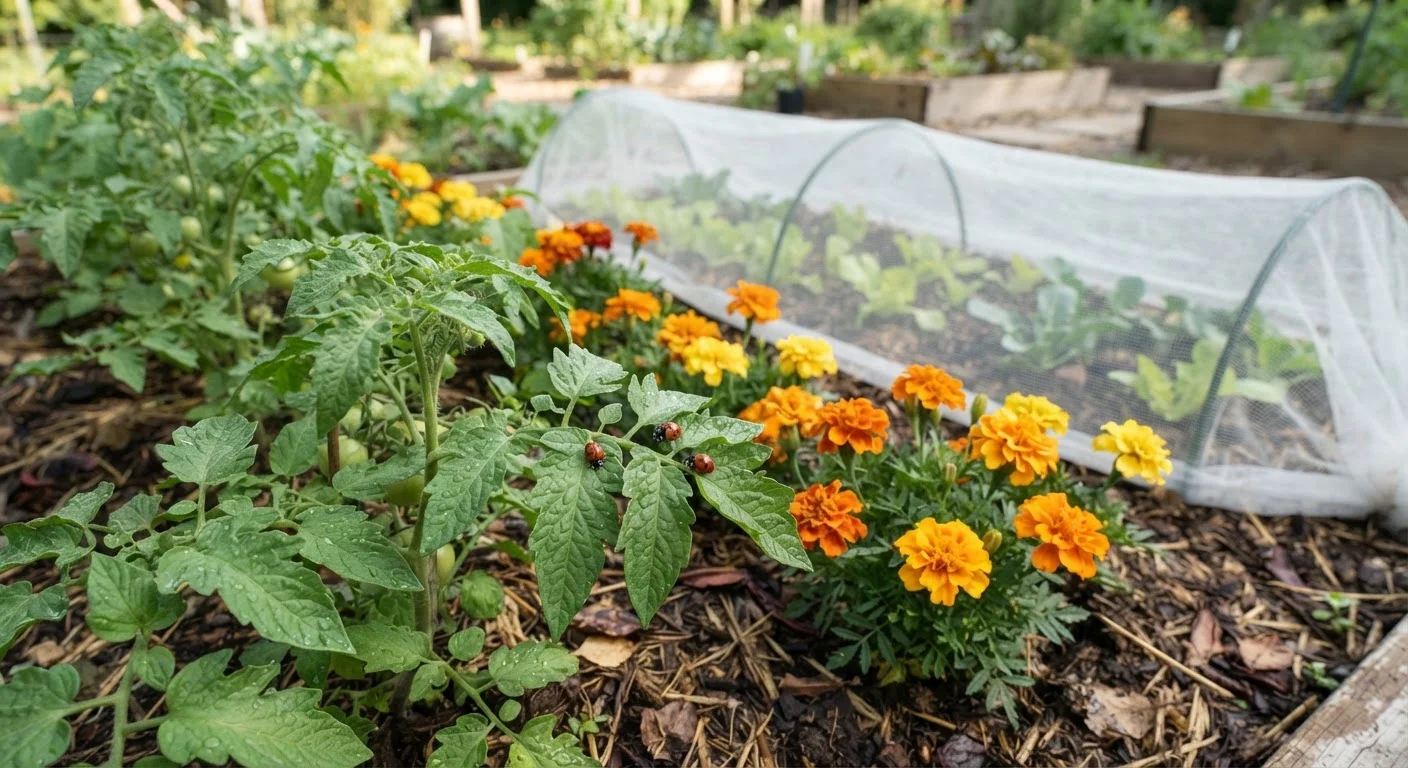
Companion planting involves growing certain plants in close proximity because their combined presence benefits at least one of them. The evidence for pest-related benefits is strongest for a handful of well-studied pairings. Marigolds (Tagetes species) planted near tomatoes or squash are among the most consistently cited examples - they attract beneficial insects and are thought to deter certain nematodes in the soil.
Aromatic herbs like basil, dill, and fennel attract predatory insects that feed on aphids and whiteflies. Nasturtiums are sometimes used as trap crops, drawing aphids away from more valued plants. The key is understanding that companion planting provides partial, probabilistic protection - it's a supporting strategy, not a guarantee. Research results vary depending on scale, climate, and pest species, so treat it as one layer in a broader approach.
Marigolds and aromatic herbs attract beneficial insects while deterring some common garden pests.
Encouraging Beneficial Insects
Many insects are natural predators of the pests that damage garden plants. Ladybugs, lacewings, parasitic wasps, and ground beetles all feed on aphids, caterpillar eggs, and other damaging insects. The challenge is that these beneficial insects need habitat, food sources beyond prey, and - critically - freedom from broad-spectrum pesticide applications that kill them alongside pest species.
You can support beneficial insect populations by planting small-flowered nectar plants (like alyssum, yarrow, or cilantro allowed to bolt), leaving a section of the garden slightly undisturbed, and avoiding pesticide applications during peak flowering periods. Purchasing beneficial insects from suppliers can work in enclosed spaces but is generally less effective in open gardens where insects disperse.
Beneficial insects need habitat and nectar sources - provide both and they'll manage many pests naturally.
Physical Barriers and Row Covers
Physical exclusion is one of the most reliable and underused tools in natural pest management. Floating row covers - lightweight, permeable fabric draped over plants or supported on hoops - can prevent flying insects from reaching plants entirely. They're particularly effective against cabbage moths, aphid-vectored viruses, and cucumber beetles when installed before pest pressure begins.
Other physical barriers include copper tape around raised beds or containers to deter slugs (results are mixed in practice and depend on the width used), fine netting over brassicas, and cardboard collars at the base of seedlings to block cutworms. For container gardeners, physical barriers are often even easier to implement - a pot is a contained space that's simpler to protect than an open bed.
Row covers installed before pest pressure begins can prevent many common flying insect problems entirely.
Hand Removal and Monitoring
It's unglamorous but highly effective: regularly inspecting plants and manually removing pests, eggs, or heavily infested leaves. For small to medium gardens, this approach keeps populations from reaching damaging levels without any inputs at all. Check the undersides of leaves - that's where aphid colonies, whitefly eggs, and caterpillar egg clusters are most often found.
Drop caterpillars and beetles into soapy water rather than on the soil (they can crawl back). Pinch off leaves with heavy egg deposits. Squish aphid clusters with gloved fingers. The habit of spending 10-15 minutes observing your garden several times per week pays compounding dividends - problems caught early are almost always easier to manage than infestations discovered late.
Spending ten minutes observing your plants a few times a week catches problems before they escalate.
Improving Plant and Soil Health
Pest pressure often concentrates on stressed plants. Overwatered, underwatered, or nutrient-deficient plants emit chemical signals that some insects can detect, making them preferential targets. Strengthening the underlying conditions of your garden is therefore a form of pest prevention, even if it doesn't look like one.
Proper plant spacing improves airflow and reduces the humid, sheltered conditions that fungal pests and certain insects prefer. Rich, biologically active soil supports plant immune function and produces more vigorous growth. Avoid over-fertilizing with nitrogen, which promotes the soft, lush leaf growth that aphids find particularly attractive. Getting watering right - neither too much nor too little - is also part of the picture; our piece on garden watering myths addresses some common habits that quietly undermine plant health.
Stressed plants attract more pests - healthy soil and proper spacing are a form of prevention.
Targeted Low-Impact Sprays
When other approaches aren't sufficient, certain low-impact spray options are widely used in natural pest management. Insecticidal soap (made from potassium salts of fatty acids) disrupts the outer membrane of soft-bodied insects like aphids and spider mites on contact. Neem oil, derived from the neem tree, interferes with insect feeding and reproduction and is used against a range of common pests. Bacillus thuringiensis (Bt) is a naturally occurring soil bacterium whose specific strains are toxic to caterpillars when ingested but have minimal effect on most other organisms.
All of these are considered low-toxicity compared with synthetic pesticides, but that doesn't mean they're without effect on non-target insects - insecticidal soap and neem can harm beneficial insects on contact. Apply in the evening when pollinators are less active, target affected areas only, and follow label directions. Treat these as occasional interventions, not routine sprays.
Even low-impact sprays can harm beneficial insects - apply selectively, in the evening, and only as needed.
Building a Strategy That Works for Your Garden
No single method eliminates pest problems entirely - and that's the right expectation to set from the start. The goal is to manage pest populations at a level your plants can tolerate, not achieve a pest-free garden, which isn't realistic or even ecologically desirable. Combining two or three of the methods above consistently outperforms any one approach used in isolation.
Start a Simple Garden Observation Log
A small notebook or a notes app on your phone is enough. Record the date, which plants you checked, what you found, and what you did. After one growing season, you'll have a clear picture of when and where pest pressure peaks in your specific garden - making it much easier to take preventive action the following year.
Healthy plants are also more resilient to pest damage. Good soil structure, appropriate watering habits, and organic matter all contribute to plant vigor. If you're building soil health, composting is a practical complement - our article on composting at home explains how to get started. Similarly, garden mulch can suppress weeds that harbor pests, though it has trade-offs worth knowing.
Start with the simplest interventions - hand removal, row covers, and companion planting - before investing time in more complex systems. Keep a basic log of which pests appear, when, and on which plants. Patterns emerge quickly and make future decisions much easier.