

Key Takeaways
Garden Soil Type
Soil type describes the physical makeup of the ground in your garden - specifically the size of its particles, how well it drains water, and how easily plant roots can move through it. The main types are sandy, clay, silty, loamy, and chalky soils, each with its own strengths and challenges. Knowing your soil type tells you which plants will thrive, what amendments your soil might need, and how much work you're in for.
Soil texture is determined by the ratio of sand, silt, and clay particles; loam is generally considered the ideal because it balances all three. Soil pH - a separate but related measurement - affects nutrient availability and should be tested alongside texture.
The Five Soil Types You're Most Likely to Encounter
Before you plant a single seed, it helps to know what you're working with. Garden soil isn't just dirt - it has a texture, a structure, and a character that determines how water moves through it, how roots grow, and which nutrients are available to your plants.
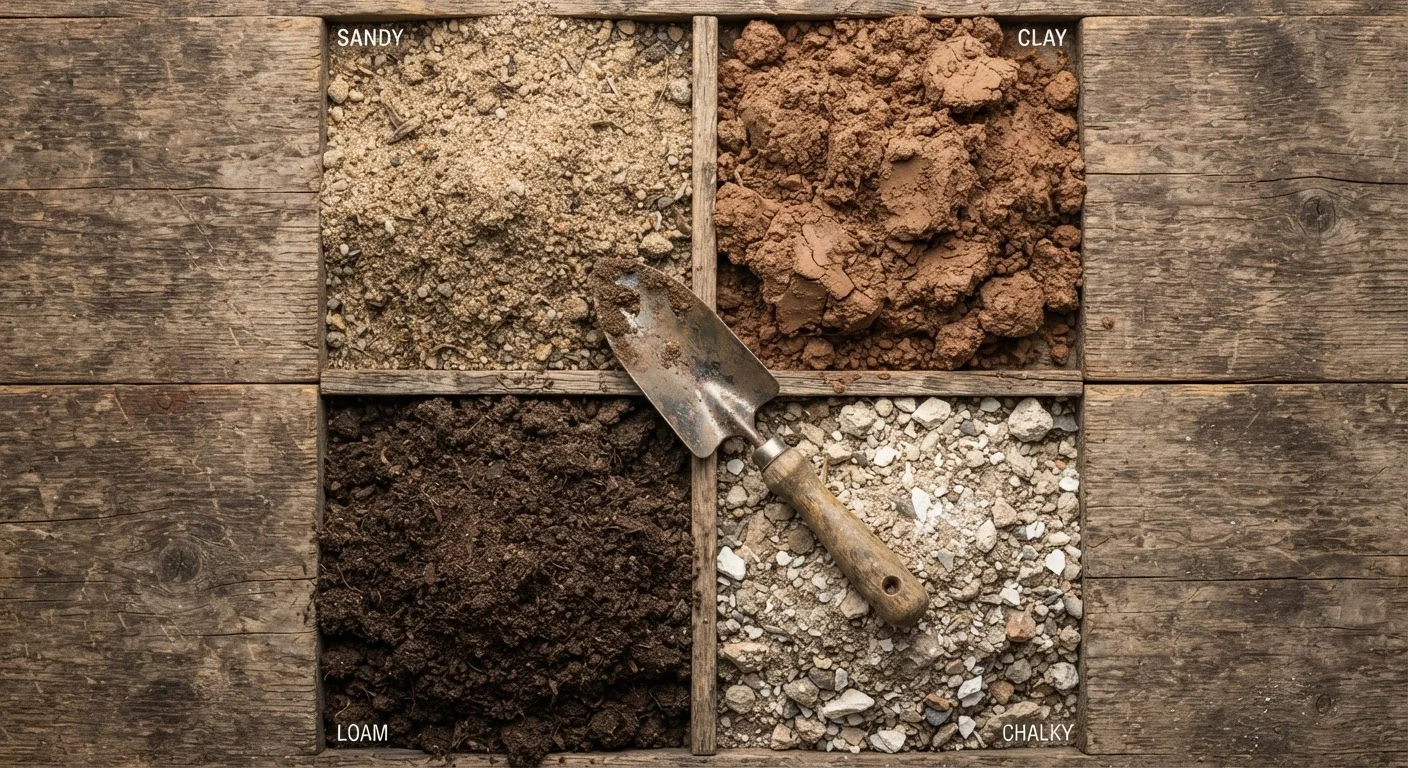
Here's a plain-language breakdown of the five types you'll commonly encounter in US home gardens:
- Sandy soil - Gritty to the touch, drains fast, warms up quickly in spring. Nutrients wash out easily, so it needs frequent amendment.
- Clay soil - Smooth and sticky when wet, rock-hard when dry. Nutrient-rich but poorly drained; easily compacted by foot traffic.
- Silty soil - Smooth and slippery, almost floury when dry. Holds moisture better than sand but can form a surface crust that blocks seedlings.
- Loamy soil - The gold standard: a balanced mix of sand, silt, and clay. Drains well, holds moisture, and crumbles easily in your hand.
- Chalky soil - Often shallow, stony, and free-draining. Naturally alkaline (high pH), which locks out certain nutrients and limits plant choices.
If you're brand new to gardening, our complete first-timer's roadmap explains how soil fits into the bigger picture of setting up your first garden.
~50%
Healthy soil that is pore space (air and water)
According to the USDA Natural Resources Conservation Service, roughly half of healthy topsoil volume consists of pore space critical for root growth and water movement.
6.0-7.0
Optimal soil pH range for most vegetables
Most cooperative extension services cite this pH range as ideal for nutrient availability in common vegetable crops.
1-3 seasons
Typical time to see soil structure improvement
Consistent organic matter additions generally produce noticeable improvement in soil workability and drainage within one to three growing seasons, according to university extension guidelines.
How to Test Your Soil at Home
You don't need a laboratory to get a useful read on your soil. Two simple tests will tell you most of what you need to know.
The Squeeze Test
Take a small handful of moist soil and squeeze it firmly. Open your hand and observe: if it crumbles apart, you likely have sandy or loamy soil. If it holds a tight ribbon and feels slick, it's clay-dominant. If it falls apart slowly and feels silky, it's probably silty.
The Jar Test
Add about one cup of soil to a clear jar, fill it with water, put a lid on, and shake vigorously. Let it sit undisturbed for 24 hours. Sand settles to the bottom first (within minutes), silt settles in the middle layer, and clay particles remain suspended near the top or form the uppermost layer. The relative depth of each layer gives you an approximate ratio of your soil's composition.
pH Testing
Soil texture and pH are separate measurements. Chalky soils tend to be alkaline (pH above 7), peat-heavy soils tend to be acidic (pH below 6), and most vegetable gardens do best around pH 6.0-7.0. Simple soil pH test kits are widely available at garden centers and give you results in minutes.
Test Before You Amend
It's tempting to dump bags of amendment on your garden beds before you really know what your soil needs. Do the jar test and a pH test first - you may find your soil is closer to ideal than you expected, saving you time and money on unnecessary purchases.
Improving What You Have
The most important thing to understand about soil improvement is this: you're working with your existing soil, not replacing it. Adding organic matter - compost, aged manure, or leaf mold - is the single most effective thing most home gardeners can do, regardless of their soil type.
- For sandy soil: Work in generous amounts of compost each season to improve moisture retention and give nutrients somewhere to anchor.
- For clay soil: Add coarse compost or aged bark to open up the structure. Avoid working clay soil when it's wet - it compacts and damages the structure.
- For chalky soil: Acidifying amendments like sulfur can lower pH over time, but this is slow. Easier to focus on plants that tolerate alkaline conditions, such as lavender, clematis, and many herbs.
- For silty soil: Compost helps prevent surface crusting; mulching between plants keeps the structure open.
Our guide on making compost from kitchen scraps walks you through producing your own amendment from scratch - one of the most cost-effective improvements you can make.
Once your soil is in better shape, consider whether raised beds or in-ground planting makes more sense for your situation - your soil type often influences that decision significantly.
You can also layer mulch over your beds to slow moisture loss and suppress weeds while your soil structure improves over time.