

Key Takeaways
Why Watering Myths Are Especially Costly
Of all the mistakes beginners make in the garden, watering errors are among the most common - and the most damaging. Unlike underfeeding or incorrect pruning, which tend to cause slow, visible decline, watering mistakes often produce symptoms that are easy to misread. A struggling plant gets more water. More water makes it worse. The cycle continues until the plant is beyond recovery.
The myths below are persistent precisely because some of them feel intuitively correct. Understanding what's actually happening in the soil and at the root zone changes how you interpret what you see above ground. For a broader look at how misconceptions create avoidable problems around the home, our piece on DIY home improvement myths covers similar ground in a different context.
Myth
You should water your garden every day to keep plants healthy.
Fact
Most garden plants thrive with deep, infrequent watering - typically once or twice a week, depending on soil, climate, and plant type.
Daily watering keeps the top inch of soil perpetually damp while preventing moisture from reaching deeper root zones. Roots instinctively grow toward water; if moisture never penetrates below the surface, roots remain shallow and structurally weak. Consistently wet soil also drives out the oxygen roots need to function, creating conditions ripe for root rot and soil-borne fungal disease. A better approach is to water deeply and then allow the top few inches to dry out before watering again - this encourages roots to grow downward where soil temperatures are more stable.
Myth
Wilting plants always mean they need more water.
Fact
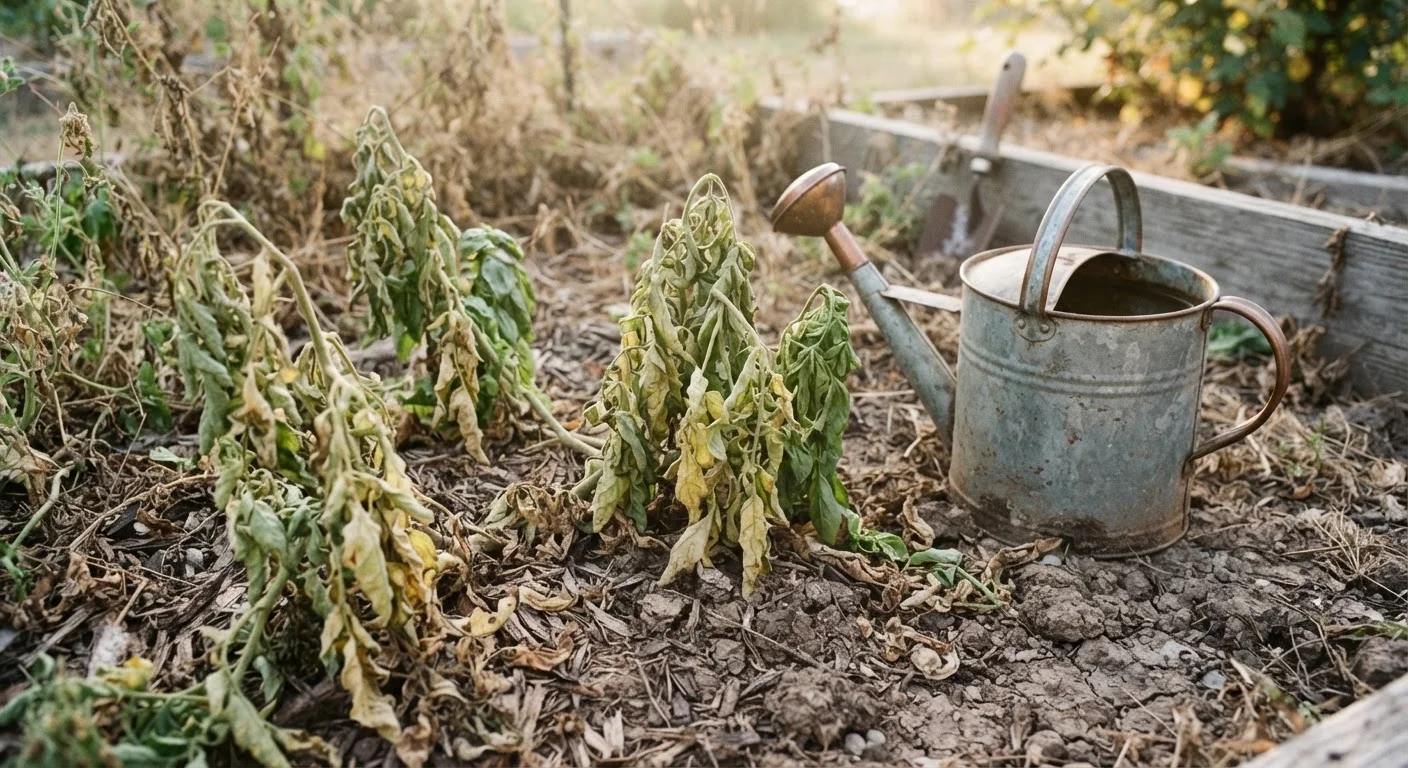
Wilting is a stress response that can be triggered by both underwatering and overwatering - the treatments are opposite, so misreading the sign can accelerate plant decline.
When roots are waterlogged and oxygen-deprived, they lose the ability to absorb water efficiently. The plant wilts not from drought but from the root system's failure - adding more water makes the situation worse. Before reaching for the hose, push a finger or a moisture meter about two inches into the soil. If it feels wet or cool, hold off on watering. If the soil is dry and pulling away from container edges, water is likely needed. Also check for other stressors: heat-scorched plants often droop mid-afternoon and recover on their own by evening without any intervention.
Myth
Watering in the evening is fine - it's cooler, so less evaporates.
Fact
Evening watering leaves foliage wet overnight, significantly increasing the risk of fungal diseases such as powdery mildew and botrytis (grey mould).
While it's true that lower temperatures reduce evaporation, the trade-off is that moisture sitting on leaves for many hours in still, cool air creates an environment where fungal spores can germinate and spread. Morning watering is generally considered the better choice: soil and foliage have the full day to dry out, and plants can absorb moisture before the heat of midday. If morning watering isn't practical, aim water at the soil base rather than overhead so foliage stays dry regardless of the time of day.
Myth
More water always helps plants recover from heat stress.
Fact
Heat-stressed plants often need shade and air circulation more than extra water - excess irrigation during heat events can compound stress rather than relieve it.
During intense heat, a plant's primary challenge is often transpiration overload: it loses water through leaves faster than even healthy roots can supply it. Drenching already-warm soil can push soil temperatures higher and displace the air pockets roots rely on. If you're responding to a heat event, check soil moisture first. For container plants, move them to a shadier spot temporarily. For in-ground plants, a layer of mulch over the root zone helps moderate soil temperature far more effectively than repeated watering. See our guide to garden mulch for a balanced breakdown of what mulching actually does.
Myth
If the soil surface looks dry, the plant definitely needs water.
Fact
Soil can be dry at the surface but adequately moist two to three inches down - surface appearance alone is an unreliable indicator of actual moisture needs.
The top layer of soil dries out quickly from sun and wind exposure, often within hours of watering. Judging by surface appearance alone leads to overwatering, especially in sandy soils that drain rapidly at the top but hold moisture at depth. The finger-test (inserting your index finger two inches into the soil) remains one of the most reliable low-tech methods. For containers, lift the pot - a noticeably lighter pot compared to after watering is a good signal that the growing medium has dried out and water is due.
Myth
All garden plants need roughly the same amount of water.
Fact
Water needs vary enormously by plant species, growth stage, soil type, and local climate - a one-size approach will always benefit some plants while harming others.
Succulents and Mediterranean herbs like rosemary and lavender are adapted to dry conditions and can be killed by the same watering schedule that would suit a moisture-loving fern or vegetable garden. Newly planted specimens generally need more frequent watering while establishing root systems, then far less once settled. Sandy soils drain fast and may require more frequent irrigation, while clay soils retain water longer and need less. Grouping plants by water need - a practice sometimes called hydrozoning - saves time, reduces waste, and helps each plant thrive on its own terms.
Building a Smarter Watering Routine
Correcting these myths opens the door to a more effective routine. A few practical principles help:
- Water deeply, not frequently. Aim for moisture to penetrate at least six inches into the soil. This typically means a slower, longer watering session rather than a quick daily sprinkle.
- Use mulch as a force multiplier. A two- to three-inch layer of organic mulch over root zones slows evaporation dramatically, reducing how often you need to water at all. Our mulch trade-offs guide explains the nuances worth knowing before you start.
- Group plants by water need. Placing thirsty plants together and drought-tolerant ones in a separate area means you can water zones appropriately rather than applying a uniform schedule across your entire garden.
- Invest in a moisture meter. Inexpensive and widely available, a basic soil moisture meter removes the guesswork and is particularly useful for beginners still developing a feel for their soil.
Overwatering Is the Leading Cause of Houseplant Death
Container plants are especially vulnerable because excess water has nowhere to drain if pots lack adequate drainage holes. Before watering any potted plant, always check that the growing medium has partially dried out and that water can freely exit the container. Sitting in a saucer of standing water for more than an hour can begin to suffocate roots.
Healthy watering habits also support a garden's resilience against pests. Well-watered but not waterlogged plants are better equipped to resist damage - a point explored further in our natural pest control guide.