

Key Takeaways
Why Preventive Maintenance Pays Off
For most young adults, a car is the second-largest expense after rent. That makes protecting it with routine maintenance one of the highest-return habits you can build. The math is straightforward: an oil change costs $40-$80; an engine seized from oil starvation can cost $4,000 or more. Preventive care is not optional upkeep - it's financial self-defense.
Beyond cost, reliability matters. A car that breaks down on the way to work or stranded on a highway is a safety problem, not just an inconvenience. The good news is that most preventive maintenance is predictable, schedulable, and either affordable to have done or manageable to do yourself with basic tools.
See our first-time ownership lessons for a broader look at the costs and surprises that catch new owners off guard.
$1,200+
Average annual car repair cost per AAA
AAA's annual 'Your Driving Costs' study consistently finds that unexpected repair costs average over $1,200 per year for drivers who skip routine maintenance.
80%
Of breakdowns are preventable
Industry estimates from automotive associations suggest the majority of roadside breakdowns are linked to maintenance items that were overdue or neglected.
25%
Fuel economy lost from underinflated tyres
The U.S. Department of Energy estimates tyres underinflated by just 10 PSI can reduce fuel economy by roughly 0.2% per PSI, with cumulative losses reaching meaningful percentages.
Your Owner's Manual: The Real Roadmap
Every maintenance article online - including this one - is general guidance. Your owner's manual is specific to your engine, transmission, and climate requirements. It lists exact fluid specifications, service intervals by mileage and months, and which components need inspection at which points. If you bought a used car without a manual, you can usually download a PDF from the manufacturer's website for free using your model year and trim.
One practical step: turn to the maintenance schedule section and mark the intervals you're approaching. Many owners skip this and end up following whatever a quick-lube shop posts on the wall - which may not match what your car actually needs.
Set a calendar reminder tied to your odometer, not just the calendar - some months you drive far more than others, and mileage-based intervals are what actually matter.
Manufacturer service intervals are expressed in miles or kilometres first; calendar months are a secondary trigger for low-mileage drivers, so tracking mileage keeps you accurate.
When a mechanic recommends an unscheduled service, ask them to show you the relevant page in your owner's manual before agreeing - legitimate recommendations will be there.
Service upselling is common. Cross-referencing the manual on the spot is a practical way to avoid paying for work the manufacturer doesn't actually require at that mileage.
Oil and Fluids: The Foundation
Engine oil is the single most important fluid in your car. It lubricates moving parts, reduces heat, and carries contaminants to the filter. Dirty or low oil accelerates engine wear dramatically. Most modern vehicles call for an oil and filter change every 5,000-10,000 miles depending on oil type (conventional vs. synthetic) and driving conditions - check your manual for the exact figure, not the sticker a shop puts on your windscreen.
Check Five Fluids in Five Minutes
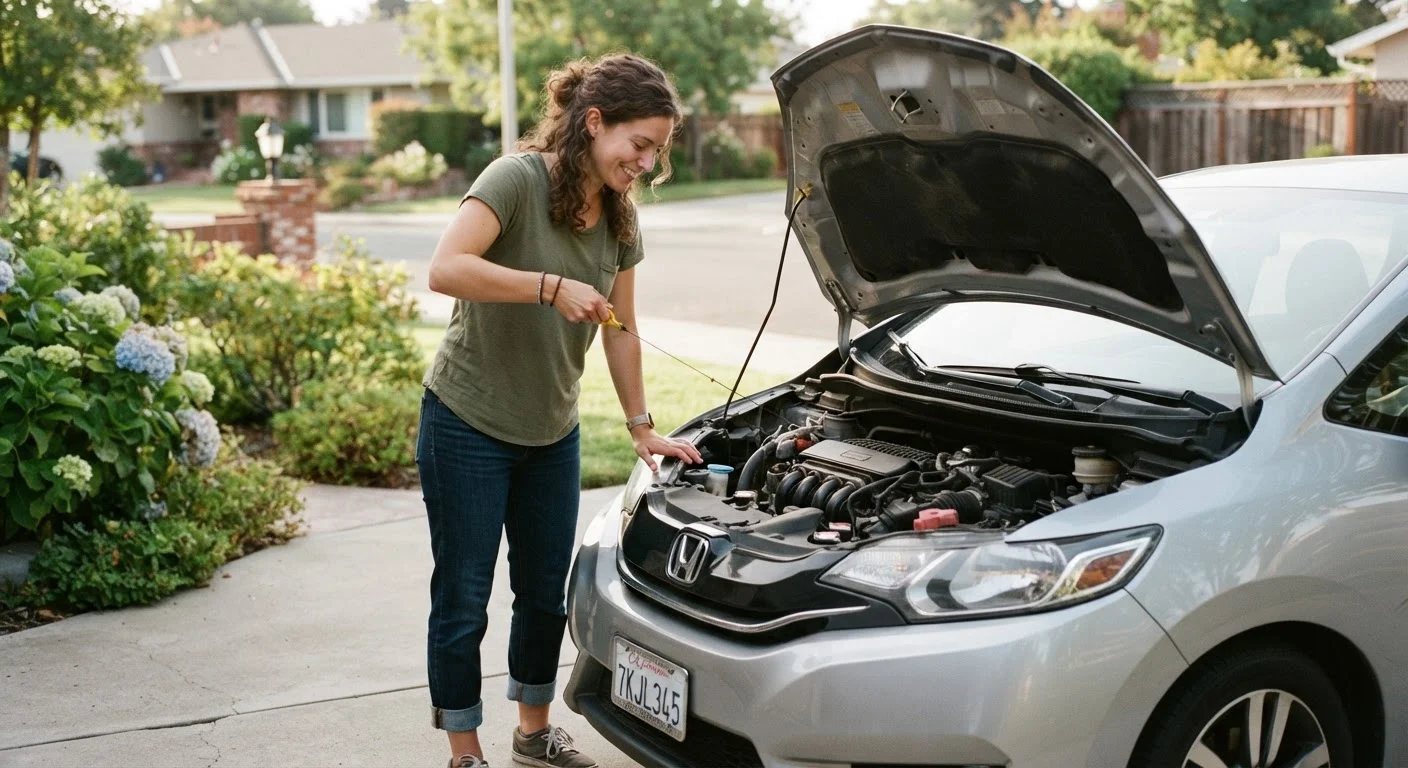
Once a month, with the engine cold and on level ground, check engine oil, coolant, brake fluid, power steering fluid (if applicable), and washer fluid. This five-minute habit catches low or contaminated fluid before it becomes a repair bill. Keep your owner's manual open to the fluid specification pages so you top up with exactly what the manufacturer requires.
Other critical fluids include coolant (which prevents overheating and freezing), brake fluid (which transfers pedal force to the calipers), transmission fluid, and power steering fluid. Each has its own change interval. Brake fluid, for instance, absorbs moisture over time and should typically be replaced every two years or per manufacturer guidance - not just when it looks low.
Building a routine of monthly fluid checks is one of the preventive habits worth building early that separates cars that last from cars that fail.
Tyres, Brakes, and Steering
Tyres are your only contact with the road, making their condition both a safety and an economy issue. Check tyre pressure monthly - use a gauge, not a visual estimate. Correct pressure is listed on the sticker inside your driver's door jamb, not on the tyre sidewall. Rotate tyres every 5,000-7,500 miles to even out wear, and check tread depth with the penny test: if you can see the top of Lincoln's head when the penny is inserted head-first into a tread groove, it's time to replace them.
Brakes should be inspected at least annually or whenever you hear squealing, grinding, or feel pulsation through the pedal. Brake pads typically last 25,000-70,000 miles depending on driving style, but that range is wide enough that physical inspection matters more than mileage alone. Brake work should be performed by a qualified mechanic unless you have demonstrated experience with hydraulic systems.
Never Ignore a Warning Light
Dashboard warning lights - especially the oil pressure light, temperature warning, or brake warning - signal conditions that can cause serious, expensive damage within minutes of driving. Pull over safely and address the issue before continuing. Do not assume a warning light is a sensor glitch without having it diagnosed by a qualified mechanic.
For steering and suspension, listen for clunking over bumps, pulling to one side, or vibration at highway speeds - these can indicate worn ball joints, tie rods, or alignment issues that affect handling safety.
Filters, Belts, and Longer-Interval Items
The engine air filter keeps debris out of the intake. It's typically replaced every 15,000-30,000 miles and is one of the easiest DIY tasks on most vehicles - it often requires no tools. A clogged filter can reduce throttle response and fuel economy. The cabin air filter (which cleans air reaching occupants) is similarly simple to replace and is often overlooked entirely by first-time owners.
Timing Belt Failure Is Catastrophic
On interference engines - which describe most modern cars - a snapped timing belt can cause pistons and valves to collide, destroying the engine instantly. Repair bills can exceed $5,000. Check your owner's manual for the timing belt or timing chain replacement interval and do not defer it. If you bought a used car, verify whether the belt has already been replaced.
Spark plugs, which ignite the air-fuel mixture, typically last 30,000-100,000 miles depending on whether they're standard or iridium/platinum. Worn plugs cause rough idling, hard starts, and reduced fuel economy. Your owner's manual will specify the type and interval.
See the month-by-month first-year checklist for a practical timeline that maps these longer-interval tasks to your ownership milestones.
Building a Maintenance Log
A maintenance log is a simple record of every service performed: date, mileage, what was done, and who did it. It takes two minutes to update and pays dividends in three ways. First, it tells you exactly what's due next. Second, it provides proof of care that supports resale value - buyers and dealers will pay more for a documented vehicle. Third, it protects you if a warranty dispute arises.
A spreadsheet, a notes app, or even a paper folder in the glove box all work equally well. The format doesn't matter; consistency does. Keep every receipt, even for fluid top-ups.
Maintenance is part of a broader ownership mindset. The Car Ownership Basics hub covers the full picture - from insurance decisions to understanding your total cost of ownership - while the Driving Skills & Safety hub addresses the habits that protect your car before any mechanical issue arises.
Dealer vs. Independent Shop
Having your car serviced at an independent shop rather than a dealership does not void your warranty for routine maintenance, provided you keep receipts and use fluids that meet manufacturer specifications. This is protected under the Magnuson-Moss Warranty Act in the United States. Always verify this with your specific warranty documentation.
This article is for general informational purposes only. Always consult your vehicle's owner's manual and a qualified mechanic for maintenance decisions specific to your car's make, model, mileage, and condition.