

Key Takeaways
Why the Screen-Sleep Debate Is More Complicated Than Headlines Suggest
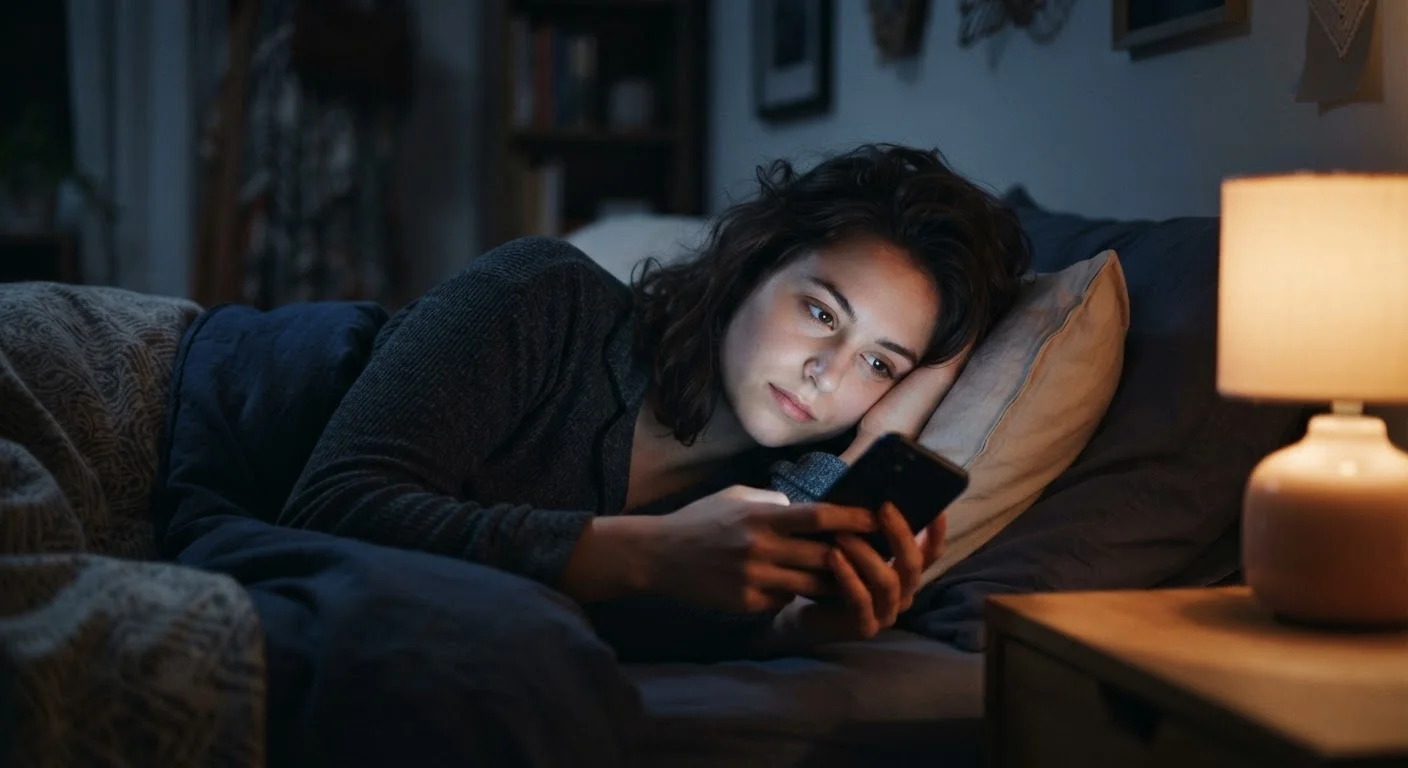
You've probably heard some version of the rule: no screens for an hour before bed. It sounds simple, but the science behind it is considerably more nuanced. Research does link evening screen use to later bedtimes and reduced sleep quality - but the mechanisms involved are multiple, and not all screen habits are equally harmful.
Two main pathways are at work. The first is biological: the blue-wavelength light emitted by phone and laptop displays can suppress melatonin, the hormone that signals your brain it's time to sleep. The second is behavioral: stimulating, emotionally activating content - news feeds, heated comment sections, competitive gaming - keeps your nervous system alert at exactly the wrong moment. Understanding which pathway is driving your sleep problems makes all the difference in choosing a fix. For a broader look at why sleep quality matters so much, see how sleep affects mood, focus, and long-term health.
Myth
All screen use before bed is equally bad for sleep.
Fact
The type of content and the emotional activation it creates matters at least as much as the light exposure itself.
Lumping all screen activity together misses a critical distinction. Passively watching a calm show or reading an e-book at low brightness is very different from scrolling an emotionally charged social feed. Research published in sleep science journals consistently finds that psychological arousal - anxiety, excitement, competitive engagement - is a strong independent predictor of delayed sleep onset, separate from any lighting effect. Targeting the content you consume in the final hour before bed is often a higher-leverage change than eliminating screens entirely.
Myth
Blue light from your phone is the main reason screens disrupt sleep.
Fact
Blue light is a real but often secondary factor; behavioral stimulation and irregular timing typically have a larger practical impact.
Blue-wavelength light does suppress melatonin secretion, and this is well-documented in controlled laboratory conditions. However, in everyday environments where overhead lighting, TVs, and other light sources are also present, the incremental contribution of a phone screen is relatively modest. Multiple sleep researchers have noted that the irregular bedtimes and the mentally activating nature of interactive content are harder to separate from the blue-light effect - and may be more consequential for most people's sleep in practice.
Myth
Night mode or dark mode on your phone effectively eliminates the sleep disruption.
Fact
These settings help reduce blue-light exposure but do not remove the arousal effects of stimulating content or irregular screen habits.
Warm-color display filters and reduced brightness do meaningfully lower blue-light emission, and using them is a worthwhile habit. But they are not a complete solution. If you're still scrolling stressful news or playing a competitive mobile game at midnight - just with the screen set to warmer tones - your nervous system can remain activated. Night mode is a useful tool, not a permission slip to continue high-stimulation screen use right up to the moment you close your eyes.
Myth
You need to stop all screen use at least one hour before bed to protect your sleep.
Fact
A strict hour-long screen ban lacks strong universal evidence; a gradual wind-down with lower-stimulation content is better supported.
The one-hour rule is widely repeated, but it is a general guideline rather than a finding with a precise evidence base. Individual sensitivity to light and arousal varies considerably. What the evidence does support is a consistent, calming pre-sleep transition - sometimes called sleep hygiene. This means winding activity down gradually, shifting to lower-stimulation content, reducing brightness, and keeping a reasonably consistent bedtime. These practices are more robustly linked to better sleep outcomes than a hard stop at a specific minute mark. See how to structure a daily routine that supports both energy and rest for evidence-informed framing.
Myth
Using your phone in bed only affects how quickly you fall asleep.
Fact
Evening screen habits can also influence sleep quality, mood the next day, and the sleep-mental health cycle more broadly.
The effects of disrupted sleep extend well beyond falling asleep a few minutes later. Fragmented or shortened sleep is linked to reduced emotional regulation, poorer concentration, and increased anxiety the following day - which can, in turn, make it harder to wind down the next evening. This creates a reinforcing loop. The two-way relationship between sleep and mental health is often underestimated, and evening screen habits that chip away at sleep duration are one of several levers that can tighten or loosen that cycle.
What the Evidence Actually Supports - and What You Can Do Tonight
The research base is genuine but often overstated in popular coverage. Studies do show that blue light at night shifts circadian timing, but the magnitude of this effect in real-world conditions - where screens are rarely the only light source - is more modest than laboratory findings suggest. Behavioral arousal from content is frequently the larger culprit, particularly for young adults who use social platforms heavily in the evening.
~90%
Adults who use a device in the hour before sleep
A survey by the National Sleep Foundation found roughly 9 in 10 Americans use some form of electronic device in the hour before bed at least a few nights per week.
~30 min
Average delay in melatonin onset from bright screen use
Research has found that bright, blue-rich light exposure in the evening can delay the onset of melatonin secretion by approximately 30 minutes, though real-world screen brightness produces smaller effects.
2-3×
Increased sleep problem odds linked to heavy evening social media use
Studies in adolescents and young adults suggest those with the heaviest pre-sleep social media use are two to three times more likely to report sleep disturbances, though causality is difficult to isolate.
The practical upshot: you don't need to go screen-free after sundown. Targeted adjustments tend to work better and stick longer than strict bans. Enable night-mode or warm-color display settings on your devices; most smartphones and laptops have these built in. Drop screen brightness in the hour before sleep. And pay attention to what you're consuming - a calm podcast, an e-reader at low brightness, or a gentle video is very different from doomscrolling social media. For a structured approach to building these habits into your evening, a practical wind-down routine can help quiet a busy mind and ease the transition into rest.
Chronic Poor Sleep Deserves Professional Attention
If you regularly struggle to fall asleep, stay asleep, or feel unrefreshed after a full night's rest - and adjustments to your screen habits haven't helped - this may reflect an underlying sleep disorder or mental health factor. These issues are treatable, but they require an assessment from a qualified healthcare provider, not just a habit tweak. Don't delay seeking help by assuming screens are the whole story.
If you're curious about where screens fit into your broader daily structure, it's worth thinking about how your evening habits connect to your morning ones - morning vs. evening routines each shape your day in distinct ways. And if you've wondered whether a full digital detox might be better, the evidence on digital detoxes is more mixed than you might expect.
This article is for general informational and educational purposes only and is not a substitute for professional medical advice. If you experience persistent sleep difficulties, consult a qualified healthcare provider.