

Key Takeaways
Spaced Repetition & Active Recall
Spaced repetition is a study method where you review material at increasing time intervals - revisiting information just before you're likely to forget it. Active recall is the practice of forcing yourself to retrieve information from memory, rather than passively re-reading notes. Together, these two techniques work with the brain's natural memory architecture to make learning stick far longer than traditional study habits.
Both techniques are grounded in cognitive science: spaced repetition exploits the 'spacing effect' first described by Hermann Ebbinghaus, while active recall leverages the 'testing effect,' documented extensively in memory research.
Why Most Study Habits Fail at the Memory Level
Highlighting, re-reading, and marathon study sessions feel productive in the moment - but cognitive science has consistently shown they produce shallow retention. The core problem is that passive review creates recognition, not recall. You recognize the material when you see it again, but struggle to summon it on your own when it matters.
This is where spaced repetition and active recall intervene. Both techniques are designed to change what happens at the neurological level, not just the behavioral one. They make retrieval effortful - and that effort is precisely the mechanism that builds durable memory. As part of a broader self-directed learning approach, these methods give you more control over what actually sticks.
~50%
Information forgotten within one hour without review
Ebbinghaus's foundational forgetting curve research demonstrated that roughly half of new information is lost within an hour of learning it if no review takes place.
2×
Retention improvement from retrieval practice vs. re-reading
A widely cited study published in the journal Science (Roediger & Karpicke, 2006) found that students who practiced retrieval retained significantly more material one week later compared to those who studied by re-reading.
4-5×
Fewer study sessions needed with spaced repetition
Research on spaced learning suggests learners can achieve the same retention level with a fraction of the total study time when reviews are optimally spaced compared to massed practice.
How Spaced Repetition Works in Practice
Spaced repetition is built on a simple observation: memory decays predictably over time, but reviewing material at the right moment before forgetting resets and strengthens it. Each successful review pushes the next review further into the future, meaning you spend less time on material you know well and more time on what needs reinforcing.
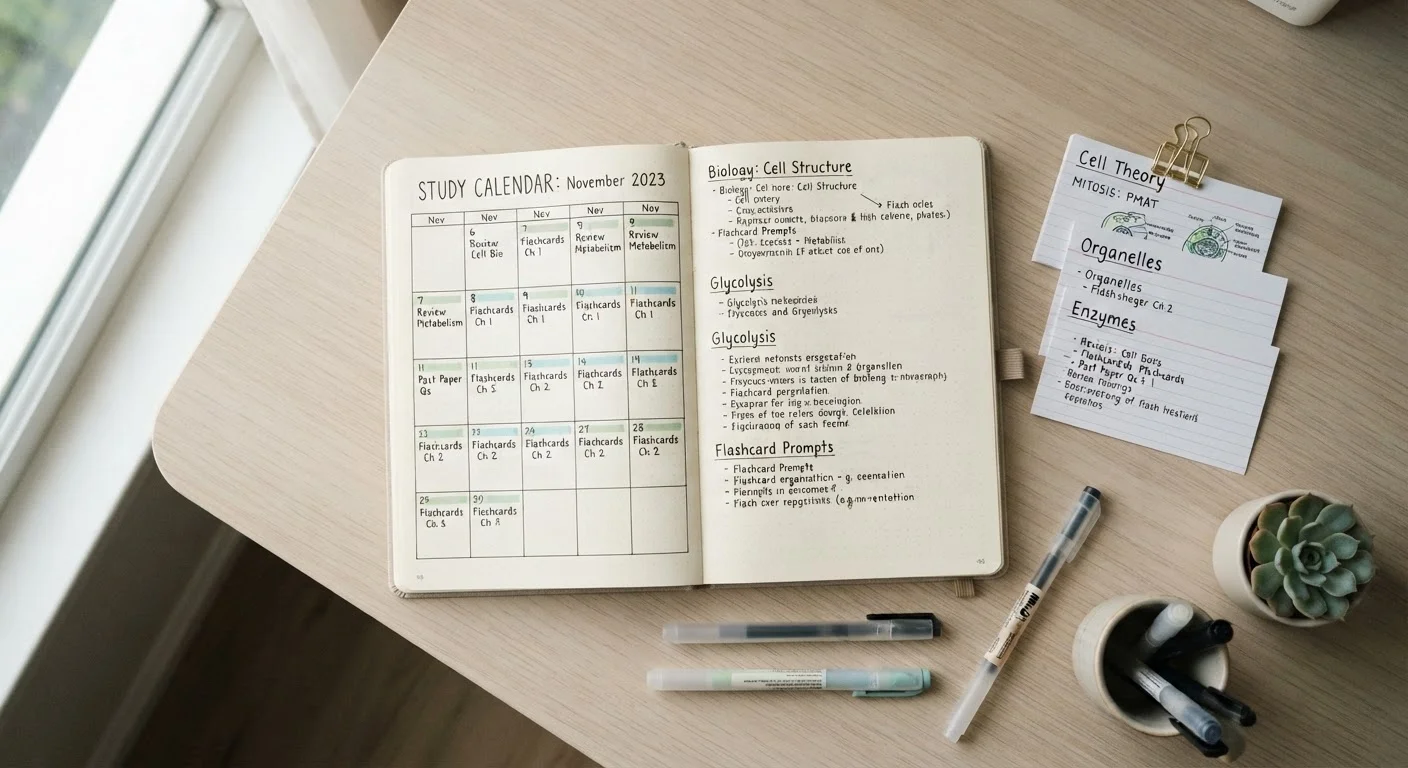
In practical terms, this might mean reviewing a new programming concept the day after learning it, then again three days later, then a week later. Digital tools can automate this scheduling, but a low-tech approach with labeled index piles works too. The key principle is timing - reviewing too soon wastes time; reviewing too late means you've already forgotten and must relearn from scratch.
Active Recall: Harder in the Moment, Better in the Long Run
Active recall means closing your notes and asking: What do I actually remember? It sounds simple, but it requires resisting the urge to look things up the second memory becomes uncomfortable. That discomfort is the mechanism - struggling to retrieve information is what signals your brain to consolidate it more deeply.
Practical implementations include writing summaries from memory after a lecture, using flashcards where you must produce an answer before flipping, or answering practice questions before reviewing the material again. Even explaining a concept aloud to no one in particular - sometimes called the Feynman Technique - activates the same retrieval process.
If you're building a structured study habit, pairing active recall with a personal learning plan can help you schedule retrieval sessions consistently rather than sporadically.
Start Small With a Two-Minute Rule
When first building an active recall habit, commit to just two minutes of retrieval practice immediately after each study session. Write down everything you remember on a blank page before reviewing your notes. This single habit, done consistently, can significantly improve how much you retain from any course or reading session.
Applying Both Techniques to Online Courses
Online learning environments - whether video lectures or reading-based courses - often make passive consumption too easy. Auto-play moves you to the next lesson before the last one has settled. Spaced repetition and active recall push back against that drift.
After any lesson, spend five minutes writing down everything you remember without looking at notes. Flag anything you couldn't recall, and add it to a review queue. Revisit that queue on a spaced schedule rather than cramming before a final quiz. This approach pairs naturally with the broader habits covered in getting the most out of any online course.
The format of your course matters less than the retrieval practice you layer on top of it. Whether you prefer video or text - explored further in video lectures vs. reading-based courses - the same principles apply: test yourself, then wait, then test again.
For a deeper look at why consuming more content doesn't automatically mean learning more, see reading more vs. retaining more.
“The act of retrieving information from memory is itself a powerful learning event - it does more than measure what we know; it changes what we know.”
— Henry L. Roediger III, Cognitive psychologist and memory researcher, Washington University in St. Louis