

Key Takeaways
Envelope Budgeting
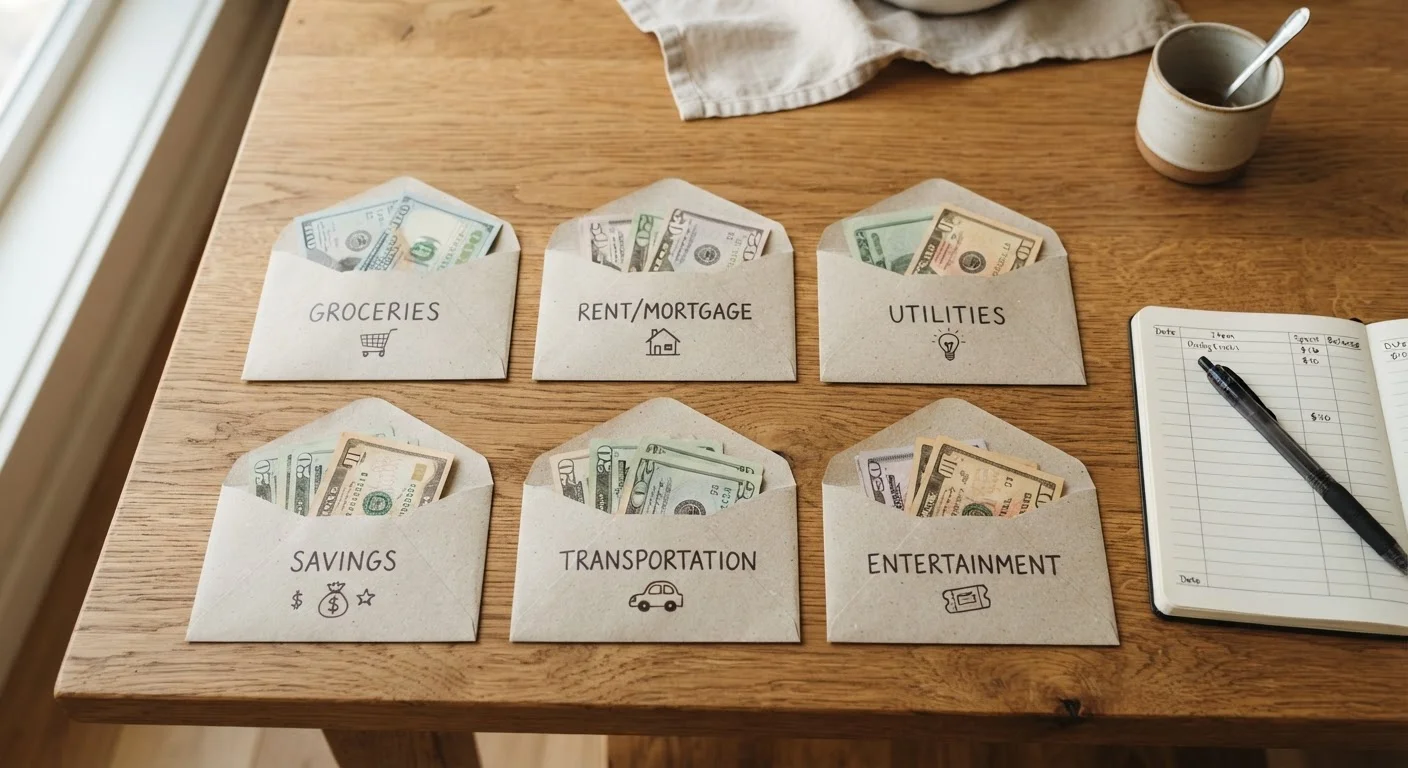
Envelope budgeting is a cash-based spending system where you divide your take-home income into physical envelopes, each labeled for a specific spending category - groceries, gas, dining out, and so on. Once an envelope is empty, spending in that category stops until the next pay period. The system creates a hard boundary that many digital tools cannot replicate.
Digital adaptations of the envelope method use virtual "envelopes" or spending buckets within budgeting software, applying the same zero-sum allocation logic without requiring physical cash.
How the Envelope System Works
The mechanics are straightforward. At the start of each pay period, you withdraw cash and divide it among labeled envelopes - one per spending category. When you buy groceries, the money comes out of the grocery envelope. When the dining envelope hits zero, dinner out waits until next month.
This simplicity is the point. There is no app to check, no transaction to log, and no end-of-month surprise. The balance is always visible because it is sitting in front of you.
Most practitioners apply envelopes only to variable expenses - the categories where spending tends to drift. Fixed obligations like rent, utilities, and minimum debt payments are typically handled separately through automatic transfers or bill pay, since those amounts don't fluctuate and don't benefit from a cash envelope.
Label Envelopes Before You Get Paid
Set up your envelopes - physical or digital - before your paycheck arrives. Allocating money immediately after it lands reduces the temptation to spend without a plan. Treat it like paying yourself first: the envelopes get funded before discretionary decisions get made.
Why Cash Creates a Different Relationship With Spending
Research in behavioral economics has consistently found that paying with cash feels more "painful" than using a card. Handing over physical bills engages a different psychological response than a tap or swipe, which can make people more deliberate about purchases. This is sometimes called the "pain of paying."
That psychological friction is the envelope method's main advantage. When you can see exactly how much is left, you make different decisions. Choosing to order takeout when there are only $12 left in your dining envelope is a conscious trade-off, not an invisible one.
“The psychology of spending is as important as the math. When people physically handle money, they tend to make more deliberate choices than when transactions are invisible.”
— Behavioral Economics Research Community, Academic consensus summarized across multiple peer-reviewed studies on payment method and spending behavior
For people who find that their bank app balance doesn't change their behavior - who spend freely until a statement shock arrives - the envelope method reintroduces the cost of each purchase in a tangible way.
Digital Adaptations: The Same Logic, Without the Bills
Physical cash isn't always practical. Direct deposit, online payments, and contactless transactions have made cash an awkward fit for many modern lives. That's why digital envelope systems have grown in popularity - they replicate the category-cap logic inside an app or spreadsheet.
In a digital version, each spending category gets an allocated balance at the start of the month. You manually log purchases against the relevant category, or link your bank account so transactions populate automatically. When a category balance reaches zero, you've hit your limit - even if the bank account still shows funds available.
If you're weighing whether to manage this through a spreadsheet or a dedicated app, our comparison of spreadsheets and budgeting apps walks through the practical trade-offs of each approach.
36%
Americans with a detailed monthly budget
A Gallup survey found that roughly one in three Americans maintains a detailed household budget, suggesting most people lack a structured spending plan.
~$1,500
Average monthly discretionary spending per U.S. consumer
Bureau of Labor Statistics Consumer Expenditure data indicates that food away from home, entertainment, and apparel together represent a significant share of household outlays - categories where envelope limits are most effective.
Setting Up Your First Envelope Budget
Start by listing your monthly take-home income - what actually lands in your account after taxes. Then subtract fixed obligations: rent or mortgage, insurance premiums, minimum loan payments, and any subscriptions you're committed to. What's left is your discretionary income, and that's what you allocate across envelopes.
Common starting categories include: groceries, dining and takeout, gas and transportation, entertainment, clothing, personal care, and a miscellaneous buffer. Keep the number of categories manageable at first - six to ten is a reasonable range. Too many envelopes becomes its own administrative burden.
One area first-time budgeters frequently overlook is irregular expenses: annual subscriptions, car registration, or a dentist visit. Our article on hidden spending categories first-time budgeters miss covers this in detail. Consider creating a single "irregular expenses" envelope and contributing a small amount each month so the cost is spread out.
After your first month, review what worked. Envelopes that consistently ran dry may need a larger allocation; envelopes with leftover cash may have been over-funded. Adjust, and repeat. Building habits that keep a budget working over time is what turns a one-month experiment into lasting change.
When Envelope Budgeting Is - and Isn't - a Good Fit
The envelope method works well for people who are visual, hands-on, or who have struggled with overspending in specific categories. It's also a strong entry point if you've bought into common budgeting myths and found that abstract systems feel too complicated to start.
It's less practical for people with highly irregular income, since allocating to fixed envelopes each month requires a relatively predictable paycheck. It also becomes cumbersome if most of your spending is online, since cash can't easily cover digital purchases.
If you're comparing envelope budgeting to other frameworks, it's worth understanding how it relates to methods like zero-based budgeting and the 50/30/20 rule. Each system has its own strengths, and the best method is the one you'll actually use consistently.
This article is for general informational and educational purposes only and does not constitute personalized financial advice. Consider speaking with a qualified financial professional to develop a budgeting approach suited to your specific circumstances.