

Key Takeaways
The 50/30/20 Rule
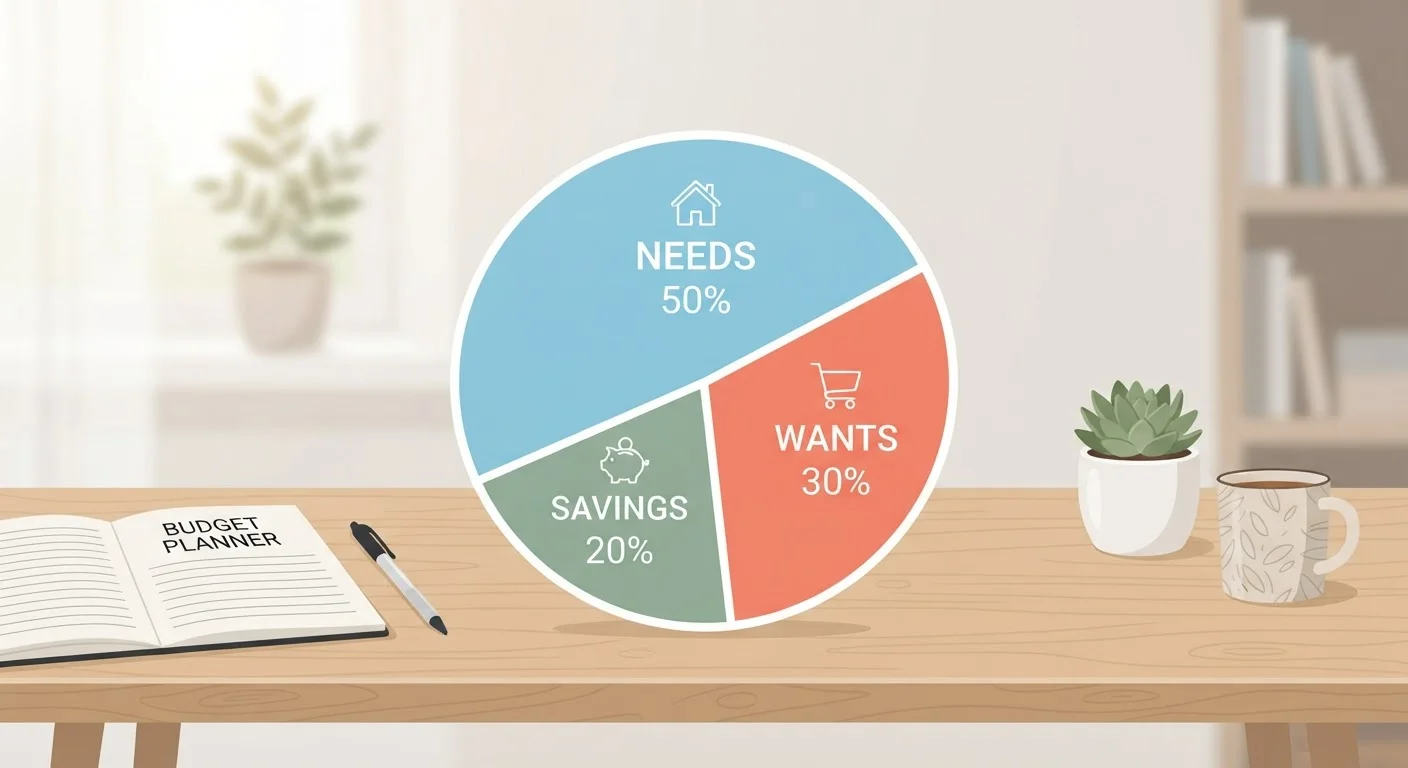
The 50/30/20 rule is a budgeting guideline that divides your after-tax income into three categories: 50% for needs, 30% for wants, and 20% for savings and debt repayment. It gives beginners a simple structure without requiring detailed tracking of every transaction. The goal is to create a balanced financial life by ensuring essentials are covered, enjoyment is built in, and future security is funded.
The framework was popularized by Senator Elizabeth Warren and her daughter Amelia Warren Tyagi in their 2005 book 'All Your Worth.' It applies to net (after-tax) income, not gross income.
Breaking Down the Three Categories
The simplicity of the 50/30/20 rule is its main appeal: instead of tracking dozens of budget lines, you monitor three broad buckets. Here is what each one contains.
50% - Needs
Needs are non-negotiable expenses required to live and work. These include rent or mortgage payments, utilities (electricity, water, heat), groceries, basic clothing, health insurance, transportation costs tied to employment, and the minimum required payments on any debts. A useful test: if eliminating the expense would jeopardize your housing, health, or job, it qualifies as a need.
30% - Wants
Wants are everything you choose to spend money on beyond bare essentials. Restaurant meals, streaming subscriptions, gym memberships, travel, hobbies, and shopping for non-essential items all fall here. The line between needs and wants can be blurry - for example, a phone plan is arguably a need, but upgrading to the newest model is a want.
20% - Savings and Debt Repayment
This slice funds your financial future. It covers contributions to an emergency fund, retirement accounts such as a 401(k) or IRA, and any debt payments above the required minimum - which help you pay off balances faster and reduce total interest paid. For more on how to put this 20% to work, explore the Saving & Debt hub for practical guidance.
Automate the 20% First
Before you pay any discretionary expenses each month, set up an automatic transfer of your savings amount to a separate account. Treating savings as a fixed, non-negotiable bill - rather than whatever is left over - is one of the most reliable ways to ensure it actually happens. Many employers also allow direct deposit splits, letting you direct a fixed percentage straight to a savings account on payday.
How to Apply It to Your Own Income
Start with your monthly take-home pay - the amount deposited after all taxes are withheld. If you receive irregular paychecks, use a conservative monthly estimate.
- Calculate each target amount. Multiply your after-tax monthly income by 0.50, 0.30, and 0.20 to get your dollar targets for each category.
- Categorize your current expenses. Review one to three months of bank and credit card statements. Label each expense as a need, want, or savings contribution.
- Compare actuals to targets. Identify which categories are over or under the guideline percentages.
- Adjust spending or income. If needs exceed 50%, look for ways to reduce fixed costs over time or increase income. If savings fall below 20%, trim the wants category first.
For a structured approach to this process, the Monthly Budget Setup Checklist walks through each step at the start of every month.
57%
Americans living paycheck to paycheck
A 2023 LendingClub report found that approximately 57% of U.S. adults described themselves as living paycheck to paycheck, underscoring how many households lack a structured savings framework.
20%
Recommended savings rate under the rule
Financial educators widely cite 20% of after-tax income as a reasonable savings and debt-repayment target for building long-term financial stability.
~$1,000
Median emergency fund balance held by Americans
Bankrate surveys have consistently found that many U.S. adults hold far less in emergency savings than the commonly recommended three-to-six months of expenses.
When the Rule Works - and When It Doesn't
The 50/30/20 rule works well as a starting framework for people who want simple structure without detailed tracking. It is particularly useful for:
- First-time budgeters who feel overwhelmed by granular spreadsheets.
- People with stable, predictable salaries and moderate cost-of-living expenses.
- Anyone who wants a quick gut-check on whether their overall spending is proportionate.
However, the rule has real limitations. In expensive cities - where rent alone can consume 40-50% of a modest salary - hitting the standard 50% needs target is genuinely difficult. Similarly, someone with significant student loan debt may find the 20% savings slice stretched thin if minimum payments already consume a large share of income.
The framework also does not account for life stage. A recent graduate building an emergency fund from scratch has different priorities than someone in their 40s accelerating retirement contributions. Treat the percentages as a benchmark, not a fixed law. Adjust them to reflect your actual circumstances and revisit them as your income or expenses change. To understand how this approach compares to a more detailed method, see Zero-Based Budgeting vs. the 50/30/20 Rule.
Once you have your allocations set, maintaining them requires consistent habits - not just a one-time setup. The habits that keep a budget working are what separate a plan that lasts from one that is abandoned in week three.
Savings Category Includes Investing
The 20% savings and debt bucket is not limited to a savings account. Contributions to a 401(k), IRA, or other investment vehicles count toward this category. If you want to understand how to structure those contributions - for example, lump-sum versus regular investing - the Lump Sum vs. Regular Contributions guide covers the trade-offs in detail.
This article provides general financial education and is not personalized financial advice. Consider speaking with a qualified financial advisor for guidance tailored to your individual situation.