

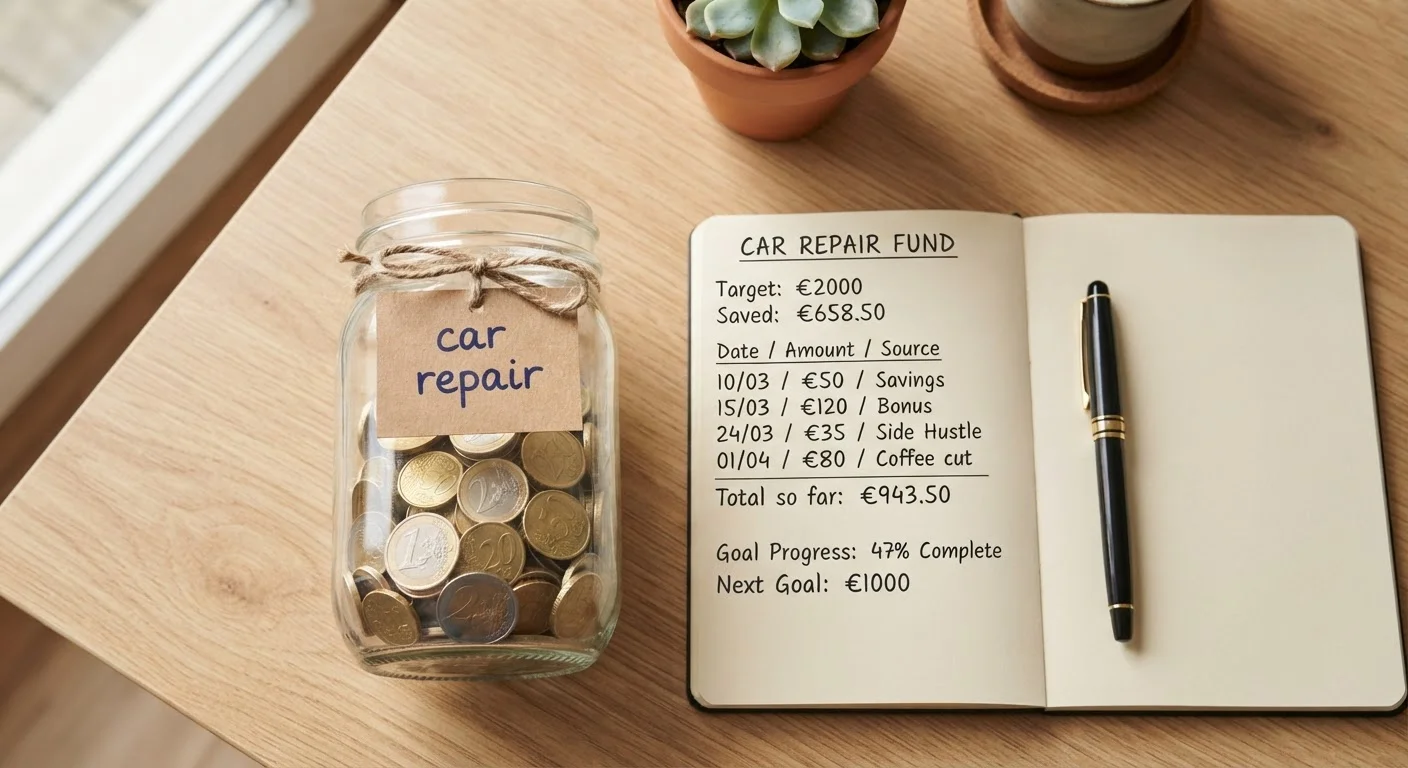
Key Takeaways
What Is a Sinking Fund - and Why Does It Matter?
A sinking fund is a dedicated pool of money you build up gradually to cover a specific expense you know is coming. The expense might not hit every month, but it is entirely predictable: annual car registration, holiday gifts, a dental deductible, or a planned vacation.
Without a sinking fund, these costs tend to arrive as budget shocks - technically foreseeable, yet still disruptive. You either raid your emergency fund (which should be reserved for genuinely unexpected events) or reach for a credit card and pay interest. Sinking funds prevent both outcomes by spreading the financial load over time.
It is worth distinguishing sinking funds from emergency funds. As explained in our guide to emergency funds, an emergency fund exists for surprises - a job loss, a sudden medical bill, an unplanned home repair. A sinking fund, by contrast, is proactive: you know the expense is coming, you know roughly what it will cost, and you save accordingly. Both serve different roles and ideally coexist in your financial plan.
This approach also integrates naturally with broader budgeting habits. If you already track monthly spending, sinking fund contributions simply become another line item - one that makes irregular costs feel routine. See habits that keep a budget working for strategies that support this kind of long-term consistency.
How to Set Up and Maintain a Sinking Fund
Setting up a sinking fund takes only a few steps, and the math is straightforward. If you are new to saving consistently, building a savings habit from scratch provides a useful foundation before you begin.
List your irregular expenses for the next 12 months
Write down every non-monthly cost you can anticipate over the coming year. Common examples include:
- Vehicle registration and annual insurance premiums
- Dental or vision care not covered by insurance
- Holiday gifts and celebrations
- Planned travel or vacations
- Annual software subscriptions
- Home maintenance (e.g., HVAC servicing, gutter cleaning)
Check past bank and credit card statements to catch expenses you may have forgotten about. The goal is a complete picture, not a rough guess.
Estimate the cost and timeline for each expense
For each item on your list, record two figures: the expected total cost and the number of months until you need the money. Use past receipts, provider quotes, or general research to arrive at a realistic estimate. It is better to round up slightly than to fall short.
For example:
| Expense | Estimated Cost | Months Away |
|---|---|---|
| Car registration | $180 | 8 |
| Holiday gifts | $400 | 6 |
| Dental deductible | $250 | 5 |
Calculate your monthly contribution for each fund
Divide the estimated cost by the number of months remaining:
Monthly contribution = Total cost ÷ Months until needed
Using the examples above:
- Car registration: $180 ÷ 8 = $22.50/month
- Holiday gifts: $400 ÷ 6 = $66.67/month
- Dental deductible: $250 ÷ 5 = $50/month
Add these together to find your total monthly sinking fund commitment. If the combined figure strains your budget, prioritise the most time-sensitive or highest-impact expenses first.
Open a dedicated account or sub-account for each fund
Many banks and credit unions allow you to open multiple savings sub-accounts or 'buckets' within a single login, often with the ability to label each one. This separation serves a practical purpose: it makes it much harder to accidentally spend money earmarked for a specific goal, and it gives you an instant visual read on your progress.
If your bank does not offer sub-accounts, a simple spreadsheet tracking each fund's balance alongside a single savings account can work, though a separate account provides stronger guardrails.
Automate your contributions and review quarterly
Set up automatic transfers from your checking account to each sinking fund, timed to coincide with your payday. Even if the amounts are small, consistency matters more than size in the early stages.
Schedule a brief quarterly review - 10 to 15 minutes is enough - to check whether:
- Your cost estimates are still accurate
- Any new irregular expenses should be added
- Any completed funds should be redirected to the next priority
This review habit keeps your sinking funds aligned with your actual life rather than a snapshot of circumstances from months ago.
Once your funds are running, automation is the most reliable way to keep them on track. Scheduling automatic transfers on payday means the money moves before you have a chance to spend it elsewhere. Our article on automating your savings covers the core principles behind making recurring transfers stick.
Name Your Funds Specifically
Generic labels like 'savings' make it easy to justify withdrawals for unrelated purposes. Naming a fund 'December Holidays' or 'Annual Car Service' creates a psychological commitment that makes you less likely to dip into it prematurely. Specificity is a simple but effective guardrail.
A practical real-world example: if you want to save $600 for a holiday trip that is 10 months away, you contribute $60 per month to a dedicated travel sinking fund. The same logic applies to a car service, an annual insurance premium, or any other foreseeable cost. Our guide to building a travel fund shows this approach applied specifically to vacation saving.
This article is for general informational and educational purposes only. It does not constitute personalised financial advice. Consider consulting a qualified financial adviser for guidance tailored to your individual circumstances.