

Key Takeaways
Our Verdict
Crate training provides a structured, safe foundation that most dogs - especially puppies and newly adopted dogs - genuinely benefit from during the adjustment period. Free roaming is a reasonable long-term goal once a dog has demonstrated reliable behavior and been thoroughly house-trained. For most households, the two approaches work best as a progression, not a permanent either/or choice.
| Best for | Recommended |
|---|---|
| Puppies and newly adopted dogs | Crate training |
| Calm, fully house-trained adult dogs with established routines | Free roaming |
| Working owners who are away for several hours | Crate training with scheduled breaks |
| Dogs that show anxiety or destructive behavior unsupervised | Crate training |
The Core Difference Between the Two Approaches
Crate training means giving your dog a dedicated enclosure - typically a wire or plastic crate - that serves as their personal space during unsupervised periods, overnight, or when you cannot actively monitor them. Free roaming means allowing your dog unrestricted or semi-restricted access to the home at all times.
The debate between these two approaches often gets heated, but the practical question is simpler: which approach matches your dog's current stage of training and your household's ability to supervise? If you're still in those early weeks, see our guide to bringing a dog home for the first time for broader context on settling-in routines.
| Crate Training | Free Roaming | |
|---|---|---|
| Best suited for | Puppies, newly adopted dogs, anxious dogs | Fully house-trained, calm adult dogs |
| Housetraining speed | Faster - structure encourages bladder control | Slower if started before training is solid |
| Risk of destructive behavior | Low - dog is contained when unsupervised | Higher until dog is reliably trained |
| Dog comfort | High when properly introduced | High for dogs that have earned the privilege |
| Owner supervision required | Lower - crate reduces monitoring burden | Higher - especially during the transition phase |
| Long-term suitability | Can continue indefinitely or phase out | Ideal end goal for most household dogs |
Why Crate Training Works - and Common Misconceptions
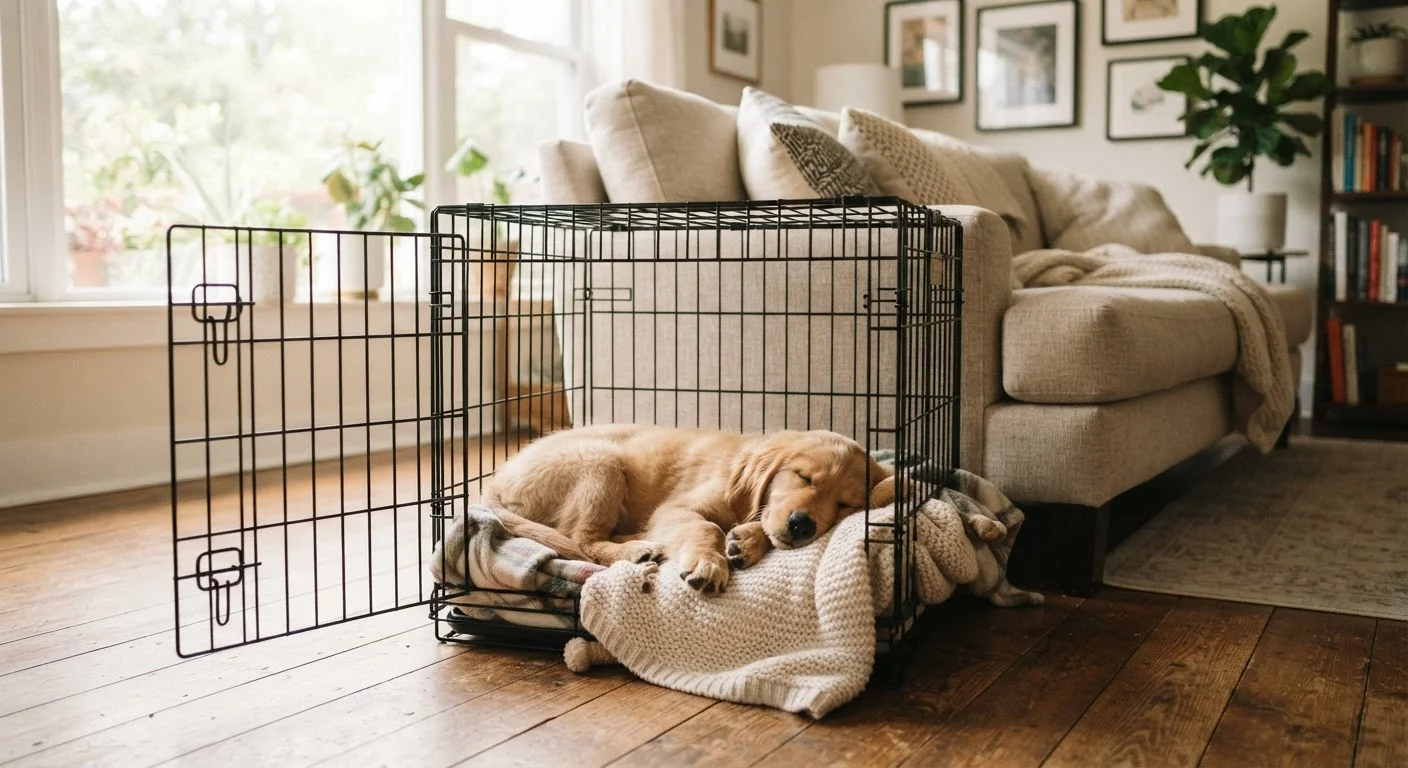
Dogs are den animals by nature. A properly introduced crate mimics that instinct, giving them a calm, predictable retreat rather than a punishment. The key word is properly introduced: forcing a dog into a crate without positive association can cause anxiety, which is where the misconception that crates are cruel originates.
When done correctly, crate training accelerates housetraining significantly. Dogs are generally reluctant to soil their sleeping area, so the crate encourages bladder control and creates a natural schedule around bathroom breaks. For puppies especially, this structure is invaluable.
Make the Crate Feel Like a Reward
Feed your dog meals inside the crate with the door open before ever closing it. Toss high-value treats inside randomly throughout the day so your dog chooses to enter on their own. Building a positive association first makes the crate a comfort, not a stressor - and it makes the entire training process substantially easier.
The critical rule: a crate should never be used as punishment, and time limits matter. Most adult dogs can comfortably stay crated for four to five hours. Puppies need breaks much more frequently - roughly one hour per month of age is a commonly used guideline among trainers. For owners with full-time work schedules, our article on getting a dog when you work full-time covers practical strategies for managing this.
When Free Roaming Makes Sense
Free roaming isn't a shortcut - it's a destination. Most dogs that successfully free roam got there because their owners systematically built up unsupervised time over weeks or months, rather than granting full access from day one.
Signs a dog may be ready for more freedom include: consistent housetraining with no recent accidents, no destructive chewing or counter-surfing behavior, and a calm temperament when left alone. Older dogs or those adopted from a previous home where they were already house-trained may reach this stage faster than a puppy.
Even then, many owners choose to limit access to certain rooms using baby gates rather than granting full whole-home freedom immediately. This middle-ground approach reduces risk while rewarding the dog's progress. Building a consistent daily routine alongside increased freedom helps dogs self-regulate more reliably.
How to Transition From Crate to Free Roaming Safely
The transition should be incremental. Start by leaving your dog unsupervised in a single dog-proofed room for short periods - 15 to 30 minutes - while you're home. If no problems occur, gradually increase duration and expand the area over several weeks.
Watch for these signals that the dog isn't ready yet: chewing furniture or belongings, inappropriate elimination, excessive barking or pacing, or getting into the trash. These aren't signs of a bad dog - they're signs the dog needs more time and structure before earning that level of freedom.
It's also worth remembering that some dogs simply do better with a crate available long-term. Many house-trained adult dogs will voluntarily retreat to their crate even when the door is left open - treating it as their personal space rather than a restriction. If you're navigating broader questions about your dog's behavioral development, our article on common dog training myths may help clarify what the evidence actually supports.