

Key Takeaways
Why Grooming Is About More Than Looks
Many new dog owners think of grooming as an aesthetic concern - keeping a coat shiny or a paw tidy. In practice, grooming is a health habit. Regular grooming sessions let you spot skin irritation, lumps, ear issues, or early signs of parasites before they escalate. They also help your dog get comfortable being handled, which makes vet visits significantly less stressful.
If you're still getting settled with a new dog, building grooming into a consistent daily routine from the start makes the whole process easier for both of you.
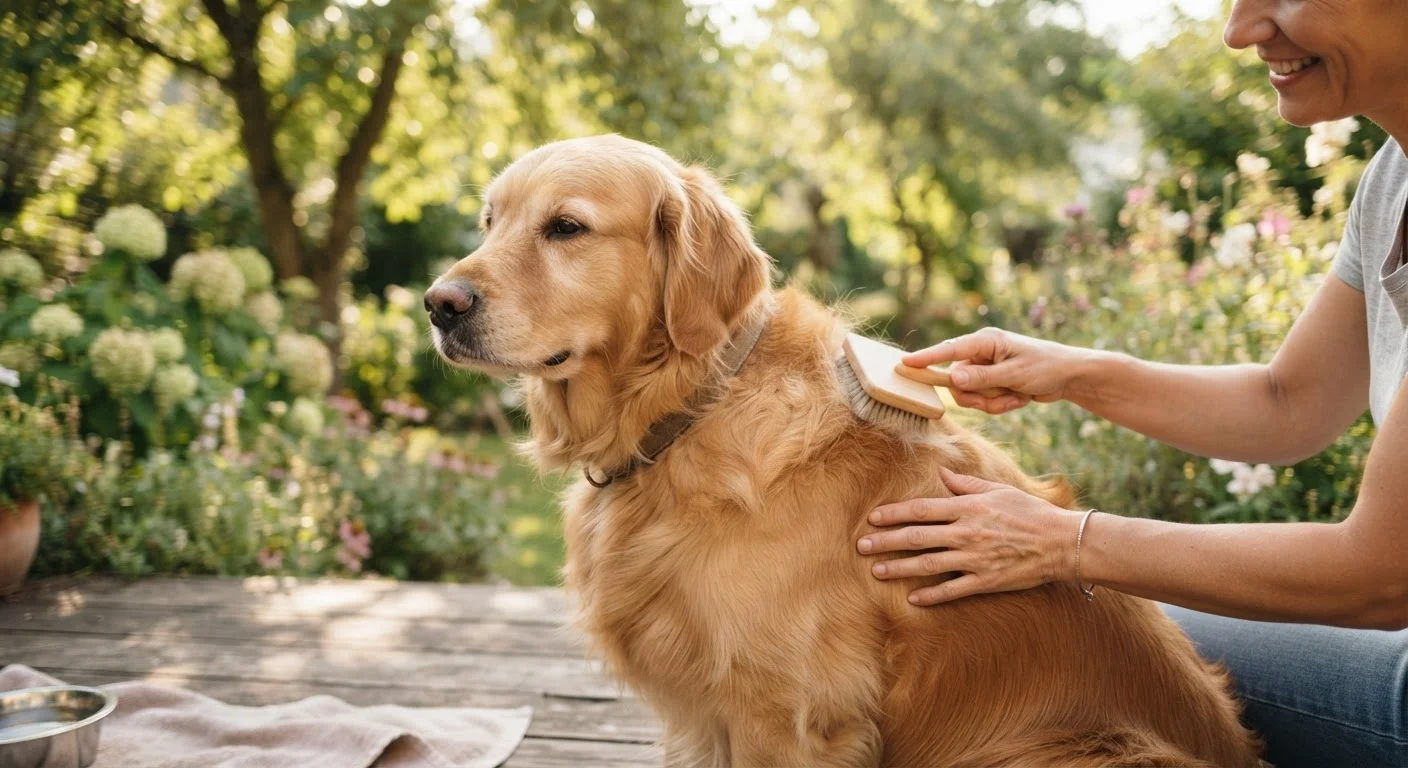
Brush your dog's coat on a schedule matched to their coat type.
Brushing removes loose fur, prevents painful matting, and distributes natural skin oils that keep the coat healthy. Dogs with long or curly coats may need daily brushing, while short-coated breeds may only need it once or twice a week. Skipping brushing in longer-coated dogs can lead to mats that pull on the skin and require professional removal.
Trim nails every three to four weeks to prevent overgrowth.
Overgrown nails force a dog to shift their weight awkwardly, which over time can affect their joints and gait. Long nails are also more likely to snag on surfaces and break painfully. Most dogs' nails grow continuously and are not worn down sufficiently by regular walks alone.
Clean and inspect your dog's ears regularly.
Dogs with floppy ears or heavy ear hair - like Cocker Spaniels and Basset Hounds - are especially prone to moisture buildup that can lead to ear infections. Routine visual checks catch early redness, odor, or discharge, which are common warning signs. Use a veterinarian-recommended ear-cleaning solution and avoid inserting anything deep into the ear canal.
Brush your dog's teeth several times per week.
Dental disease is one of the most common health issues in dogs, yet it's largely preventable with consistent at-home care. Plaque and tartar buildup can lead to gum disease, tooth loss, and secondary health complications. Starting tooth brushing early - using a toothbrush and toothpaste formulated for dogs - makes it far easier for dogs to accept the routine.
Bathe your dog only as needed, not on a rigid calendar.
Over-bathing strips natural oils from the skin and coat, leading to dryness and irritation. Most dogs do well with a bath every four to six weeks, though active dogs or those with skin conditions may need different schedules. Always use a shampoo formulated specifically for dogs - human shampoos have a different pH balance and can cause skin issues.
Core Grooming Practices to Build Into Your Routine
The following practices form the foundation of year-round dog care. How often you do each one will vary based on your dog's breed, coat type, and lifestyle - but the basics apply to nearly every dog.
Seasonal Considerations and When to Call a Professional
Grooming needs shift with the seasons. In warmer months, dogs that spend time outdoors may pick up burrs, ticks, or grass seeds in their coat - check after every outing. In colder months, paws can become cracked from dry air or irritated by road salt. Gently wiping paws after walks and keeping the fur between toe pads trimmed short helps prevent buildup and discomfort.
A Note on Double-Coated Breeds
Never shave a double-coated dog for summer - this is a common misconception. The double coat actually helps regulate body temperature in both heat and cold. Shaving it can disrupt that insulation system and may cause coat texture changes that are sometimes permanent. When in doubt, consult a professional groomer familiar with your dog's specific coat type.
For dogs with very thick double coats - such as Huskies or German Shepherds - professional grooming a few times per year can be worthwhile, especially during heavy shedding seasons. A groomer can safely thin the undercoat without the risk of over-trimming, which can actually damage temperature regulation in double-coated breeds. For most short- or medium-coated dogs, at-home grooming is fully manageable with the right tools and a little patience.
Grooming is also a natural companion to the broader care habits covered in our guide on what your dog actually needs each day.
This article is for general informational purposes only. Consult your veterinarian for guidance specific to your dog's health, breed, or skin conditions.