

Key Takeaways
Significantly fewer crowds at major attractions
Popular sites like the Blue Lagoon, Jökulsárlón glacier lagoon, and Geysir see dramatically lower visitor numbers in winter, creating a more immersive and less rushed experience.
Ice cave tours only run in winter
Natural ice caves inside glaciers like Vatnajökull are accessible specifically between November and March, when colder temperatures stabilize the ice enough for guided entry - a genuinely unique experience unavailable in summer.
Aurora borealis viewing window is open
The long dark nights between September and April provide the darkness required to see the northern lights; summer's midnight sun makes aurora viewing impossible.
Lower accommodation and flight costs on average
Winter (excluding Christmas and New Year's) is generally Iceland's off-peak travel period, meaning travelers often find more availability and lower baseline pricing compared to the summer rush.
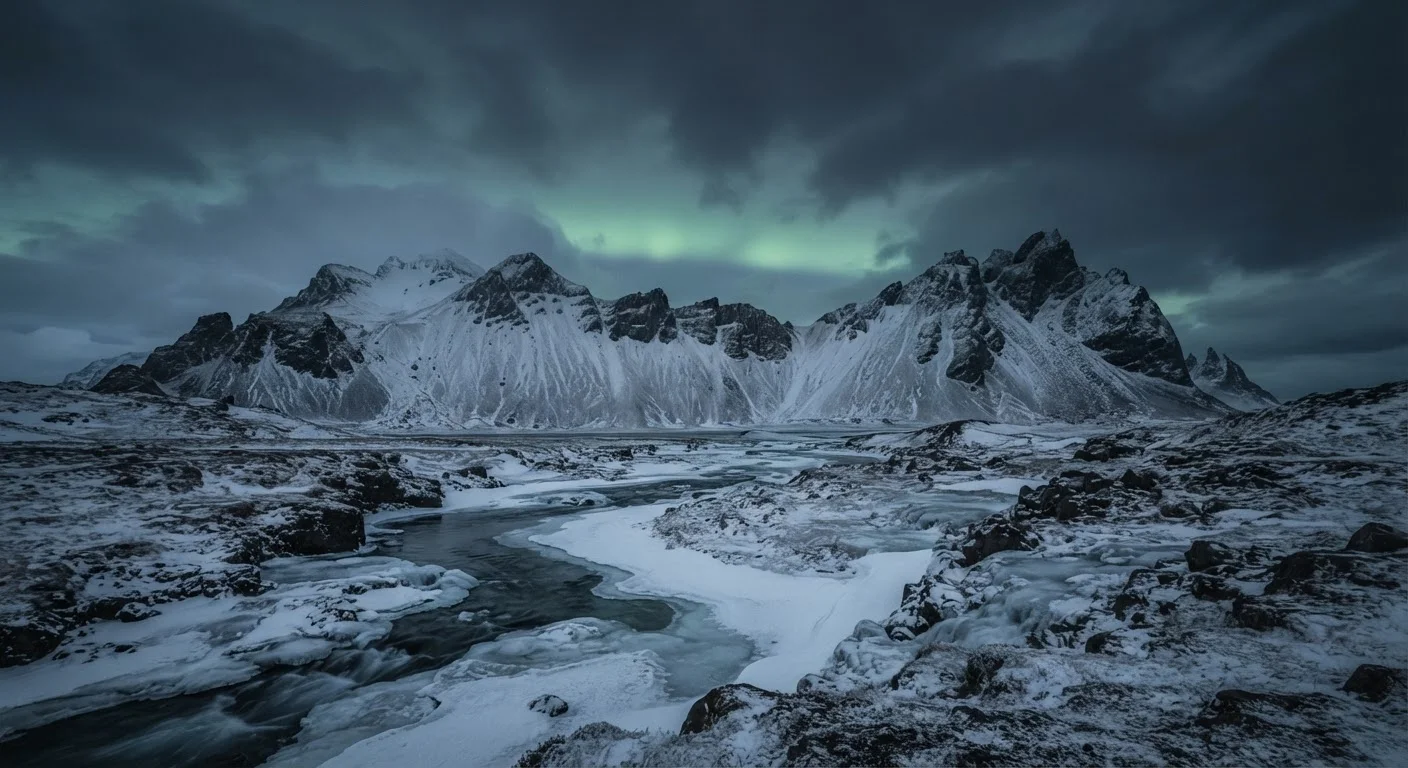
Dramatic, snow-covered scenery throughout
Iceland's volcanic landscapes transform under snow and ice into starkly beautiful environments that feel unlike any other destination, with steam vents and geothermal features contrasting against white.
Extremely limited daily daylight hours
In December, Reykjavík receives around 4-5 hours of daylight, substantially limiting driving range, sightseeing windows, and the pace at which an itinerary can realistically unfold.
Northern lights are unpredictable and not guaranteed
Cloud cover - common in Icelandic winters - can completely obscure the aurora even during strong solar activity, and many visitors leave without a clear-sky sighting despite dedicated effort.
Road closures and hazardous driving conditions
Icy roads, sudden storms, and blowing snow can close roads with little warning, stranding travelers or forcing itinerary changes; driving unfamiliar winter roads in Iceland is a genuine skill challenge.
Some attractions and services operate reduced hours or close
Certain highland routes, campsites, and smaller regional attractions are fully closed in winter, and even open attractions may have limited operating hours during the dark months.
Cold and wind chill can be intense without proper gear
While coastal temperatures aren't extreme by Arctic standards, persistent wind and moisture make inadequate clothing genuinely uncomfortable and, in exposed areas, a safety concern.
Flight disruptions are more likely in winter
Severe weather events can delay or cancel flights at Keflavík International Airport, and connecting through European hubs also carries winter disruption risk that requires buffer time in itineraries.
Our Verdict
Iceland in winter is genuinely rewarding for travelers who go in with realistic expectations and solid preparation. The landscapes are starkly beautiful, the crowds are thinner, and the aurora is possible - just not guaranteed. Those who struggle with cold, darkness, or rigid itineraries may find it frustrating rather than magical.
Flexible, cold-weather-tolerant travelers who prioritize dramatic scenery and unique natural phenomena over reliable sunshine and packed sightseeing schedules.
What Winter in Iceland Actually Looks Like
Iceland's winter season broadly spans November through March, with December and January sitting at the darkest extreme. In Reykjavík, expect around 4-5 hours of usable daylight in December, with the sun barely cresting the horizon. That's not a dramatic exaggeration - it genuinely shapes the entire rhythm of travel.
Temperatures along the coast hover between roughly 28°F and 39°F (-2°C to 4°C), which is milder than many visitors expect given the latitude. However, wind chill and moisture make it feel far colder, and conditions in the interior highlands are dramatically more severe - many interior roads close entirely for winter.
Storms can roll in quickly, and the Icelandic Meteorological Office issues road condition warnings that travelers should check daily at road.is. The famous Ring Road (Route 1) generally stays open, but sections can close temporarily after heavy snow or ice events.
Always Check Road Conditions Before Driving
The Icelandic Road and Coastal Administration maintains a real-time road condition map at road.is, updated continuously during weather events. Conditions can shift from passable to dangerous within hours. Travelers are strongly encouraged to check this resource each morning before any driving day and to heed all closures - driving on closed roads is illegal and dangerous.
The Real Pros of Visiting in Winter
Despite the challenges, winter draws a loyal crowd of repeat visitors for good reasons.
Significantly fewer crowds at major attractions
Popular sites like the Blue Lagoon, Jökulsárlón glacier lagoon, and Geysir see dramatically lower visitor numbers in winter, creating a more immersive and less rushed experience.
Ice cave tours only run in winter
Natural ice caves inside glaciers like Vatnajökull are accessible specifically between November and March, when colder temperatures stabilize the ice enough for guided entry - a genuinely unique experience unavailable in summer.
Aurora borealis viewing window is open
The long dark nights between September and April provide the darkness required to see the northern lights; summer's midnight sun makes aurora viewing impossible.
Lower accommodation and flight costs on average
Winter (excluding Christmas and New Year's) is generally Iceland's off-peak travel period, meaning travelers often find more availability and lower baseline pricing compared to the summer rush.
Dramatic, snow-covered scenery throughout
Iceland's volcanic landscapes transform under snow and ice into starkly beautiful environments that feel unlike any other destination, with steam vents and geothermal features contrasting against white.
~4-5 hrs
Daylight in Reykjavík in December
According to the Icelandic Meteorological Office, the winter solstice in Reykjavík produces roughly 4 hours and 7 minutes of daylight - among the shortest in any European capital.
Kp 5+
Aurora index for strong naked-eye displays
The NOAA Space Weather Prediction Center uses the Kp index to measure geomagnetic activity; values of 5 or above typically produce visible northern lights at Iceland's latitude under clear skies.
Beyond aurora hunting, winter offers some of Iceland's most photogenic landscapes. Waterfalls like Skógafoss and Seljalandsfoss freeze partially at their edges, and the low-angle winter light during the brief golden-hour-all-day phenomenon creates extraordinary warmth in photographs. Geothermal pools - including community pools in small towns - are arguably best enjoyed when steam rises against a dark, cold sky. Glacier hiking and ice cave tours operate specifically in winter, when cave ceilings are stable enough to enter safely.
The Honest Cons You Should Know
No honest guide skips the harder parts, and Iceland in winter has several worth weighing carefully before booking.
Extremely limited daily daylight hours
In December, Reykjavík receives around 4-5 hours of daylight, substantially limiting driving range, sightseeing windows, and the pace at which an itinerary can realistically unfold.
Northern lights are unpredictable and not guaranteed
Cloud cover - common in Icelandic winters - can completely obscure the aurora even during strong solar activity, and many visitors leave without a clear-sky sighting despite dedicated effort.
Road closures and hazardous driving conditions
Icy roads, sudden storms, and blowing snow can close roads with little warning, stranding travelers or forcing itinerary changes; driving unfamiliar winter roads in Iceland is a genuine skill challenge.
Some attractions and services operate reduced hours or close
Certain highland routes, campsites, and smaller regional attractions are fully closed in winter, and even open attractions may have limited operating hours during the dark months.
Cold and wind chill can be intense without proper gear
While coastal temperatures aren't extreme by Arctic standards, persistent wind and moisture make inadequate clothing genuinely uncomfortable and, in exposed areas, a safety concern.
Flight disruptions are more likely in winter
Severe weather events can delay or cancel flights at Keflavík International Airport, and connecting through European hubs also carries winter disruption risk that requires buffer time in itineraries.
Travel insurance that covers trip disruptions from weather is worth understanding before you go - not as a guarantee, but as a sensible layer of planning. Similarly, if you're relying on a rental vehicle, ensure it's rated for winter conditions and that you understand the terms for driving on roads marked F (highland tracks), which are closed in winter and off-limits to all vehicles regardless of capability.
Aurora Expectations: What the Photos Don't Show
Northern lights imagery dominates Iceland's winter marketing, and the phenomenon is genuinely spectacular when conditions align. But the honest picture requires a few clarifications.
Aurora visibility depends on three overlapping variables: solar activity (measured on the Kp index), clear skies, and darkness away from light pollution. Iceland's winter weather produces frequent cloud cover, and many travelers spend an entire week without a clear-sky aurora display. Forecasting apps and the Icelandic Meteorological Office aurora forecast tool can help you plan nights out, but no tool eliminates the uncertainty.
The other reality: photos you see online are almost always long-exposure shots that amplify color and intensity beyond what the naked eye sees in moderate displays. A Kp 2 or 3 event looks like a greenish shimmer to the unaided eye, not the vivid curtains in viral images. That said, strong Kp 5+ events during clear nights can produce jaw-dropping naked-eye displays - they're just not bookable experiences.
Practical Planning Essentials for Winter Travel
The travelers who enjoy Iceland in winter most tend to share a few habits. They build buffer days into their itinerary rather than back-to-back must-dos. They dress in proper layered merino base layers, insulating mid-layers, and waterproof outer shells - not just a heavy coat. They check road.is every morning before driving and adjust plans without frustration.
Booking accommodations with flexible cancellation policies helps absorb weather disruptions. Concentrating activity in the south and west - where services remain more reliably open - is wiser than attempting ambitious Ring Road circuits on a tight timeline. Consider basing yourself in one region for multi-night stays rather than moving daily, which also reduces driving risk.
Entry requirements, including any applicable visa rules, should be verified through official government sources well ahead of travel, as these can change. The same applies to any health documentation requirements. Iceland is part of the Schengen Area, which has specific rules for US passport holders regarding length of stay.