

Key Takeaways
Our Verdict
All three destinations deliver incredible experiences, but the right choice depends heavily on your priorities. Thailand wins on ease and variety. Vietnam wins on cultural immersion and value. Indonesia wins on focused, unhurried exploration. Two weeks is a meaningful amount of time - spend it where your travel style will actually thrive.
| Best for | Recommended |
|---|---|
| First-time Southeast Asia visitors who want variety with minimal logistics stress | Thailand |
| Culture-focused travelers who enjoy regional contrast and history-rich cities | Vietnam |
| Travelers who prefer one immersive base over multi-city hopping | Indonesia (Bali) |
| Budget-conscious travelers watching every dollar | Vietnam |
Why Two Weeks Forces a Real Choice
Two weeks sounds generous until you factor in long-haul flight recovery, internal travel days, and the inevitable afternoon you spend doing absolutely nothing because you needed it. Southeast Asia's big three - Thailand, Vietnam, and Indonesia - each span enormous geographic and cultural distances. Rushing across all three in 14 days typically means spending more time in airports than at destinations.
The smarter move is picking one country and exploring it with intention. Before you decide, it helps to understand how each destination stacks up on the factors that actually shape your experience: ease of entry, daily cost, internal travel, cultural richness, and pacing. See our guide to slow travel vs. multi-destination trips for a deeper look at how pacing affects both your wallet and your enjoyment.
| Thailand | Vietnam | Indonesia (Bali) | |
|---|---|---|---|
| Ease of Entry (US Citizens) | Visa exemption up to 30 days (verify officially) | E-visa available (verify officially) | Visa-on-arrival or free (verify officially) |
| Internal Travel | Flights, trains, buses - well connected | Budget domestic flights along north-south corridor | Mostly within Bali; inter-island flights available |
| Relative Daily Cost | Moderate; varies by region | Generally affordable, especially outside cities | Moderate; tourist areas can push costs up |
| Geographic Variety in 2 Weeks | High - cities, mountains, coast | High - multiple distinct regions | Moderate - Bali-focused with island hops |
| Pace & Logistics Intensity | Low - beginner-friendly infrastructure | Medium - navigating cities takes adjustment | Low - single-base, slower rhythm |
| US Flight Connections | Good - multiple routing options | Good - hub connections through major Asian cities | Fewer direct options; often 2 layovers |
Thailand: The Accessible All-Rounder
Thailand's tourist infrastructure is among the most developed in the region. Domestic flights are frequent and affordable, trains connect major cities reliably, and English signage is widespread in tourist areas. Most US passport holders receive a visa exemption for up to 30 days on arrival, which removes a planning hurdle entirely - though you should always verify current entry requirements with official Thai government sources before travel.
A two-week itinerary could move comfortably from Bangkok's street food scene and temples north to Chiang Mai for markets and day treks, then south to one of several island groups. Thailand's range of experiences - urban, mountainous, coastal - all accessible within a single trip is a genuine logistical advantage.
Daily costs vary widely, but budget travelers generally find guesthouses, local transport, and street meals affordable by US standards, while mid-range options remain competitive. The trade-off is popularity: heavily visited areas can feel crowded, and some sites have adopted entrance fees or timed entry in recent years. For help structuring your days without burning out, see our itinerary planning guide.
Vietnam: Cultural Depth Along a Natural Corridor
Vietnam's long, narrow geography actually works in a two-week traveler's favor. The country runs roughly north to south, and budget domestic flights between Hanoi, Da Nang, and Ho Chi Minh City are plentiful. This means you can experience genuinely distinct regions - the Old Quarter and food culture of Hanoi, the UNESCO-listed town of Hoi An, the dramatic karst landscapes of Halong Bay or Ninh Binh - without doubling back.
Vietnam tends to be slightly more affordable than Thailand across accommodation and dining, particularly outside major tourist hubs. US citizens have historically been eligible for e-visa applications, but visa rules change; verify current requirements through official Vietnamese government channels well before booking.
Book Domestic Flights Early in Vietnam
Budget domestic airlines in Vietnam book up quickly during peak travel periods, particularly around Vietnamese national holidays. If your itinerary depends on a specific Hanoi-to-Da Nang or Da Nang-to-Ho Chi Minh City flight, locking that in early gives you more control over your schedule. Leaving it to the last week before departure can limit your options or push you toward longer, less practical overland routes.
The pace of Vietnam's cities can feel more intense than Thailand's resort-oriented areas. Motorbike traffic in Hanoi and Ho Chi Minh City is famously dense. That energy is part of the draw for many travelers, but it's worth factoring into your stamina calculations for a two-week trip. If Indonesia's Bali is also on your radar, our Bali pre-trip checklist covers key questions worth asking before any Southeast Asia booking.
Indonesia: Going Deep on Bali and Beyond
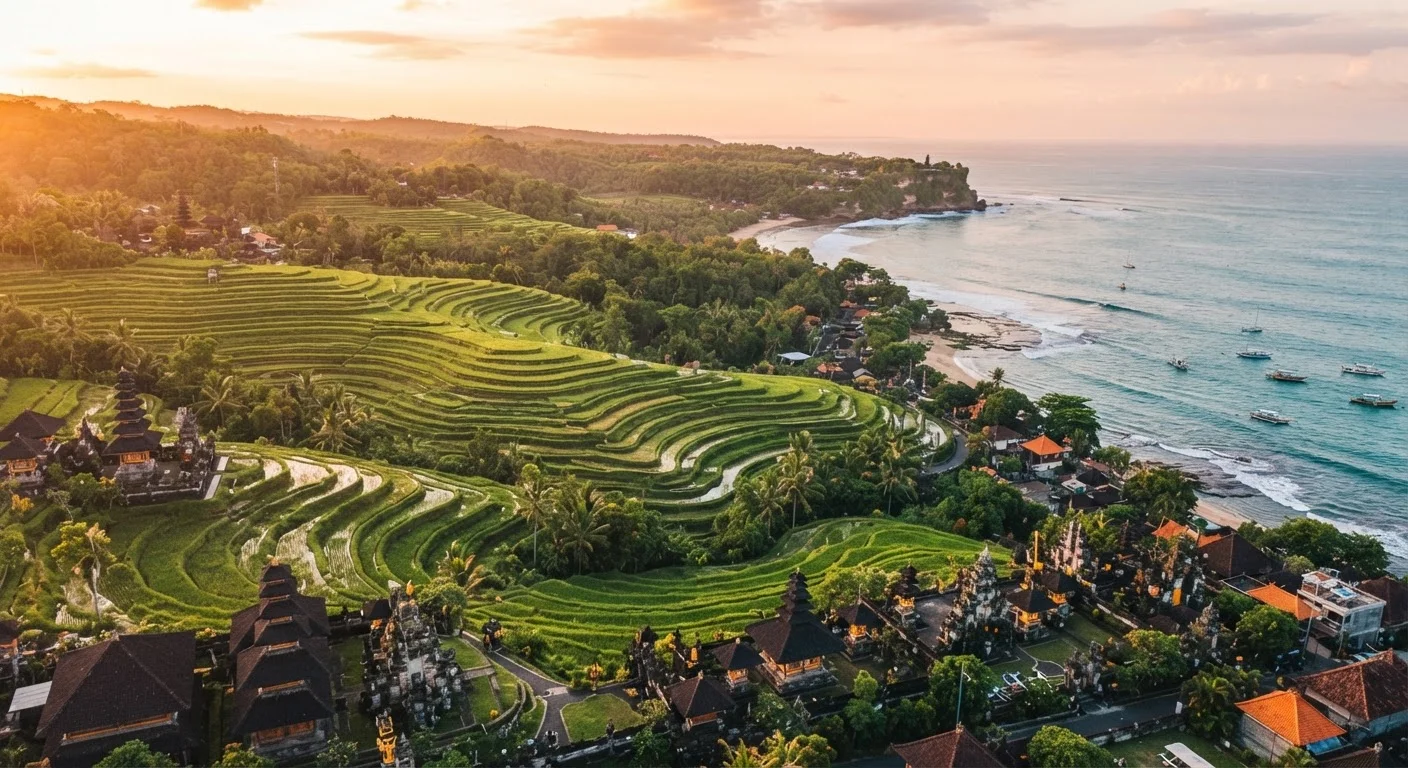
Indonesia is the world's largest archipelago - over 17,000 islands - which means "Indonesia" as a destination really depends on which part you mean. For most two-week US travelers, the practical focus is Bali, with potential day trips or short hops to Lombok or the Gili Islands. Bali alone offers enough variety to fill a two-week itinerary: rice terraces in Ubud, surf beaches in Seminyak and Canggu, volcanic hikes, and some of the most photogenic temples in the region.
The slower, base-focused nature of a Bali trip suits travelers who prefer depth over distance. You spend less time managing logistics and more time actually being somewhere. Indonesia typically offers visa-free or visa-on-arrival access for US citizens for short stays, but confirm the current policy via the Indonesian embassy or official immigration sources before you travel.
Flight connections from major US cities to Bali often involve one or two layovers; transit routing matters more here than for Thailand or Vietnam, which have more direct connection options. Check our guide to direct flights vs. layovers to think through whether saving on airfare is worth the added transit time on a short trip.
Making the Final Call
Strip the decision down to three questions. First: how much do you value ease of navigation? If logistics stress you out, Thailand's infrastructure is reassuring. Second: do you want urban intensity and cultural contrast, or a single immersive environment? Vietnam delivers the former; Bali the latter. Third: what's your honest budget ceiling? Vietnam tends to stretch dollars furthest for travelers watching costs carefully.
Whether you're weighing this solo or thinking about group travel options, our comparison of group tours vs. independent travel can help you figure out how to structure the trip once you've picked a destination. The best Southeast Asia trip isn't the most ambitious one - it's the one you actually return from recharged.
Travel information in this article is general in nature. Visa requirements, entry conditions, and travel advisories change frequently. Always verify current requirements through official government and embassy sources before booking or traveling.