

Key Takeaways
Why the Admin Side of Travel Actually Matters
Booking flights and dreaming about itineraries is the fun part. The paperwork and logistics? Less glamorous - but skipping them is how travellers end up standing at a foreign ATM with a frozen card or realising their passport expired two months ago. A little organised prep work before you leave home can be the difference between a smooth trip and an expensive, stressful scramble.
This list covers the practical admin tasks that first-time and casual international travelers most commonly overlook. None of these steps are complicated, but they do require doing them before you're at the airport. Pair this with our pre-departure checklist for a full picture of what to confirm before you leave home.
Verify your passport validity - and apply early if needed
Many countries require your passport to be valid for at least six months beyond your planned departure date. Even if your passport technically hasn't expired, you could be denied boarding. Check the expiration date the moment you start planning any international trip. US passport renewals can take several weeks under standard processing - longer during peak periods - so don't wait until the last month. If you need a new passport quickly, expedited options exist, but they come with higher fees.
Many countries deny entry if your passport expires within six months of your departure date.
Confirm visa requirements before anything else
Visa rules vary enormously by destination and by the passport you hold. Some countries offer visa-free entry to US citizens; others require advance applications, fees, and supporting documents like proof of onward travel or accommodation bookings. Always check requirements directly through the US Department of State website or the destination country's official immigration authority - not third-party travel blogs, which can be outdated. Factor visa processing time into your overall planning timeline.
Visa rules change - always verify requirements through official government sources, not travel blogs.
Notify your bank and card providers
Banks routinely flag foreign transactions as suspicious and freeze accounts without warning. A quick call or in-app notification to your bank and credit card providers before you travel prevents this. While you're at it, confirm which cards charge foreign transaction fees and which don't - this information can meaningfully affect how much you spend. It's also worth knowing your card's daily ATM withdrawal limits and whether your bank has international partner networks that waive ATM fees.
Failing to notify your bank before traveling is one of the most common - and easily avoided - money problems abroad.
Research your currency exchange options in advance
Airport currency exchange kiosks are convenient but typically offer poor exchange rates with high margins. Research alternatives in advance: some banks allow you to order foreign currency before departure, and certain checking accounts reimburse international ATM fees. Understanding roughly how much local currency you'll need for cash-only situations - local markets, small transport operators, tips - helps you avoid over-exchanging at bad rates. The budget travel guide for first-timers covers more money-saving strategies worth reading before you go.
Research currency exchange options before departure - airport kiosks often offer the worst available rates.
Make and store copies of all critical documents
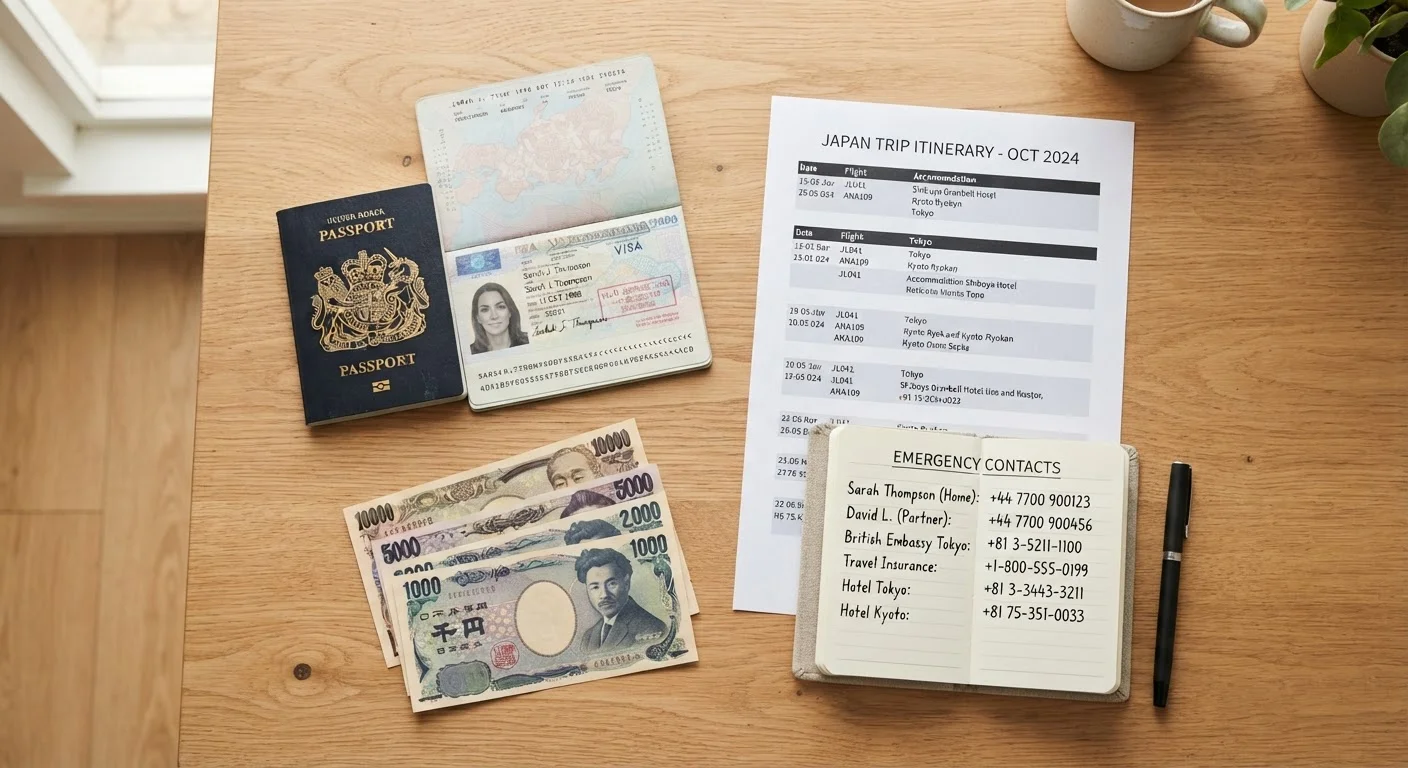
If your passport or travel documents are lost or stolen abroad, having copies dramatically speeds up the replacement process. Make digital copies and store them somewhere accessible offline - a downloaded PDF on your phone, for example - and in a secure cloud folder you can access from any device. Also carry a separate physical copy kept apart from your originals. Include your passport photo page, visa stamps, travel insurance policy number, and any booking confirmations. Share a set of copies with a trusted contact back home as a backup.
Digital and physical document copies stored separately from originals are essential insurance against theft or loss.
Save emergency contacts - accessible offline
Don't assume you'll have reliable internet access in an emergency. Save the following numbers somewhere you can reach without a data connection: the nearest US embassy or consulate in your destination country, your travel insurance provider's emergency line, your bank's international collect call number, and a trusted contact at home. The US State Department's STEP program (Smart Traveler Enrollment Program) lets you register your trip so the embassy can reach you in a genuine crisis - registration is free and takes minutes.
Register with the US State Department's STEP program so the nearest embassy can contact you in a crisis.
Understand your health coverage and travel insurance basics
Most US domestic health insurance plans provide limited or no coverage abroad. Before you travel, check whether your existing plan has any international provisions and what they cover. Travel insurance policies can cover emergency medical care, evacuation, trip cancellation, and lost luggage - but policies vary widely in what they include and exclude. Read the policy details carefully before purchasing, paying attention to exclusions for pre-existing conditions and adventure activities. This is general information; consult your insurance provider directly to understand what your specific policy covers.
Most US health insurance plans have limited international coverage - verify your situation before you depart.
Start Early, Travel Confident
None of the items on this list take more than an hour or two to handle individually - the key is not leaving them until the week before you fly. Build in time to deal with surprises, like a passport renewal that takes longer than expected or a visa application that needs supporting documents.
Build a Simple Travel Admin Folder
Create a dedicated folder on your phone or computer before every international trip. Drop in digital copies of your passport, visa confirmation, insurance policy, flight and hotel bookings, and your offline emergency contacts list. Label it clearly and make sure it's downloadable for offline access. This single habit can save hours of stress if something goes wrong abroad.
For deeper preparation, explore the research habits experienced travellers rely on and consider running through a pre-trip budget planning checklist to make sure no financial surprises are waiting for you either. A little upfront effort here adds up to genuine peace of mind once you're on the road.
This article provides general travel preparation information only. Entry requirements, visa rules, and currency regulations change frequently - always verify current requirements with official government sources and your destination's embassy or consulate before traveling.