

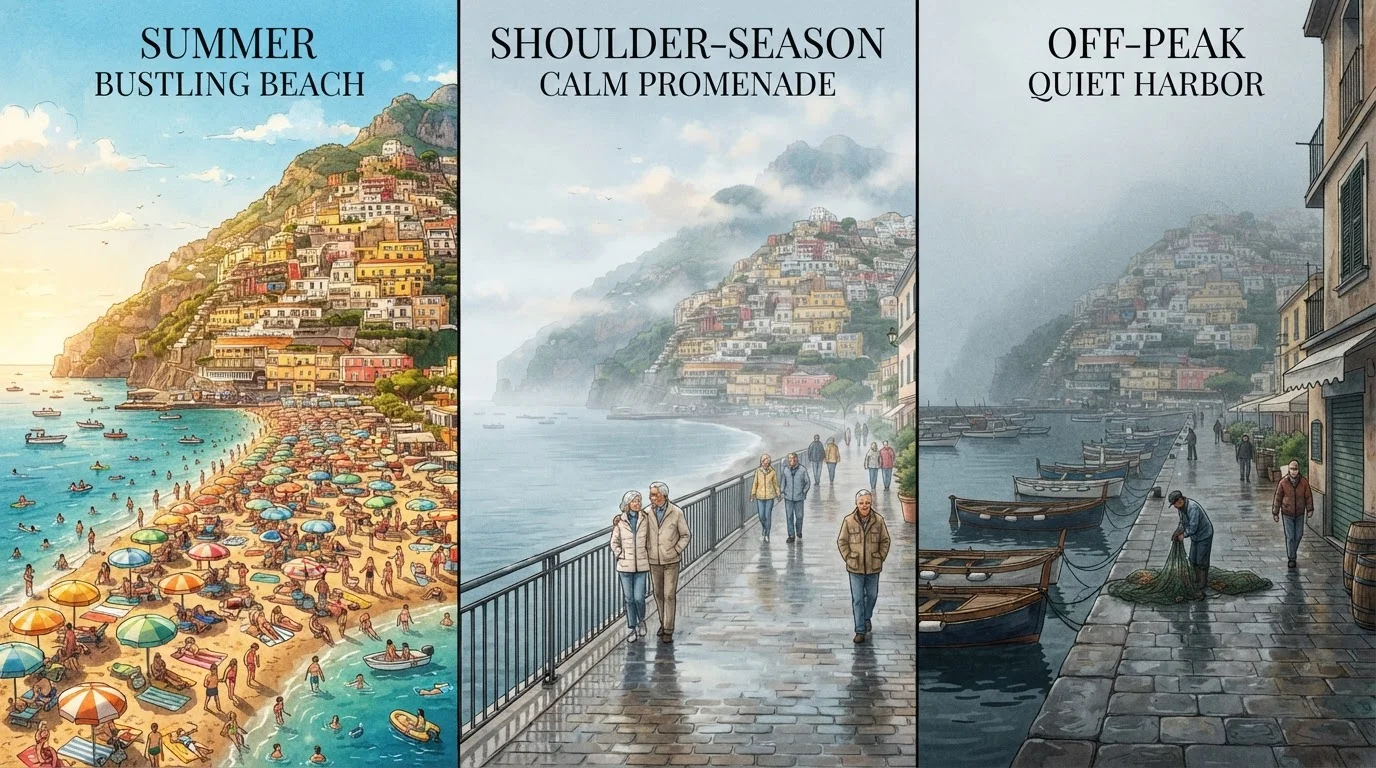
Key Takeaways
Travel Seasons
Travel seasons are time-based categories - peak, shoulder, and off-peak - that describe how popular a destination is during a given period. They affect how crowded attractions are, how much flights and hotels cost, and what the weather and local atmosphere are like. Understanding them helps travelers make smarter, more intentional choices about when to go.
Season windows vary significantly by destination; a location's peak season is determined by a combination of climate patterns, local school calendars, cultural events, and regional holiday schedules - not by a universal calendar.
The Three Season Framework Every Traveler Should Know
If you've ever noticed that the same flight costs dramatically more in July than in November, you've already felt the effects of travel seasons without necessarily knowing the terminology. The three-season model - peak, shoulder, and off-peak - is a practical framework that describes the ebb and flow of tourism demand at virtually any destination on earth.
Understanding where a destination sits in its seasonal cycle at the time of your visit shapes almost every part of the experience: what you pay, how long you wait in line, whether you need reservations weeks in advance, and what the weather will actually be like. It's one of the first things to look up when planning any trip - and one of the most commonly overlooked by first-timers. For more on the assumptions that trip up new travelers, see common travel planning myths.
30-50%
Typical airfare variation between peak and off-peak windows
Travel industry analyses consistently show wide fare swings tied to demand seasons, though exact variation depends on route, destination, and booking timing.
3-4x
Visitor volume difference at some destinations between high and low season
Destinations like Venice and Dubrovnik have documented visitor count disparities of this magnitude between their peak summer months and quieter winter periods.
~6 weeks
Average shoulder season window on either side of peak
While it varies by destination, shoulder seasons typically span four to eight weeks before and after the peak period, offering meaningful value without the full off-peak trade-offs.
Peak Season: High Demand, High Stakes
Peak season is the window when a destination draws the most visitors. For beach destinations in the US and Europe, that's typically mid-June through August. For ski resorts, it's the winter holiday window. For some cities, a major annual festival can create micro-peaks that spike prices for just a week or two.
During peak season, you can generally expect:
- Higher airfare and accommodation rates driven by demand
- Crowded attractions, longer wait times, and sold-out tours
- Favorable or optimal weather conditions (which is usually why it's peak in the first place)
- More tourism infrastructure running at full capacity
The trade-off is real: you get the best conditions, but you pay for them - in both dollars and patience. If peak season aligns with your only available travel window, book well in advance and set realistic expectations about crowds.
Shoulder Season: The Practical Sweet Spot
Shoulder season sits in the transitional windows on either side of peak - typically a few weeks to a couple of months before or after the busiest period. Exact dates vary by destination, but the pattern is consistent: demand drops, and with it, prices and crowd levels.
What you often still get in shoulder season:
- Weather that's close to peak-season quality (especially in early shoulder)
- Most attractions and services operating normally
- A less hectic, more local atmosphere
- More availability and often better rates on flights and lodging
For budget-conscious travelers, shoulder season deserves serious consideration. It frequently delivers a high-quality experience at a meaningful discount - without the sacrifices that full off-peak travel sometimes demands. Why shoulder season rewards budget travelers goes deeper on this if you want to explore the strategy further.
Research Your Destination's Specific Season Calendar
Don't rely on general assumptions about when a destination is busy. Look up the specific peak, shoulder, and off-peak windows for your target location - tourism boards and travel databases often publish this. A week's shift in travel dates can sometimes mean meaningfully different pricing and crowd levels without any change in weather quality.
Off-Peak Season: Lowest Costs, Biggest Trade-Offs
Off-peak season - sometimes called low season - is when tourist numbers hit their lowest point. Prices are typically at their floor, crowds are minimal, and you're more likely to interact with a destination as its residents actually experience it. For some travelers, that's exactly the appeal.
The potential downsides worth knowing about:
- Weather may be unfavorable: rainy seasons, extreme heat or cold, or unpredictable conditions
- Some businesses, tours, or seasonal attractions may be closed or operating on reduced hours
- Less tourist infrastructure support if something goes wrong
Off-peak doesn't mean a bad trip - it means a different kind of trip. Travelers who know what they're walking into can have extraordinary experiences at a fraction of peak-season cost. The key is doing your homework on what specifically changes at your destination during that window.
Why Seasons Aren't Universal
One of the most important things to internalize: seasons are destination-specific. The Northern Hemisphere school-year calendar shapes US travel patterns, but it doesn't govern global tourism. Southeast Asia's monsoon season makes certain beach destinations off-limits in summer - precisely when Americans are most eager to travel. Patagonia's hiking season peaks in the Southern Hemisphere's summer (November through February). A city like Kyoto might see a spike in spring for cherry blossoms and another in fall for autumn foliage, creating two distinct mini-peak windows separated by relatively quiet stretches.
This is why region-specific research matters. A general region-by-region cost and travel overview can help you orient yourself before diving into destination-specific details.
Also worth noting: how long you stay can interact with seasonal pricing in interesting ways. If you're weighing one longer stay against multiple shorter trips, a comparison of slow travel vs. multi-destination trips can help clarify the cost picture. And for everything from seasonal timing to booking strategy, smart budget travel strategies is a useful ongoing reference.