

| Colors used for warning lights | Red (urgent), Amber/Yellow (caution), Green/Blue (informational) (ISO 2575 vehicle symbol standards) |
| TPMS required in US vehicles since | 2008 (all new passenger vehicles) (NHTSA TPMS Final Rule) |
| Most common CEL trigger | Loose or faulty gas cap (causes evap system leak code) (EPA vehicle emissions guidance) |
| Safe driving range, low fuel light | Typically 30-50 miles depending on vehicle and driving conditions (General manufacturer estimates; check your owner's manual) |
| What to do with a red warning light | Pull over safely as soon as possible; do not continue driving |
| Free OBD-II scanning | Available at many US auto parts retailers at no charge |
The Color System: Red Means Stop, Amber Means Act
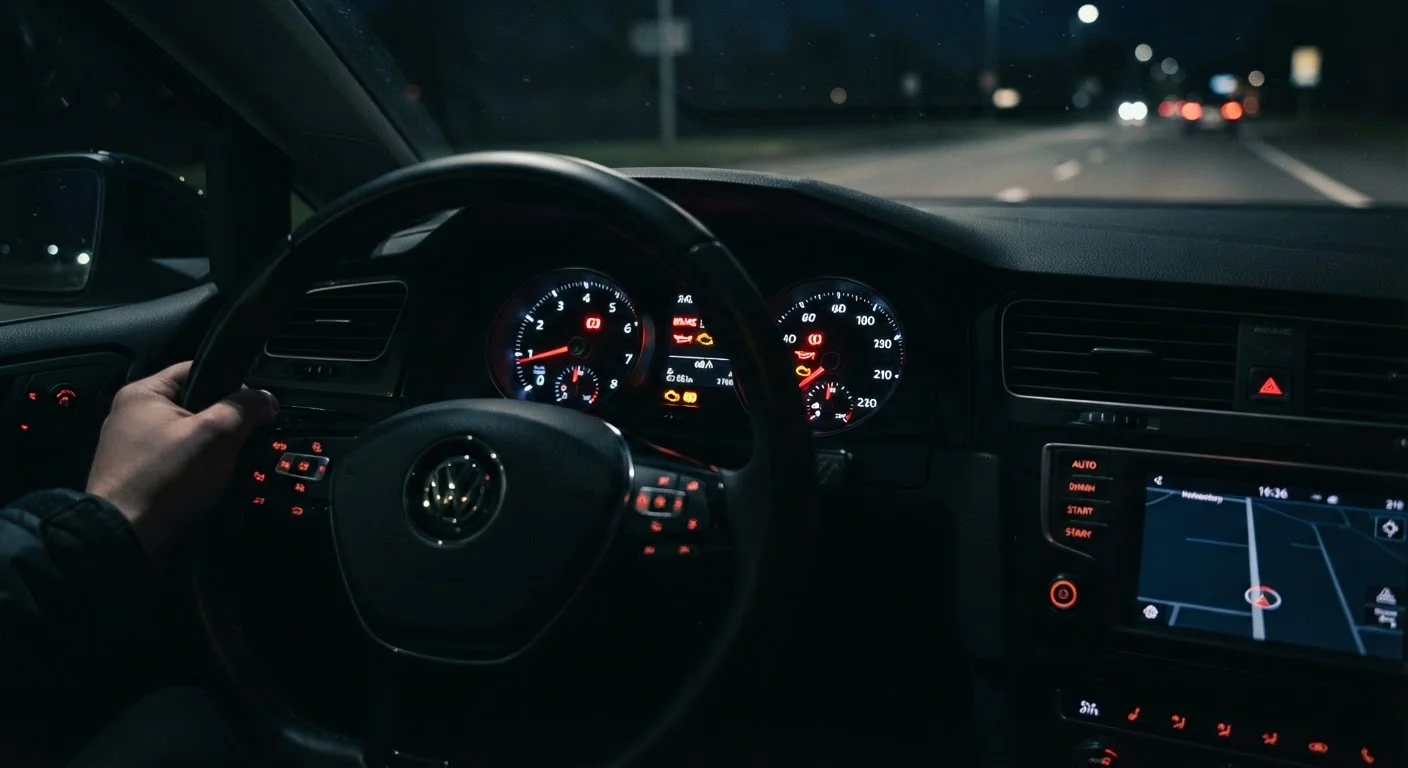
Dashboard warning lights follow a traffic-light logic that's worth memorizing. Red lights signal an immediate problem - oil pressure loss, overheating, brake system failure, or a seatbelt reminder. If a red light appears while driving, pull over safely as soon as conditions allow and do not continue until the cause is identified. Continuing to drive with a red oil or temperature warning can cause permanent engine damage within minutes.
Amber or yellow lights indicate a fault or condition that needs attention soon but typically doesn't require stopping immediately. The check engine light, TPMS alert, and traction control warnings usually fall here. Green or blue lights are informational - they confirm something is active, like high beams or cruise control.
| Colors used for warning lights | Red (urgent), Amber/Yellow (caution), Green/Blue (informational) (ISO 2575 vehicle symbol standards) |
| TPMS required in US vehicles since | 2008 (all new passenger vehicles) (NHTSA TPMS Final Rule) |
| Most common CEL trigger | Loose or faulty gas cap (causes evap system leak code) (EPA vehicle emissions guidance) |
| Safe driving range, low fuel light | Typically 30-50 miles depending on vehicle and driving conditions (General manufacturer estimates; check your owner's manual) |
| What to do with a red warning light | Pull over safely as soon as possible; do not continue driving |
| Free OBD-II scanning | Available at many US auto parts retailers at no charge |
For a deeper look at lights that first-time owners overlook entirely, see warning lights first-time owners often ignore.
The Most Common Lights - and What to Actually Do
Check Engine Light (CEL)
An amber or orange indicator triggered by the vehicle's onboard diagnostic system (OBD-II) when it detects a fault in the engine, emissions, or related systems. The light itself doesn't pinpoint the problem - a diagnostic scan is needed.
OBD-II Scanner
A tool that plugs into your car's data port (usually under the dashboard) and reads fault codes stored by the vehicle's computer. Many auto parts stores offer free scanning as a service.
Malfunction Indicator Lamp (MIL)
The formal technical name for the check engine light. It signals that the engine management system has logged at least one diagnostic trouble code (DTC).
TPMS
Tire Pressure Monitoring System - a federally mandated system (required on US vehicles since 2008) that alerts the driver when one or more tires drops significantly below the recommended inflation pressure.
ABS
Anti-lock Braking System - prevents wheels from locking under hard braking, helping the driver maintain steering control. An ABS warning light means this safety feature may not function correctly.
Diagnostic Trouble Code (DTC)
A standardized code stored by a vehicle's computer when a sensor or system reports an out-of-range reading. Codes follow a letter-number format (e.g., P0420) and help mechanics identify the fault.
Check Engine Light
Probably the most anxiety-inducing symbol on any dashboard. A steady amber check engine light means the vehicle's computer has logged a fault - often something minor like a loose gas cap, a failing oxygen sensor, or a catalytic converter issue. A flashing check engine light is more serious: it typically indicates an active engine misfire that can damage the catalytic converter. Stop driving and have it checked promptly if it flashes.
First step with a steady light: check that your gas cap is tight. If it was loose, the light may clear itself after a few drive cycles. If it stays on, get a free OBD-II scan to read the fault code before spending anything.
TPMS (Tire Pressure)
The horseshoe-with-exclamation symbol means at least one tire is significantly underinflated - generally 25% or more below the recommended pressure. Check all four tires with a handheld gauge; don't guess by looking. Correct the pressure and the light typically turns off within a few miles. If it stays on, one sensor may be faulty.
Oil Pressure Warning
A red oil can symbol is not a reminder to change your oil - it means oil pressure is critically low right now. Stop the engine as soon as safely possible. Check the oil level with the dipstick. If the level is normal and the light persists, the pressure sensor or oil pump may be failing. Do not drive further until a mechanic has diagnosed it.
Battery / Charging System
A battery symbol while driving means the alternator may not be charging the battery. Your car is running on battery reserve only. Turn off non-essential accessories, and get to a safe location or a repair shop soon - you may have 20-30 minutes of driving range before the vehicle loses electrical power entirely.
ABS and Brake Warning
The ABS light on its own means the anti-lock system is disabled but your standard brakes still work - allow extra stopping distance and get it inspected. A red brake warning light combined with a soft pedal can signal low brake fluid or a more serious hydraulic fault. Do not drive if you have any doubt about braking ability.
Your Owner's Manual Is the Real Authority
Warning light symbols and their exact meanings vary between makes and models. The descriptions here reflect common US standards, but always cross-reference your vehicle's owner's manual for model-specific guidance. A digital copy is usually available on the manufacturer's website if you don't have a physical one.
When to Drive On vs. When to Stop and Call
Knowing the urgency level prevents two opposite mistakes: ignoring a serious fault or stranding yourself unnecessarily over a minor one. As a practical rule:
- Stop immediately: Red oil pressure, red temperature (overheating), red brake warning with soft pedal, flashing check engine light.
- Drive to a shop soon (same day or next day): Steady amber check engine, ABS light alone, TPMS that doesn't clear after inflating tires.
- Schedule routine service: Maintenance reminder lights (wrench or oil-can symbols with a mileage counter), steady TPMS after verifying pressure is correct.
Unusual sounds often accompany warning lights - a grinding noise with a brake warning or a knocking with an oil light makes the situation more urgent, not less. For a guide to decoding what those sounds mean, see common car noises and what they mean.
Driving fatigued also reduces your ability to notice and respond to dashboard changes. If you're tired, your reaction to a sudden warning light is slower - one more reason to stay rested behind the wheel. Learn more in our article on driving fatigue and safety.
The broader Driving Skills & Safety hub covers everything from reading the road to handling emergencies, making it a useful bookmark for any new driver.
This article provides general educational information about vehicle warning systems and is not a substitute for diagnosis by a qualified mechanic. Always consult your vehicle's owner's manual and seek professional service when in doubt.