

| Number of essential amino acids | 9 (National Institutes of Health) |
| Main macronutrient categories | Carbohydrates, Protein, Fat |
| Calories per gram of fat | 9 kcal (USDA Dietary Guidelines) |
| Calories per gram of carbs or protein | 4 kcal each (USDA Dietary Guidelines) |
| Glycemic Index scale range | 0 - 100 |
| Daily Values based on | 2,000-calorie reference diet (U.S. FDA) |
Why Nutrition Vocabulary Matters
Walk into any conversation about eating well and you'll quickly encounter words like macronutrients, glycemic index, or bioavailability. Without a working knowledge of these terms, it's easy to feel lost - or worse, to misinterpret advice that could affect how you eat. This reference guide cuts through the jargon so you can read nutrition labels, research, and health articles with confidence.
Once you feel comfortable with these concepts, a natural next step is learning to decode nutrition labels, where this vocabulary gets applied line by line.
| Number of essential amino acids | 9 (National Institutes of Health) |
| Main macronutrient categories | Carbohydrates, Protein, Fat |
| Calories per gram of fat | 9 kcal (USDA Dietary Guidelines) |
| Calories per gram of carbs or protein | 4 kcal each (USDA Dietary Guidelines) |
| Glycemic Index scale range | 0 - 100 |
| Daily Values based on | 2,000-calorie reference diet (U.S. FDA) |
Core Nutrition Terms Defined
The terms below cover the most common concepts you'll encounter as a beginner. They are organized from foundational ideas outward, so each definition builds on the ones before it.
Macronutrients
The three main nutrient categories the body needs in large amounts: carbohydrates, protein, and fat. Each provides energy measured in calories and plays distinct roles in bodily function.
Micronutrients
Vitamins and minerals required in smaller amounts than macronutrients. They don't provide calories but are essential for processes like immune function, bone health, and energy metabolism.
Calories
A unit of energy. In nutrition, calories measure the energy a food provides to the body. The body uses this energy to power everything from breathing to exercise.
Fiber
A type of carbohydrate the body cannot fully digest. Fiber supports digestive health, helps regulate blood sugar levels, and contributes to feelings of fullness after eating.
Net Carbs
A calculated figure representing total carbohydrates minus fiber (and sometimes sugar alcohols). It is used to estimate carbohydrates that raise blood sugar. This term is common in low-carbohydrate diet contexts but is not a regulated term on official nutrition labels.
Glycemic Index (GI)
A scale from 0 to 100 rating how quickly a carbohydrate-containing food raises blood sugar compared to pure glucose. Foods with a high GI cause faster spikes; low-GI foods produce a slower, steadier rise.
Amino Acids
The building blocks of protein. The body uses 20 amino acids to build and repair tissues; nine of these are considered 'essential' because the body cannot make them and must obtain them from food.
Antioxidants
Compounds - including certain vitamins like C and E - that help neutralize unstable molecules called free radicals in the body. They are found in many fruits, vegetables, and nuts.
Omega-3 Fatty Acids
A type of polyunsaturated fat that the body cannot produce on its own. Omega-3s, found in fatty fish, flaxseed, and walnuts, are associated with heart and brain health in research settings.
Bioavailability
The proportion of a nutrient that the body can actually absorb and use from a food or supplement. A food may be high in a nutrient on paper but deliver less if that nutrient has low bioavailability.
Whole Foods
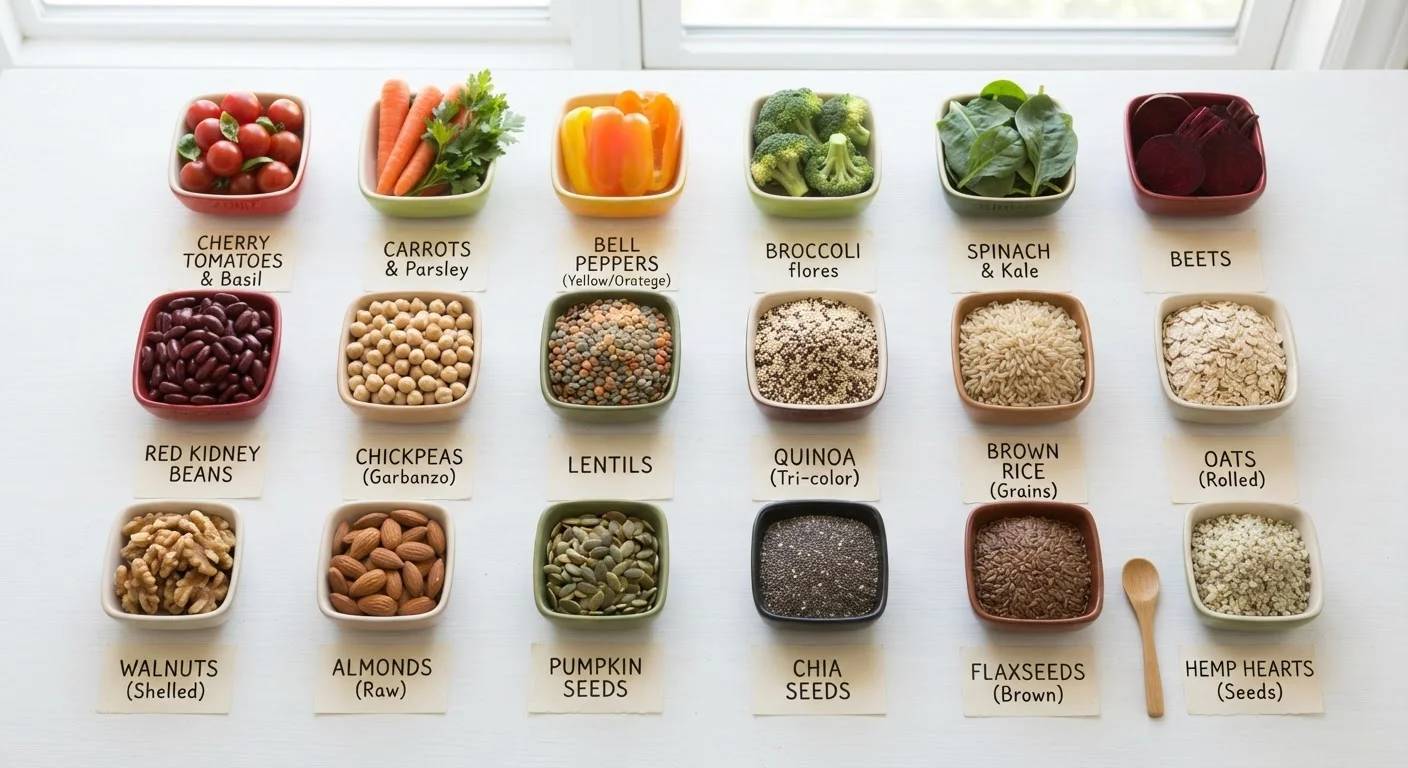
Foods that are minimally processed and as close to their natural state as possible - such as fresh vegetables, fruits, legumes, and whole grains - as opposed to heavily refined or packaged products.
Daily Value (DV)
A reference amount set by the U.S. Food and Drug Administration (FDA) representing how much of a nutrient a typical adult should consume per day. Nutrition labels show nutrients as a percentage of the DV per serving.
Keeping these definitions handy can also help you avoid early missteps. Many beginners misuse terms like clean eating or confuse net carbs with total carbohydrates - patterns explored in detail in our guide on common early nutrition mistakes.
Putting the Terms Together
Knowing individual definitions is useful, but nutrition concepts work as a system. For example: a food's glycemic index is partly shaped by its fiber content, which in turn affects how insulin responds - all of which ties back to the balance of macronutrients on your plate. Seeing these connections helps you evaluate nutritional claims more critically rather than reacting to buzzwords.
Terms vs. Prescriptions: An Important Distinction
Understanding a term like 'glycemic index' tells you what it measures - it doesn't tell you which GI target is right for you personally. Individual responses to foods vary based on health status, activity level, and other factors. Use this vocabulary to ask better questions, not to set rigid personal rules. A registered dietitian can help translate these concepts into guidance suited to your specific situation.
This article provides general health information and is not a substitute for personalized advice from a qualified healthcare professional or registered dietitian. If you have specific dietary concerns or health conditions, consult a professional before making significant changes to how you eat.
This article is for informational purposes only and does not constitute medical or dietary advice. Always consult a qualified healthcare professional for guidance specific to your health situation.