

Key Takeaways
Why the Label Matters - and Why It's Confusing
The Nutrition Facts label is a federally standardized tool, updated by the FDA, designed to help consumers make informed food choices. Despite that goal, most people scan it quickly, focus only on calories, and move on. The problem isn't the label itself - it's that no one explains the logic behind it.
Understanding the label doesn't require a nutrition degree. It requires knowing which rows to read, in which order, and what the numbers actually mean relative to your day. If you want to build that broader vocabulary first, the plain-language nutrition glossary is a solid starting point before diving in here.
What you will need
Step-by-Step: Reading the Label From Top to Bottom
The label is deliberately structured to be read top to bottom - and that order matters. Each section builds on the one before it. Follow these steps the next time you pick up a packaged food.
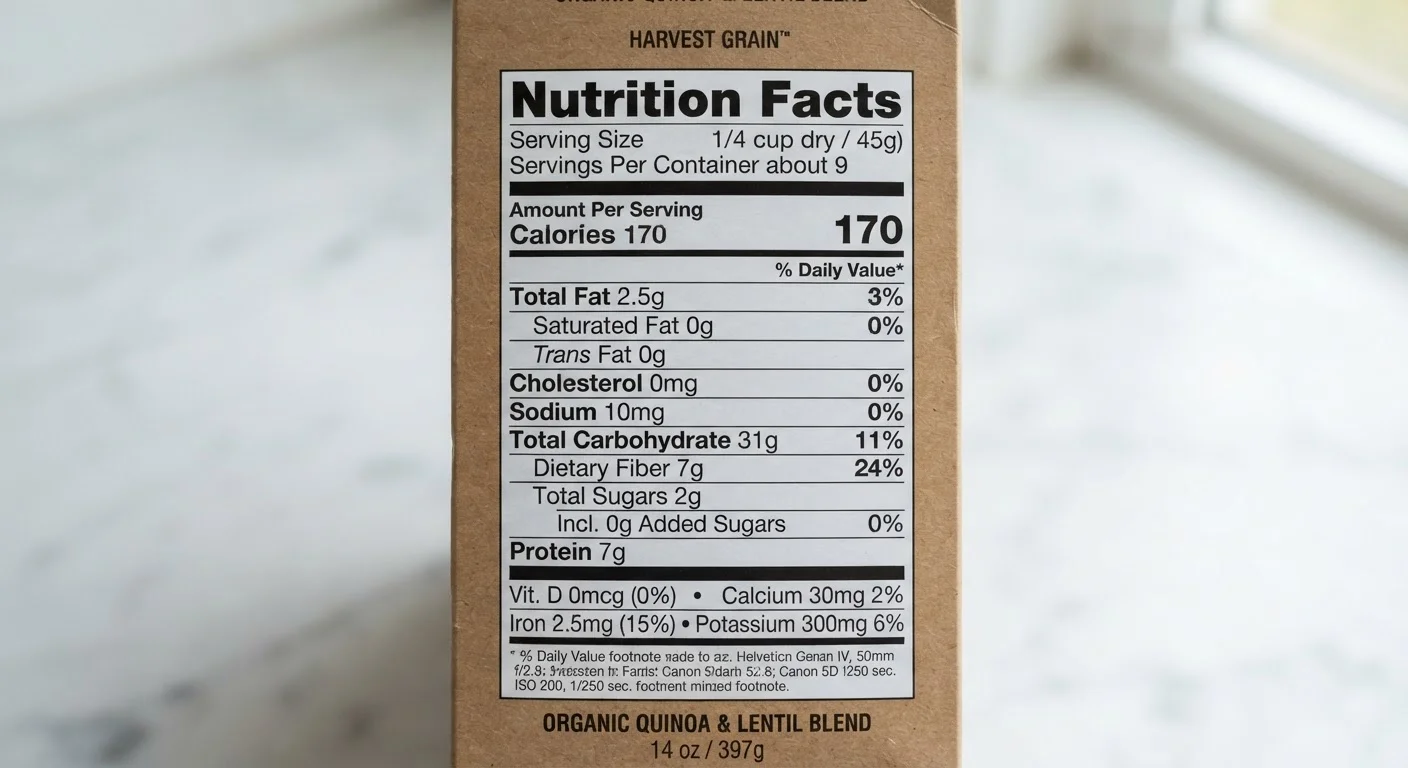
Start with serving size and servings per container
Every number on the label - calories, fat, sodium, everything - is calculated per serving, not per package. If a bag contains 2.5 servings and you eat the whole thing, multiply every number by 2.5. This single step changes most people's perception of what they're actually consuming.
Note the calorie count - but don't stop there
Calories measure energy. The label shows calories per serving prominently, which makes it easy to track energy intake. However, calorie count alone tells you nothing about a food's nutritional value. Two foods with identical calorie counts can differ dramatically in vitamins, fiber, protein, and other nutrients that affect how your body uses that energy.
Identify nutrients to limit
The label groups certain nutrients as ones most Americans consume in excess. These include:
- Saturated fat - linked to cardiovascular risk when consistently high in the diet
- Sodium - excessive intake is associated with elevated blood pressure
- Added sugars - calories with little nutritional payoff; the FDA requires this to appear separately from total sugars
Use the % Daily Value (%DV) column as a quick guide: 5% DV or less per serving is considered low for these nutrients.
Identify nutrients to seek out
Below the dividing line on most labels, you'll find nutrients many people don't get enough of: dietary fiber, vitamin D, calcium, iron, and potassium. Here, a %DV of 20% or more per serving is considered high - a good sign. Look for foods that contribute meaningfully to these rather than relying on supplements to fill gaps.
Use %DV as a compass, not a ceiling
Percent Daily Value is based on a 2,000-calorie reference diet used for labeling purposes. Your actual needs may differ based on age, activity level, health status, and other factors. Use %DV as a relative comparison tool - to see how a food fits within a whole day's intake - rather than a personal prescription.
Read the ingredient list
Ingredients are listed in descending order by weight. The first three or four ingredients make up the bulk of what you're eating. If a refined grain or added sugar appears at the top, that's what dominates the product. A short ingredient list with recognizable names generally indicates less processing - though this isn't a hard rule for all foods.
Common Pitfalls and What to Watch For
Even careful readers get tripped up by a few recurring issues.
- Misleading serving sizes: A bag of chips labeled as two servings still looks like a single-serving snack. Manufacturers set serving sizes based on typical consumption amounts, not on what's healthy. Always multiply.
- "0g trans fat" with partially hydrogenated oils: FDA rules allow rounding to zero if a serving contains less than 0.5g of trans fat. If you see partially hydrogenated oils in the ingredient list, some trans fat is present - it's just below the rounding threshold.
- Sugar by any other name: Ingredients like cane syrup, dextrose, maltose, and fruit juice concentrate are all forms of added sugar. The ingredient list reveals what the label's sugar row summarizes.
For a broader look at how these small misreads add up over time, see common beginner nutrition mistakes.
Use the 5%/20% Rule as a Quick Filter
When you're in a hurry, the 5/20 rule gives you a fast read on any nutrient: 5% DV or less means the food is low in that nutrient per serving, while 20% DV or more means it's high. Apply this to both the nutrients you want to limit and those you want more of - it works for both directions.
Putting It Together: What to Actually Prioritize
You don't need to analyze every row every time. Once the structure is familiar, you can triage quickly. For most packaged foods, a practical reading order is: serving size → calories → added sugars → sodium → fiber → protein.
Fiber is worth calling out specifically. It's one of the most under-consumed nutrients in the US diet, and the %DV column makes it easy to spot foods that actually contribute meaningfully - look for 10% DV or higher per serving. Our companion piece on fibre and what it actually does explains why it deserves that attention.
And remember: calories and nutrient quality are not the same thing. A 200-calorie food rich in fiber, protein, and micronutrients is nutritionally different from a 200-calorie food made almost entirely of added sugar - even though the calorie row looks identical. The label gives you enough information to tell them apart, if you know where to look.
For context on building meals that balance these elements, see the underlying principles of a balanced plate.
This article is for general informational and educational purposes only and does not constitute medical or dietary advice. Consult a registered dietitian or qualified healthcare professional for guidance specific to your health needs.