

Key Takeaways
Our Verdict
Neither plant nor animal protein is universally superior. Animal proteins offer complete amino acid profiles and high bioavailability, while plant proteins come bundled with fiber and phytonutrients that support long-term health. Research generally supports that both can meet protein requirements when dietary variety is prioritized.
| Best for | Recommended |
|---|---|
| Those seeking the most straightforward complete protein per meal | Animal protein |
| Those wanting added fiber, phytonutrients, and lower saturated fat alongside protein | Plant-based protein |
| Those following vegetarian or vegan diets | Plant-based protein (varied sources) |
| Those with no dietary restrictions seeking maximum flexibility | A combination of both sources |
What Protein Actually Does in Your Body
Protein is one of three macronutrients your body relies on daily. It's used to build and repair tissues, produce enzymes and hormones, and support immune function. Unlike carbohydrates or fat, your body doesn't store a large protein reserve - so a consistent daily intake from food matters.
All proteins are made from amino acids - think of them as links in a chain. There are 20 amino acids in total; nine of them are called essential amino acids because your body can't manufacture them on its own. You have to get them from food. This distinction - which foods supply all nine, and in what amounts - is at the core of the plant vs. animal protein debate.
Understanding protein quality also means understanding bioavailability: the share of protein your digestive system actually absorbs and puts to use. A food can look impressive on a nutrition label but deliver less usable protein than the number suggests. See our guide on calories vs. nutrients for more on why label numbers don't tell the whole story.
How Animal and Plant Proteins Compare
Animal proteins - from sources like eggs, poultry, fish, dairy, and red meat - are complete proteins. They contain all nine essential amino acids in proportions that closely match what human muscle tissue needs. They also score high on bioavailability measures like the PDCAAS and DIAAS, the scales nutrition scientists use to rate protein quality.
Most plant proteins - from legumes, grains, nuts, and seeds - are incomplete, meaning they're low or missing in one or more essential amino acids. Lentils, for example, are low in methionine; rice is low in lysine. However, soy and quinoa are notable exceptions: both are plant-based complete proteins.
The practical fix for incomplete plant proteins is straightforward: variety. When you eat different plant protein sources throughout the day - say, legumes at lunch and whole grains at dinner - their amino acid profiles complement each other, collectively meeting your needs. You don't need to combine them in the same meal, as was once commonly believed.
| Animal Protein | Plant Protein | |
|---|---|---|
| Amino acid completeness | Complete (all 9 essential amino acids) | Often incomplete; soy and quinoa are exceptions |
| Bioavailability | Generally high (DIAAS scores near 1.0) | Moderate; varies by source and preparation |
| Saturated fat content | Can be higher (especially red meat) | Generally low |
| Fiber content | None | Present in most whole-food sources |
| Key micronutrients | B12, heme iron, zinc, omega-3s (fish) | Phytonutrients, folate, magnesium |
| Nutrient gaps to watch | Saturated fat (some sources) | B12, iron, zinc, calcium |
Animal proteins also tend to carry nutrients that are harder to get from plants: vitamin B12, heme iron (a more absorbable form), zinc, and omega-3 fatty acids (particularly in fatty fish). Plant proteins, by contrast, come packaged with dietary fiber, antioxidants, and phytonutrients - compounds associated with reduced chronic disease risk - and are generally lower in saturated fat.
Practical Protein Sources Worth Knowing
Rather than choosing a single category, most nutrition guidance suggests thinking in terms of food patterns over time. Here's a brief look at high-value sources in each group:
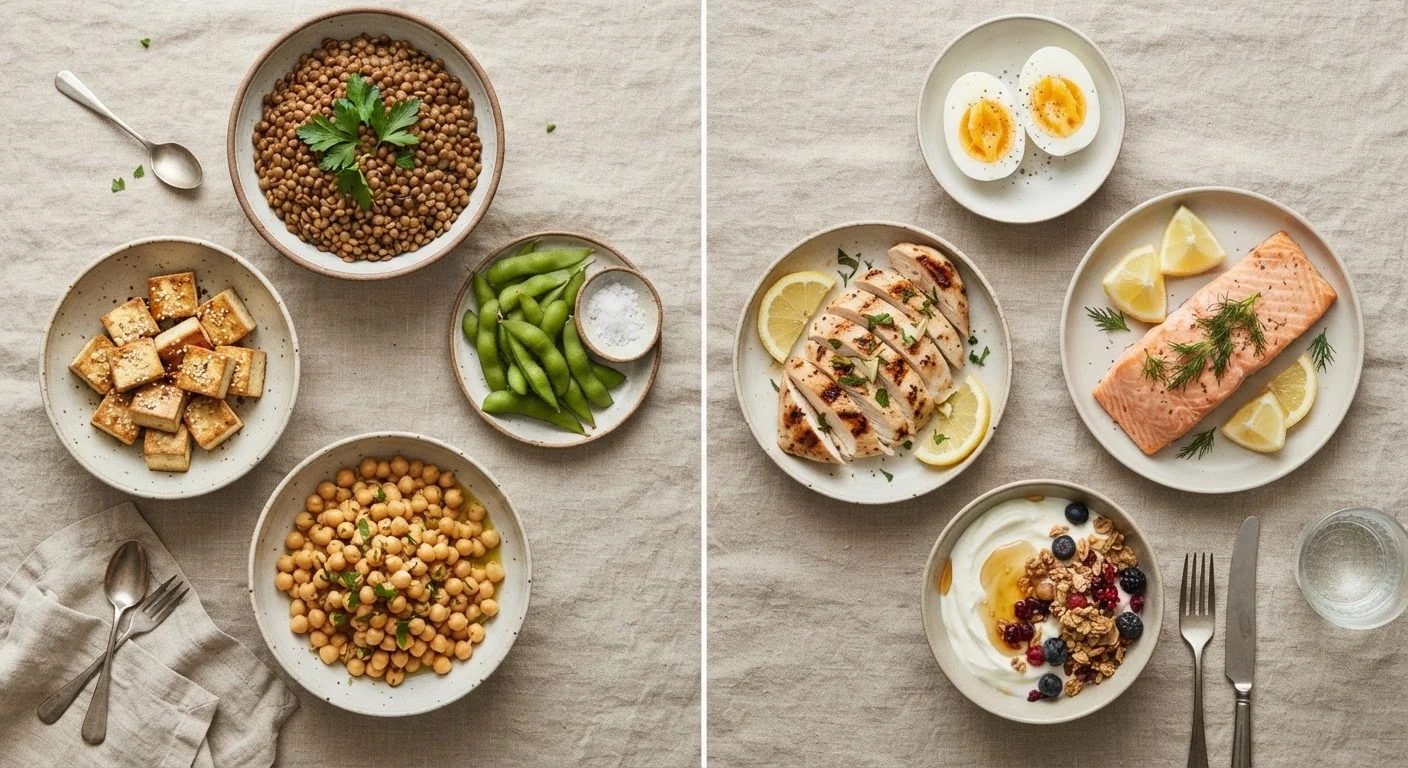
- Animal: Eggs (highly bioavailable, affordable), Greek yogurt (protein + probiotics), canned salmon or sardines (protein + omega-3s), skinless poultry, low-fat dairy.
- Plant: Lentils and beans (protein + fiber + iron), tofu and tempeh (soy-based complete proteins, versatile), edamame, quinoa, hemp seeds.
If you rely primarily on plant sources, consider monitoring vitamin B12, iron, and zinc intake - these nutrients are less abundant or less absorbable from plant foods alone. A registered dietitian can help you assess whether your current diet is meeting your needs, especially if you're transitioning away from animal products.
Combining Plant Proteins Is Easier Than You Think
You don't need to engineer perfectly complementary meals at every sitting. Eating a range of legumes, whole grains, nuts, and seeds across the course of a day naturally fills the amino acid gaps. Think of it as a daily pattern rather than a per-meal calculation. Variety is the practical strategy.
For a broader look at how protein fits into a full meal, our guide to building a balanced meal walks through the structural logic of a well-rounded plate.
What the Research Broadly Suggests
Large-scale dietary research - including work from institutions like the Harvard T.H. Chan School of Public Health - generally finds that diets emphasizing plant proteins are associated with favorable cardiovascular and metabolic outcomes compared to diets heavy in processed or red meat. However, research also shows that high-quality animal proteins (like fish, eggs, and dairy) are compatible with healthy dietary patterns.
It's worth noting that nutrition science involves significant complexity: studies often measure dietary patterns rather than isolated nutrients, and individual health status, genetics, activity level, and total diet all interact. No single study resolves the debate, and that's normal for an evolving field.
What's well-supported: eating a wide variety of protein sources, limiting ultra-processed versions of either type (processed meat or highly refined plant-based packaged foods), and anchoring choices in whole and minimally processed foods where possible.
This article is for general informational purposes only and is not medical or dietary advice. Please consult a qualified healthcare professional or registered dietitian for guidance tailored to your individual health needs.