

Key Takeaways
Why Small Changes Make a Big Difference
A full renovation is rarely the only path to a room that feels better to live in. In many cases, the upgrades that most visibly shift a room's atmosphere cost under $100 and take an afternoon. The trick is knowing which details your eye actually registers - and which ones tend to go unnoticed regardless of how much you spend.
This list focuses on targeted changes that deliver noticeable returns in how a space feels: lighter, more coherent, more finished. If you're new to home improvement, these are excellent starting points. For a broader foundation, our guide to home maintenance for beginners covers the core upkeep habits that make everything else easier. And if you've run into misleading advice before, it's worth reading up on common DIY myths that cost beginners time and money before starting any project.
Replace Cabinet and Door Hardware
Cabinet pulls, drawer knobs, and door hinges are the jewelry of a room - small, but immediately visible. Dated brass or builder-grade chrome handles can make an otherwise clean kitchen or bathroom read as old, while updated hardware in a consistent finish (matte black, brushed nickel, and antique brass are all popular choices) pulls a space together with minimal effort.
Most pulls and knobs use standard screw spacing, making swaps straightforward: unscrew the old, align the new, tighten in place. If you're moving from a single-hole knob to a bar pull with two mounting points, you'll need to drill a second hole - measure carefully and use a painter's tape guide to keep things level. A handheld drill and a steady hand are all that's needed.
Consistent hardware finish is one of the simplest ways to make a kitchen feel intentionally designed.
Add or Reposition a Mirror
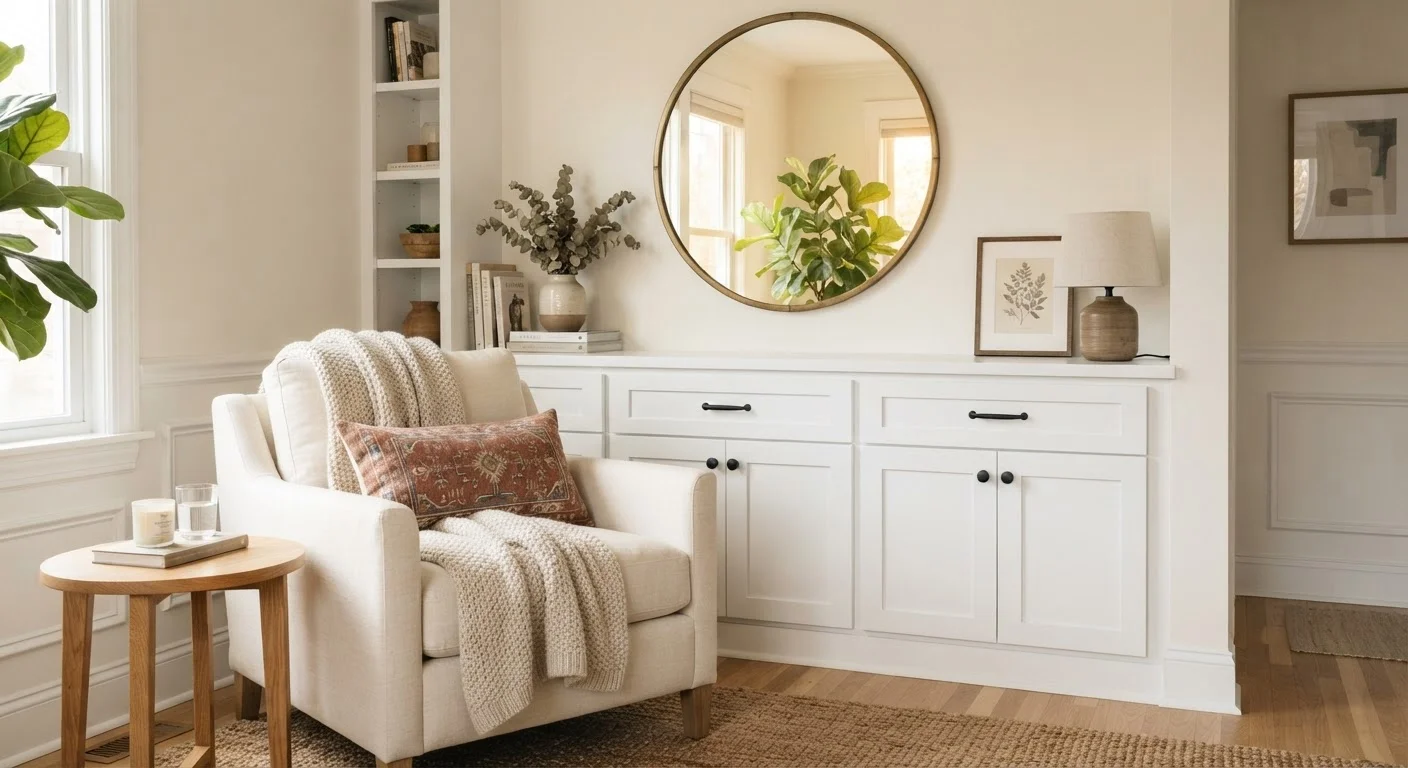
Mirrors do two things that are hard to replicate with any other single object: they bounce light into dim corners, and they create the visual impression of more space. A large mirror on a wall opposite a window can effectively double the perceived brightness of a room during daylight hours.
Positioning matters more than size. A mirror hung too high reads as decorative but ineffective; placed at eye level or leaning against a wall, it integrates naturally into the room. In narrow hallways or small bedrooms, a full-length mirror on one wall can make the space feel significantly less confined. When hanging anything substantial, locate studs or use appropriate wall anchors rated for the weight.
A mirror opposite a window can effectively double a room's perceived brightness without any electrical work.
Paint or Touch Up Trim and Baseboards
Trim - the molding around doors, windows, and along floors - frames every surface in a room. When it's scuffed, yellowed, or a mismatched off-white, it creates visual noise that's easy to overlook consciously but hard to shake as an impression. A fresh coat of bright white or crisp neutral on all trim in a room takes a few hours and makes walls and floors look cleaner by contrast.
Use a semi-gloss or gloss paint for trim; it's more durable and easier to wipe down than flat or eggshell. Tape carefully along the edges, cut in with a small angled brush, and work in thin coats. This is a project where preparation - light sanding and a wipe-down with a damp cloth before painting - makes a measurable difference in the final result.
Fresh trim paint makes walls and floors look cleaner, even when neither has been touched.
Adjust Your Lighting - Bulbs First, Fixtures Second
Color temperature (measured in Kelvins) has a dramatic effect on how a room feels. Bulbs in the 2700-3000K range cast a warm, amber-toned light associated with relaxation; bulbs at 4000K and above produce cooler, bluer light that can feel clinical in living spaces. If a room feels oddly sterile or uninviting, check the bulbs before assuming anything structural is wrong.
Adding a dimmer switch to an existing overhead fixture is a relatively simple electrical upgrade, but it does involve working with wiring - if you're not comfortable doing so, this is a task worth delegating to a licensed electrician. Swapping bulbs, however, is immediate, reversible, and costs very little. Layering light sources (overhead, floor lamp, table lamp) gives you far more control over mood than relying on a single ceiling fixture.
Bulb color temperature shapes how a room feels emotionally - warm tones relax, cool tones energize.
Swap Out Curtains or Add a Rug
Textiles define the acoustic and visual texture of a room in ways that paint and hardware cannot. Heavy curtains that pool on the floor make ceilings feel taller and rooms feel more considered. Sheer panels let in light while softening hard window lines. Either direction is a meaningful shift from bare windows or dated blinds.
Rugs, meanwhile, anchor furniture groupings and signal where a seating or dining zone begins and ends. A rug that's too small for the furniture it sits beneath is one of the most common layout mistakes in living rooms - ideally, the front legs of all major seating pieces should rest on the rug. If budget is a concern, starting with curtains (which cover more visual real estate per dollar) tends to deliver faster results.
A rug that's correctly sized for your furniture grouping can make a living room feel intentionally composed.
Declutter One Surface Completely
This isn't strictly an upgrade in the material sense, but it reliably changes how a room feels - often more dramatically than any purchase. Identifying one surface (a countertop, a coffee table, a windowsill) and clearing it entirely creates a visual rest point that makes the whole room read as calmer and more spacious.
The discipline here is in maintenance rather than the initial clear-out. Designating a drawer or bin nearby for the items that tend to collect on that surface gives you a functional place for them that isn't in eyesight. Over time, the habit of one clear surface tends to propagate to others.
One completely clear surface can make a whole room feel less cluttered, with no spending required.
Building Confidence, One Change at a Time
None of the upgrades above require demolition, specialist tools, or significant expense. What they do require is a bit of patience, an eye for proportion, and a willingness to commit to a choice. Starting small is not a compromise - it's a sensible way to learn how your space responds to change before you invest in anything larger.
Start With What You Notice Most
Before deciding where to begin, spend five minutes in the room you want to change and note what your eye is drawn to - positively or negatively. The things that bother you most are usually the highest-value targets. Working from your own honest observations tends to produce better results than following a generic checklist.
Once you've worked through a few of these changes, you'll likely find that the room's remaining rough edges become clearer - and easier to address systematically. Small wins build the judgment that bigger projects demand.