

Key Takeaways
Damp, Mould, and Condensation
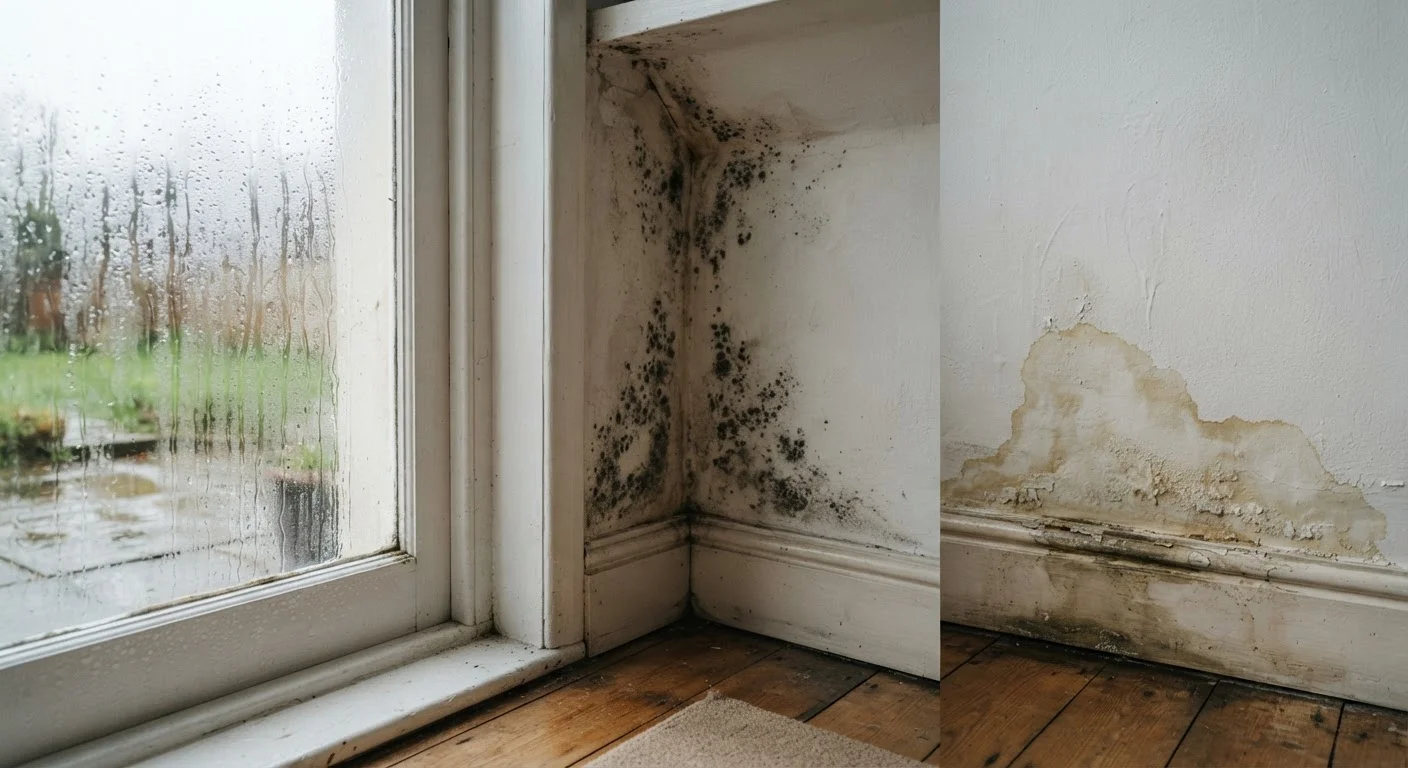
These are three related but distinct moisture problems that affect homes. Condensation forms when warm, humid air meets a cold surface. Damp refers to moisture entering the structure from outside or rising through the ground. Mould is a living organism - a fungus - that grows wherever persistent moisture provides the right conditions.
Mould can begin colonising a surface within 24-48 hours of sustained moisture, which is why identifying the underlying moisture source quickly matters more than treating visible growth alone.
Why Getting the Diagnosis Right Matters
Walk into most hardware stores and you'll find shelves of anti-mould sprays, damp sealants, and moisture absorbers - all presented as universal fixes. The problem is that damp, mould, and condensation are genuinely different problems with different causes, and reaching for the wrong solution wastes money while the real issue quietly worsens.
A mould spray applied over penetrating damp, for example, will suppress visible growth for a few weeks at most. Meanwhile, moisture continues to saturate the wall behind the surface, potentially weakening plaster, rotting timber, and creating conditions for a much costlier repair later on. Getting the diagnosis right first is the most cost-effective thing you can do. If you want to understand what other household symptoms might signal, this overview of common home warning signs is a useful starting point.
1 in 5
UK homes affected by damp or mould
Government housing surveys have consistently found that roughly one in five homes in England report some form of damp, mould, or condensation problem.
24-48 hrs
Time for mould to begin colonising a wet surface
Building science research indicates mould spores can begin establishing on persistently damp materials within one to two days, underscoring the importance of rapid moisture control.
~1 metre
Maximum height rising damp typically reaches
Capillary action - the process that draws water upward through porous masonry - generally loses force at around one metre above ground level, making tide-mark height a useful diagnostic clue.
Condensation: The Most Common Culprit
Condensation occurs when water vapour in warm indoor air cools and converts to liquid on contact with a cold surface. Windows, external walls, and uninsulated pipes are the most common locations. It tends to be worst on cold winter mornings and in rooms where a lot of moisture is generated - kitchens, bathrooms, and rooms where wet laundry is dried indoors.
Key signs of condensation: water droplets or streaks on glass, a persistently steamed-up bathroom mirror that takes a long time to clear, or a damp, musty smell that fades when windows are opened. It is a lifestyle and ventilation problem, not a structural one, which means the fixes are generally affordable.
Improving airflow is the primary solution. Running extractor fans during and after cooking or showering, briefly opening windows to purge humid air, and ensuring furniture isn't pressed flush against external walls all make a measurable difference. Understanding how home ventilation works can help you plan a more systematic approach, especially in older or poorly insulated properties.
The Plastic Sheet Test for Damp
If you can't tell whether a damp patch is condensation or structural moisture, try taping a 30 cm square of plastic sheeting firmly over the area and leave it for 48 hours. If moisture forms on the outer (room-facing) side of the plastic, it's condensation settling on the wall surface. If moisture appears behind the plastic, between it and the wall, water is coming through the structure - which points toward penetrating or rising damp and warrants a professional inspection.
Penetrating and Rising Damp: Structural Moisture Problems
Unlike condensation, structural damp involves moisture entering the building from outside or below ground. There are two main types:
- Penetrating damp enters horizontally through defects in the external fabric - cracked render, damaged pointing (the mortar between bricks), blocked gutters, or faulty flashings around chimneys and window frames. The hallmark is a wet patch that appears or enlarges during or after sustained rainfall.
- Rising damp travels upward through porous masonry from the ground when the damp-proof course (a waterproof barrier built into the base of walls) is missing, damaged, or bridged by accumulated debris. It typically appears as a tide-mark stain up to about one metre above floor level, often with salting - white crystalline deposits left behind as moisture evaporates.
Both types need professional assessment before treatment. Attempting DIY damp-proofing without identifying the exact entry point is rarely effective and, in some cases, can trap moisture inside the wall rather than allowing it to dry out. Check whether permits or specialist contractors are required in your area before proceeding with any structural remediation work.
Mould: Symptom, Not Source
Mould is a living organism, and treating it as a surface stain is the single most common mistake homeowners make. Visible mould - usually black, green, or grey patches with a fuzzy or powdery texture - is always a symptom of an underlying moisture problem. Remove the growth but leave the moisture, and mould will return, often within weeks.
The most important step is to identify what type of moisture is sustaining the growth. Mould in bathroom grout after inadequate ventilation is a very different problem from mould spreading across a bedroom wall that also shows signs of tide-marking. The former is a condensation issue; the latter may indicate penetrating damp and needs structural investigation.
It's worth noting that the common belief that bleach permanently kills mould is contested - several home maintenance myths, including this one, can lead to real damage if acted upon without understanding the underlying cause. Effective long-term mould management always starts with resolving the moisture source.
Practical First Steps for Each Problem
Once you've identified which problem you're dealing with, a clearer action plan follows:
- Condensation
- Increase ventilation: run extractor fans, open windows briefly after bathing or cooking, consider a whole-house ventilation assessment in particularly airtight homes. Reducing the temperature differential between indoor air and wall surfaces - through modest draught-proofing and insulation - also helps. Draught-proofing is one of the more impactful low-cost upgrades available to renters and homeowners alike.
- Penetrating damp
- Inspect and repair the external fabric: clear gutters, repoint damaged mortar, fix cracked render, and check flashings. Addressing the external defect is the fix - internal treatments alone are not sufficient.
- Rising damp
- Get a professional survey to confirm the diagnosis, assess the damp-proof course, and recommend appropriate remediation. Verify whether your local authority requires permits or licensed contractors for this type of structural work.
- Mould
- Resolve the moisture source first. Then remove surface mould using appropriate safety precautions (gloves, a face mask, good ventilation during cleaning). For widespread or recurrent mould, professional remediation is advisable.
This article is for general informational purposes only. For structural damp, widespread mould, or any work involving the building fabric, always consult a qualified, licensed professional and verify local building regulations and permit requirements before beginning any remediation work.