

Key Takeaways
Budget
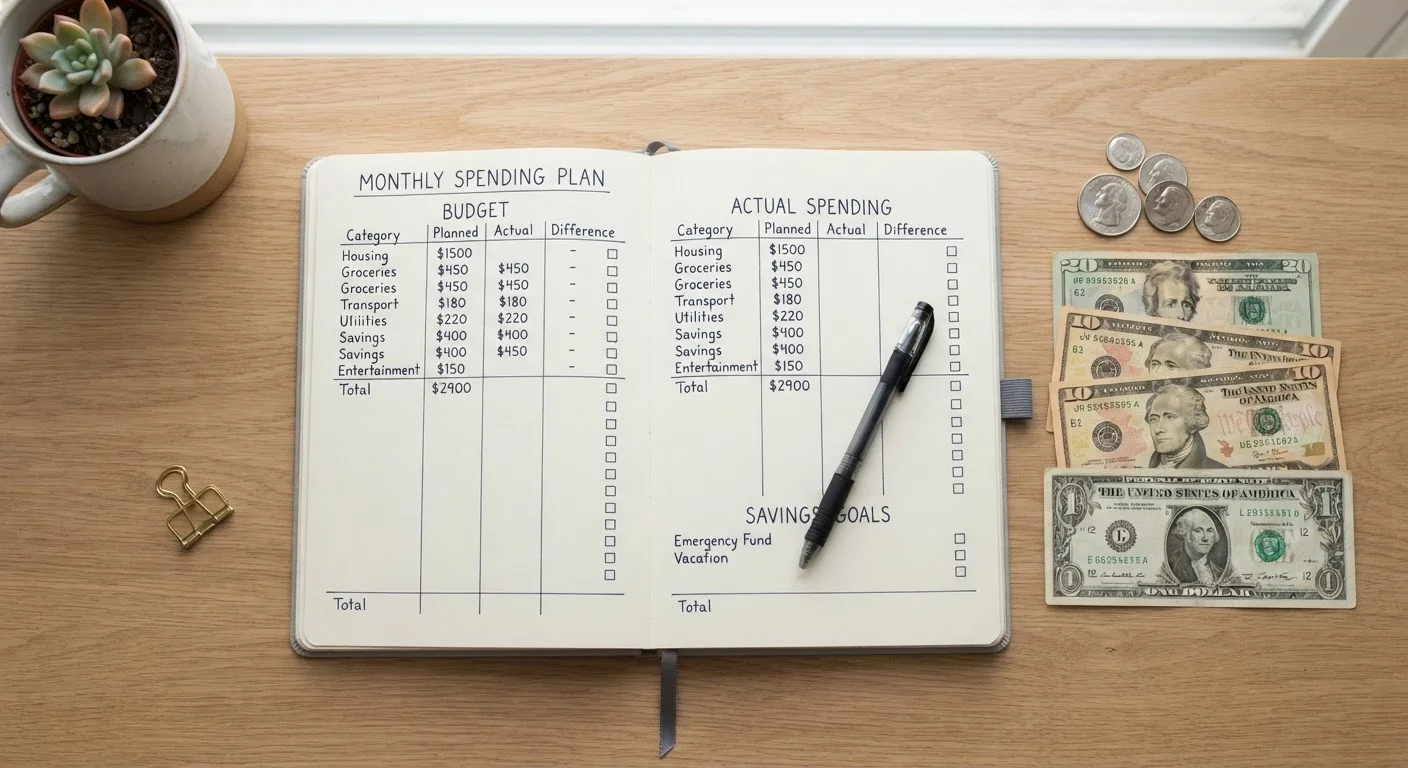
A budget is a plan that tells your money where to go before you spend it. It maps your expected income against your planned expenses over a set period - usually one month. Think of it less as a set of restrictions and more as a decision you make in advance about your priorities.
In personal finance, a budget is often expressed as an income-and-expense statement covering a fixed time horizon, used to align spending with financial goals and identify cash flow gaps.
The Definition Most People Miss
Ask someone what a budget is and you'll often hear something like: "It's what stops you from buying things you want." That framing is exactly why so many people avoid making one.
A budget is simply a plan for your money. Specifically, it's a document - or a spreadsheet, or even a notebook page - that matches your expected income to your planned spending across a set period. Most household budgets cover one calendar month.
What makes a budget different from just checking your bank balance is its orientation in time. A bank balance tells you where you stand right now. A budget tells you where your money is going - before it leaves your account. That forward-looking quality is the whole point.
Budgeting vs. Tracking: A Key Distinction
Expense tracking apps show you what you already spent. A budget is a plan for what you intend to spend. Both tools are valuable, but they serve different purposes. Tracking tells you what happened; a budget shapes what will happen. Using both together gives you the clearest financial picture.
If you're new to the vocabulary of budgeting, essential budgeting terms every beginner should know covers key words like net income, fixed expenses, and discretionary spending in plain language.
Why the "Restriction" Framing Backfires
The most common misconception about budgeting is that it means telling yourself no. In reality, a well-built budget does the opposite - it tells you yes with confidence.
When you assign every dollar a purpose before the month starts, you know exactly how much is available for rent, groceries, savings, and yes, going out for dinner. You're not guessing. You're not hoping there's enough left. You decided in advance. That's not restriction - that's control.
The restriction feeling usually comes from one of two problems: the budget is too rigid, leaving no room for enjoyment; or it's based on an idealized version of spending habits rather than actual ones. Both are fixable design flaws, not proof that budgets don't work.
Start Simple, Then Refine
Your first budget doesn't need to be perfect - it needs to exist. Start with just three categories: needs, wants, and savings. Once you have a month of real data, you can break those into more specific line items. An imperfect plan beats no plan every time.
Common budgeting myths worth reading before you start can help you approach the process with realistic expectations rather than dread.
What a Budget Actually Contains
A functional budget has three core components:
- Income: Every source of money you expect to receive in the month - wages, freelance pay, side income. Use your net income (after taxes and deductions), not your gross salary.
- Fixed expenses: Costs that stay the same each month and are generally non-negotiable - rent, loan payments, insurance premiums.
- Variable expenses: Costs that fluctuate - groceries, gas, utilities, entertainment. These are the categories where most of the day-to-day decision-making happens.
The goal is simple: the sum of your planned expenses should not exceed your income. Ideally, the difference goes toward a savings goal or an emergency fund rather than sitting unassigned.
~33%
Americans with a formal written budget
Surveys by the National Foundation for Credit Counseling have consistently found that only about one-third of US adults maintain a detailed household budget.
$1,000
Common emergency fund benchmark for beginners
Many personal finance educators suggest a starter emergency fund of $1,000 as a first savings milestone - a goal that is easiest to hit when tracked inside a budget.
3-6 months
Recommended emergency expense coverage
Financial planning guidelines generally recommend building reserves covering three to six months of essential living expenses, a target a budget helps make visible and achievable.
Ready to put this into practice? Building your first budget in seven steps walks you through the process from start to finish in plain language.
A Budget Is a Living Document
One of the most important things to understand about a budget is that it is never truly finished. Life changes - you get a raise, a bill goes up, an unexpected car repair appears. A budget that was accurate in January may be completely wrong by March.
Treating a budget as a one-time task is one of the top reasons budgets fail. The tool itself isn't broken; it just stopped being updated. Habits that keep a budget working long after you set it up explains how a few consistent routines - like a quick monthly review - keep your plan accurate and useful over time.
If you've tried budgeting before and felt like it always collapsed mid-month, the plan's design may be the real culprit. Why your budget keeps failing before the month ends explores the structural issues that undermine even well-intentioned spending plans.
This article is for general informational and educational purposes only and does not constitute personalized financial advice. For guidance specific to your situation, consider consulting a qualified financial professional.