

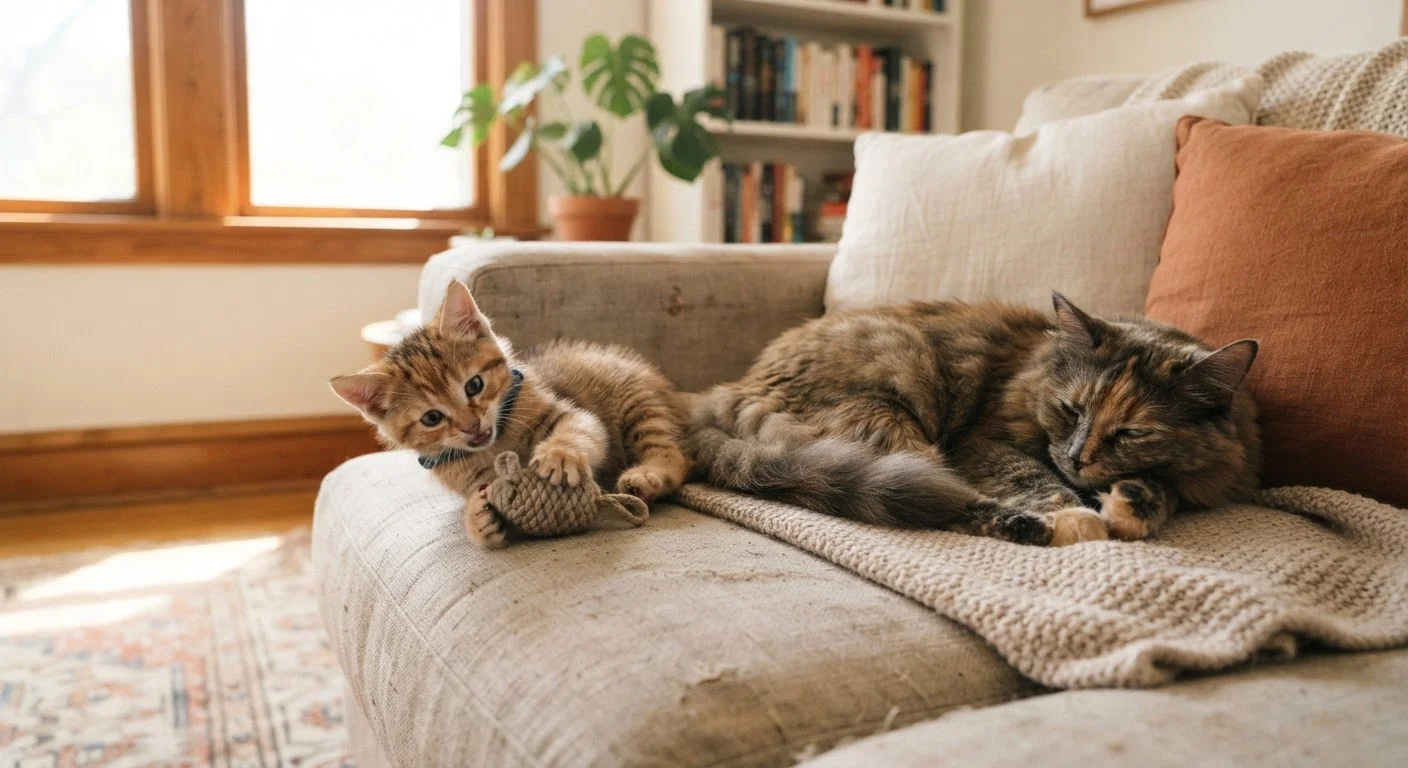
Key Takeaways
You can shape their habits and socialization early
Kittens are highly impressionable, and consistent early exposure to handling, sounds, and routines can result in a more confident, adaptable adult cat.
Higher energy makes for entertaining companionship
If you're home often and enjoy interactive play, a kitten's curiosity and activity level can be genuinely fun - especially for younger households.
Potentially longer time together
Adopting at eight to twelve weeks means you may share twelve to eighteen or more years together, which appeals to those looking for a long-term companion from the start.
Easier to introduce to other young pets
Kittens often integrate more readily with other young animals because they haven't yet established strong territorial behaviors.
Personality is largely unknown until adulthood
A playful kitten may grow into a shy or high-strung adult - you're making a long-term commitment based on limited behavioral data.
What you see is what you get - stable personality
An adult cat's temperament, energy level, and social preferences are already established, letting you choose a cat that genuinely fits your lifestyle and household.
Lower upfront veterinary costs at adoption
Adult cats from shelters are typically already spayed or neutered, vaccinated, and microchipped, which meaningfully reduces first-year expenses compared to kitten care.
Calmer energy suits busy or quieter households
Adult cats generally require less supervision, sleep more, and are less likely to engage in the destructive play behavior common in kittens.
Adjustment period can take weeks or months
Some adult cats - particularly those from stressful shelter environments - need more time to decompress and show their true personality, which can feel discouraging without proper expectations.
Our Verdict
Neither kittens nor adult cats are universally the better choice - the right answer depends on your household, schedule, and experience level. Kittens suit those with time, energy, and a desire to shape a cat's personality from scratch. Adult cats are often the smarter fit for busy individuals, families with young children, or anyone who wants a calmer, more predictable companion from day one.
First-time cat owners with limited free time or a quieter home environment will generally find adult cats easier to manage and equally rewarding to bond with.
Why the Age Question Matters
When you walk into a shelter, the pull toward a tiny, wide-eyed kitten is nearly universal. But choosing a cat based on age is one of the most consequential decisions a first-time owner can make. Age shapes energy level, training demands, adjustment time, and even how predictable the experience will be - and those differences are significant enough to affect whether the relationship thrives.
This isn't about which is cuter. It's about matching a living animal's genuine needs to your actual life. Before you commit, it helps to understand what each stage realistically involves. You may also want to read what to expect in the first days with a new cat to prepare for whichever path you choose.
The Case for Adopting a Kitten
Kittens - generally defined as cats under one year old - are endlessly appealing, and the appeal isn't purely superficial. There are genuine advantages to starting with a young cat.
You can shape their habits and socialization early
Kittens are highly impressionable, and consistent early exposure to handling, sounds, and routines can result in a more confident, adaptable adult cat.
Higher energy makes for entertaining companionship
If you're home often and enjoy interactive play, a kitten's curiosity and activity level can be genuinely fun - especially for younger households.
Potentially longer time together
Adopting at eight to twelve weeks means you may share twelve to eighteen or more years together, which appeals to those looking for a long-term companion from the start.
Easier to introduce to other young pets
Kittens often integrate more readily with other young animals because they haven't yet established strong territorial behaviors.
That said, kittens also demand a level of commitment that surprises many first-time owners. They need multiple vet visits in their first year for vaccines, deworming, and spay or neuter surgery. See our overview of routine vet care across each life stage to understand what that schedule looks like. They're also prone to accidents, destructive play, and waking you at 3 a.m. - none of which is a deal-breaker, but all of which require honest self-assessment.
The Case for Adopting an Adult Cat
Adult cats - typically one year and older - are often overlooked in shelters, but they bring real advantages that younger cats simply can't offer.
Personality is largely unknown until adulthood
A playful kitten may grow into a shy or high-strung adult - you're making a long-term commitment based on limited behavioral data.
What you see is what you get - stable personality
An adult cat's temperament, energy level, and social preferences are already established, letting you choose a cat that genuinely fits your lifestyle and household.
Lower upfront veterinary costs at adoption
Adult cats from shelters are typically already spayed or neutered, vaccinated, and microchipped, which meaningfully reduces first-year expenses compared to kitten care.
Calmer energy suits busy or quieter households
Adult cats generally require less supervision, sleep more, and are less likely to engage in the destructive play behavior common in kittens.
Adjustment period can take weeks or months
Some adult cats - particularly those from stressful shelter environments - need more time to decompress and show their true personality, which can feel discouraging without proper expectations.
~25%
Adult cat adoption rate vs. kittens in shelters
Shelter data consistently shows adult cats are adopted at lower rates than kittens, despite often requiring less intensive care from new owners.
12-18 years
Average indoor cat lifespan
According to the American Veterinary Medical Association, indoor cats typically live between 12 and 18 years, making age at adoption a meaningful consideration for long-term planning.
One common concern is that adult cats won't bond as deeply with a new owner. Behaviorists and shelter staff consistently push back on this. Cats form attachments based on trust and consistency, not age at adoption. Many adult cats - especially those from loving prior homes - settle in quickly and become devoted companions. Patience in the first few weeks makes an enormous difference.
Key Factors to Weigh Before Deciding
No checklist can make this choice for you, but these are the variables that matter most:
- Time availability: Kittens need near-constant supervision and structured play for the first several months. If you work long hours, an adult cat will adapt more easily to your routine.
- Household composition: Homes with very young children or elderly family members may be better suited to a calmer adult cat with a known temperament.
- Other pets: Introducing a kitten to an existing adult cat is often (though not always) smoother than two adult cats meeting for the first time. Shelters can often advise on compatibility.
- Budget: First-year kitten costs - vaccines, spay/neuter, supplies - can add up quickly. Adult cats from shelters are often already vaccinated and altered, lowering upfront costs.
- Experience level: If you've never owned a cat before, an adult with a documented personality removes a lot of guesswork.
Shelter Staff Are a Valuable Resource
Good shelters conduct behavioral assessments and can tell you a great deal about an individual cat's history, socialization, and personality - especially for adults. Don't hesitate to ask detailed questions before committing. A staff member who knows a cat well can help you avoid a mismatch and find a genuinely compatible fit for your home.
For a useful parallel if you're also considering dogs, the same age-based tradeoffs apply - see our piece on puppy vs. adult dog adoption.