

Key Takeaways
Start here
Is an Indoor Rabbit Right for You?
Next
Setting Up Your Rabbit's Living Space
Then
Diet and Nutrition Basics
Safety first
Rabbit-Proofing Your Home
Build connection
Social Needs and Handling
Stay prepared
Veterinary Care and Health Basics
Is an Indoor Rabbit Right for You?
Rabbits are intelligent, social, and surprisingly complex animals - they're not the low-maintenance starter pets they're sometimes assumed to be. Before committing, it helps to understand what daily life with an indoor rabbit actually looks like. If you're still comparing options, our guide to matching a small pet to your lifestyle covers how rabbits stack up against other small animals.
Indoor rabbits can live 8-12 years, so this is a long-term commitment. They require daily feeding, fresh water, litter box maintenance, and meaningful interaction. They're also crepuscular - most active at dawn and dusk - which suits many working adults well. If you're prepared for consistent daily care and have space for a rabbit to safely explore, they can be deeply rewarding companions.
Crepuscular
Most active during the hours around dawn and dusk, rather than primarily during the day or at night.
GI stasis
A condition where a rabbit's digestive system slows down or stops, which can quickly become life-threatening and requires immediate veterinary attention.
Bonded pair
Two rabbits that have been carefully introduced and now live together comfortably, providing each other with companionship.
Continuously growing teeth
Unlike humans, a rabbit's teeth never stop growing throughout their life, which is why chewing hay and safe materials is essential to keep them worn down to a healthy length.
Prey animal
An animal that is hunted by others in nature; prey animals are often more easily startled and may hide signs of illness as a survival instinct.
Setting Up Your Rabbit's Living Space
A small cage is not an appropriate long-term home for a rabbit. The minimum recommended enclosure for a single average-sized rabbit is at least 12 square feet of living space, with additional supervised free-roaming time in a larger area each day. Many rabbit owners use large exercise pens rather than traditional hutches.
Your rabbit's space should include a hiding area where they can feel secure, a litter box filled with paper-based bedding (not cedar or pine shavings, which can irritate airways), a hay rack or pile, a water bowl or sipper bottle, and a few safe chew toys. Position the enclosure away from drafts, direct sunlight, and household noise sources that could cause stress.
Before your rabbit comes home, work through this pre-arrival checklist for new small pet owners to make sure everything is genuinely ready on day one.
Diet and Nutrition Basics
Hay is the cornerstone of a rabbit's diet and should be available in unlimited quantities at all times. Timothy hay is the standard choice for adult rabbits; orchard grass is a good alternative for picky eaters. Hay keeps the digestive system moving and naturally wears down teeth, which grow continuously throughout a rabbit's life.
Alongside hay, rabbits should receive a daily portion of fresh leafy greens - roughly one packed cup per two pounds of body weight. Safe options include romaine lettuce, cilantro, parsley, and kale (in smaller amounts). Avoid iceberg lettuce, which has little nutritional value, and starchy vegetables like carrots, which should only be occasional treats despite their popular association with rabbits.
Pellets are appropriate for young rabbits but should be limited for adults - around a quarter cup per five pounds of body weight daily. Overfeeding pellets can lead to obesity and discourage the hay consumption that keeps gut health in check.
Introduce New Foods Gradually
When adding a new green to your rabbit's diet, offer a small amount and wait 24 hours to observe their digestion before increasing the portion. Sudden dietary changes can trigger loose stools or digestive upset. Stick to one new food at a time so you can easily identify anything that doesn't agree with your rabbit.
Rabbit-Proofing Your Home
Rabbits chew - it's an instinctive behavior that keeps their continuously growing teeth in check. Left unsupervised in an unmodified room, a rabbit will likely find electrical cords, baseboards, furniture legs, or carpet edges to gnaw on. This is both destructive and potentially life-threatening.
Prioritize covering or tucking away all electrical cords before allowing your rabbit to free-roam. Flexible cord covers or cable management conduits work well. Block access to areas under sofas and beds, where rabbits like to hide and are harder to retrieve. Remove any toxic houseplants from rooms the rabbit accesses, and keep cleaning products, medications, and small objects they might swallow out of reach.
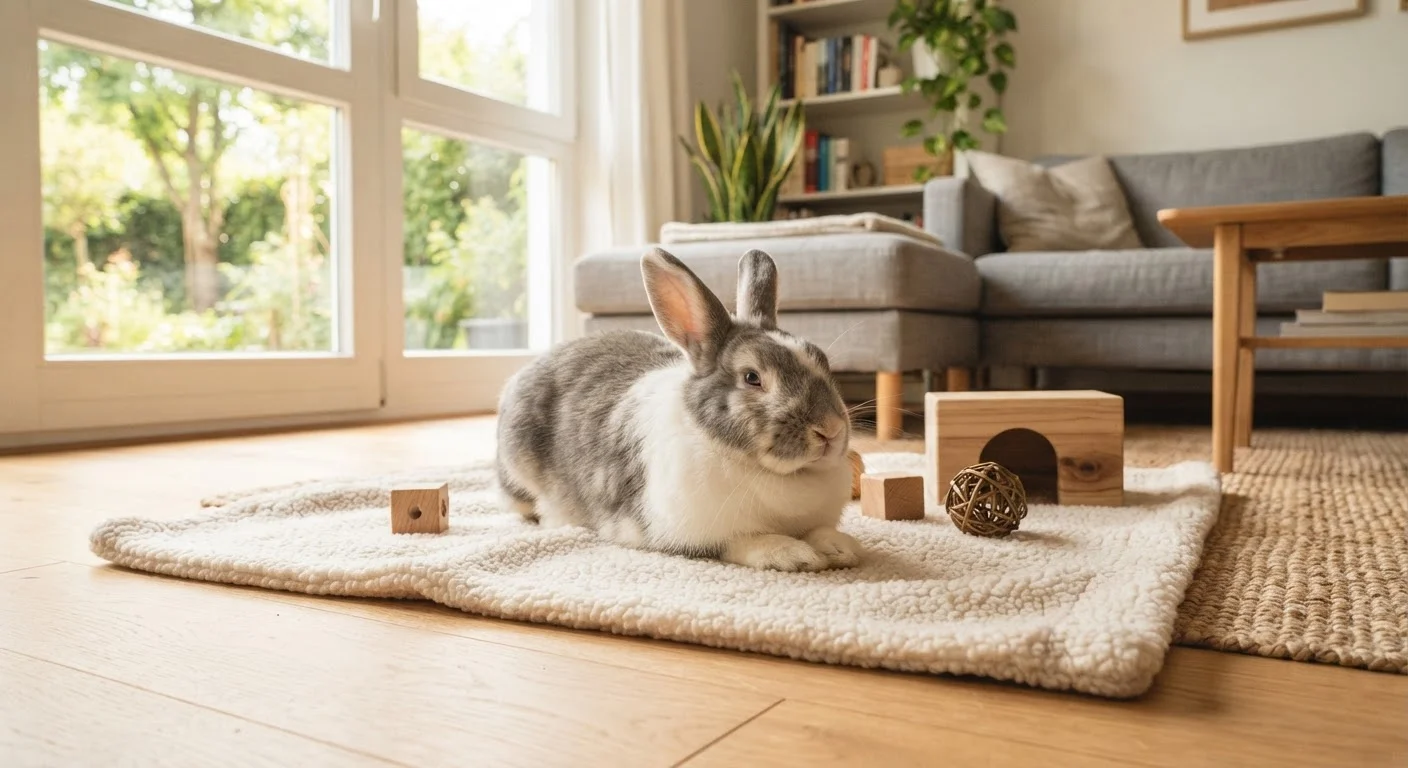
Providing plenty of rabbit-safe chew options - untreated wood blocks, willow balls, cardboard - gives them an appropriate outlet and reduces the appeal of your furniture.
Never Leave Cords Within Reach
A rabbit chewing through a live electrical cord can suffer severe burns, electrocution, or death. This is one of the most common causes of serious injury in free-roaming rabbits. Treat cord management as a non-negotiable safety step, not an optional extra, before your rabbit has any unsupervised access to a room.
Social Needs and Handling
Rabbits are prey animals, which means they're wired to be cautious and can feel threatened when picked up or restrained. Many rabbits that seem antisocial are simply responding to handling they find uncomfortable. Learning to read your rabbit's cues makes a meaningful difference - understanding small pet body language can help you recognize when your rabbit is relaxed versus stressed.
Build trust by spending time at floor level - let your rabbit approach you rather than reaching for them. Over time, most rabbits become affectionate on their own terms: flopping beside you, grooming your hand, or seeking out your presence. If you're away for long hours regularly, consider whether a bonded pair of rabbits might be a better fit, since rabbits kept alone can become bored and withdrawn.
Veterinary Care and Health Basics
Not every veterinarian is experienced with rabbits. Before your rabbit comes home, find a vet in your area who specifically treats small mammals or exotic pets - ask directly about their rabbit experience when calling to inquire. Annual wellness exams are recommended even for apparently healthy rabbits.
Spaying or neutering is strongly advised. Unspayed female rabbits have a very high lifetime risk of uterine cancer, and neutering males reduces territorial behaviors. Most vets recommend the procedure between 4-6 months of age, though your vet will assess the right timing for your individual animal.
Common health concerns to watch for include GI stasis (a dangerous slowdown of the digestive system), dental problems, and respiratory infections. Any rabbit that stops eating, hasn't produced droppings in several hours, or appears hunched and lethargic should be seen by a vet promptly - GI stasis in particular can become life-threatening quickly.
This article is for general informational purposes only and does not constitute veterinary or medical advice. Always consult a qualified veterinarian for guidance specific to your pet's health and care needs.