

Key Takeaways
Our Verdict
There's no single 'best' small pet - only the one that genuinely fits how you live. Fish and hamsters work well for busy or space-limited owners who want lower-maintenance companionship, while guinea pigs and rabbits reward owners who can commit daily time and adequate space. Matching your realistic routine to the animal's actual needs is the most important step you can take.
| Best for | Recommended |
|---|---|
| Busy schedules with limited daily interaction time | Fish or Hamster |
| Those wanting a social, handleable companion in a smaller home | Guinea Pig |
| Owners with more space and time for an interactive, personality-driven pet | Rabbit |
| Families or individuals looking for a visually engaging, low-allergen pet | Fish |
Why Your Lifestyle Matters More Than Your Preference
It's tempting to choose a pet based on looks or a childhood memory, but the animal that actually thrives in your home is the one whose needs align with your real daily life - not your ideal version of it. Before comparing species, honestly assess three things: how many hours you're home each day, how much usable floor or shelf space you have, and what your monthly budget realistically allows beyond rent and groceries.
For a fuller picture of the tradeoffs involved in small pet ownership, see our honest overview of small pet ownership before committing. And if you're still weighing small pets against a cat or dog, the Cat Owner Guide and Dog Care Basics offer useful contrast.
Comparing the Four Most Common Small Pets
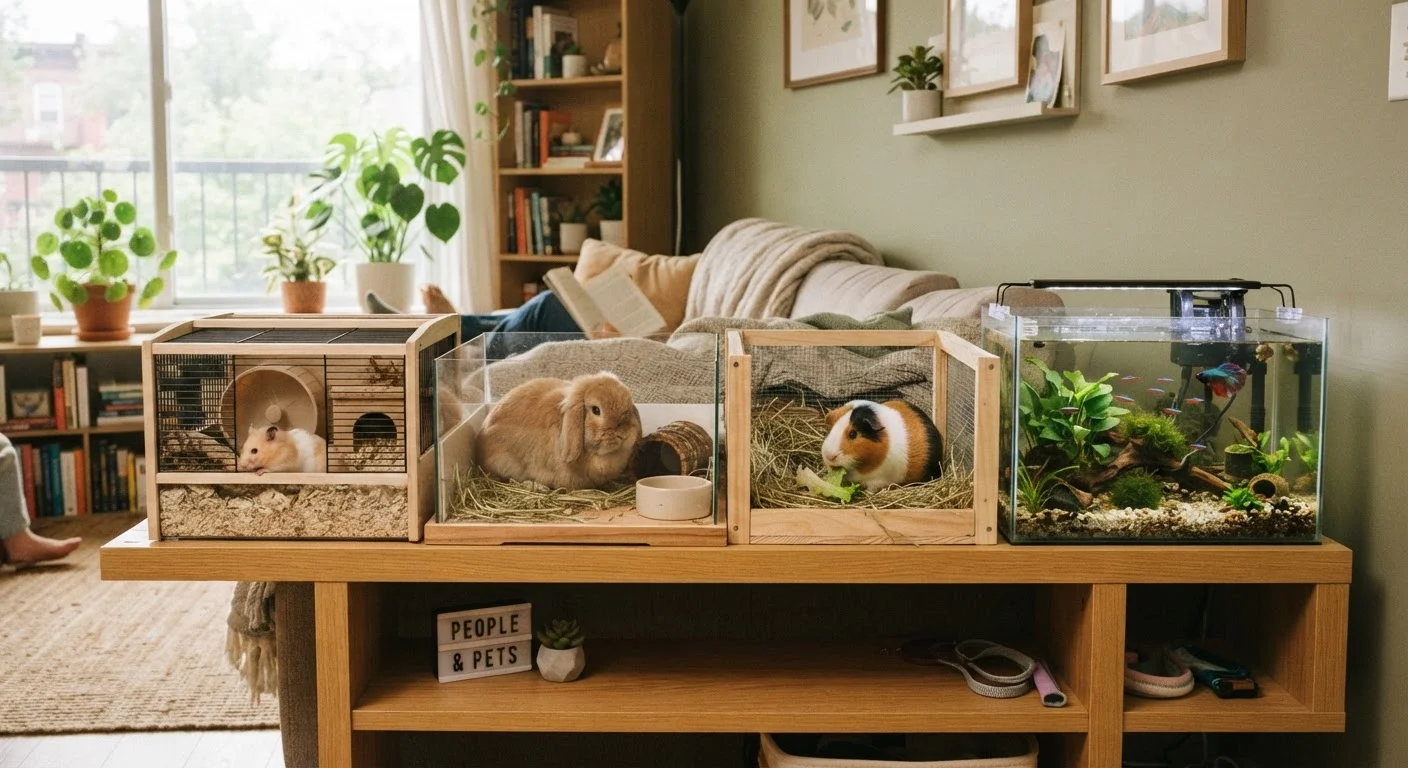
The four pets below cover the widest range of beginner situations. Each has genuine strengths - and genuine demands that are frequently underestimated.
| Fish | Hamster | Guinea Pig | Rabbit | |
|---|---|---|---|---|
| Daily time commitment | Low (15-20 min) | Low-Moderate (30 min) | Moderate (1-2 hrs) | High (2-4 hrs) |
| Space needed | Tank footprint only | Large cage, minimal floor | Sizeable cage + floor time | Large enclosure + roaming area |
| Social needs | None | Solitary (mostly) | Pair or group recommended | Can bond with humans |
| Handling friendliness | Not handleable | Moderate, requires trust | Generally tolerant | Variable, needs patience |
| Typical lifespan | 2-5 years (varies by species) | 2-3 years | 4-6 years | 8-12 years |
| Vet specialist needed | Aquatic vet for illness | Exotic vet | Exotic vet | Exotic vet |
| Noise level | Silent | Wheel noise at night | Frequent vocalizations | Generally quiet |
For ongoing cost planning beyond the setup phase, this breakdown of ongoing small pet expenses is worth reading before you decide.
What Each Pet Actually Demands Day-to-Day
Fish
Fish are often called low-maintenance, which is true relative to mammals - but a healthy tank still requires weekly partial water changes, monitoring of water parameters (pH, ammonia, nitrites), and consistent feeding. The upfront equipment cost can be surprisingly high. Once established, however, fish ask very little of your time and produce no allergens, making them a strong fit for small apartments or allergy-prone households.
Hamsters
Hamsters are nocturnal, meaning they're most active in the evening and overnight. If you work standard daytime hours, this can actually be convenient - they're lively when you're home to watch them. They do need a large enough enclosure (many experts now recommend a minimum of 600 square inches of unbroken floor space) and daily fresh food and water. Handling takes patience to build, especially early on. Understanding your hamster's body language helps you build trust without causing stress.
Guinea Pigs
Guinea pigs are vocal, social animals that genuinely benefit from living in same-sex pairs or groups. A single guinea pig often shows signs of loneliness and boredom. They need fresh hay available at all times, daily vegetables, and vitamin C supplementation because - like humans - they cannot synthesize it themselves. Common guinea pig care mistakes are worth knowing before day one. Feeding them well doesn't have to be complicated or expensive.
Rabbits
Rabbits are frequently underestimated. They need several hours of supervised free-roaming time daily, a large living space, and a diet that is predominantly fresh hay. They are not naturally suited to being held for long periods and can injure themselves if dropped. Setting up their living space correctly is critical from day one. Rabbits are also long-lived - often 8-12 years - which is a serious commitment.
Visit Before You Commit
If possible, spend time around the species you're considering before acquiring one - at a shelter, a rescue, or a knowledgeable friend's home. Observing their real behavior, sounds, and care routines firsthand can confirm or change your decision in ways that no article can replicate.
Before You Bring Anyone Home
Whichever animal fits your profile, preparation matters more than enthusiasm. Sourcing appropriate food, identifying an exotic-animal veterinarian in your area, and having the enclosure fully set up before the animal arrives are non-negotiable steps. Our pre-arrival checklist covers housing, food sourcing, vet access, and safety-proofing in practical detail. If your schedule is particularly demanding, this guide to small pets suited to busy or smaller homes can help narrow your options further.
This article is for general informational purposes only. For veterinary guidance specific to your pet's health or behavior, consult a licensed veterinarian.