

Key Takeaways
Why Guinea Pig Care Trips Up Beginners
Guinea pigs have a reputation as easy starter pets - small, quiet, and uncomplicated. That reputation does them a disservice. In practice, they have specific social, dietary, and environmental needs that are easy to overlook without guidance, especially when much of the information on packaging or in pet stores is incomplete.
If you are considering bringing guinea pigs home - or you already have one and want to make sure you are on the right track - this guide covers the mistakes that show up most often, and more importantly, how to correct them. For a broader look at what small pet ownership actually involves day to day, see what 'low-maintenance' really means for small pets.
Housing a guinea pig alone.
Why it happens: Many new owners assume one pet means simpler care. Guinea pigs are marketed individually in many stores, reinforcing the idea that solo housing is normal.
Providing insufficient or no daily vitamin C.
Why it happens: New owners often rely on pellets alone, assuming commercial food is nutritionally complete. Many pellet labels do not clearly communicate that vitamin C degrades rapidly after the bag is opened.
Underestimating how much hay is needed.
Why it happens: Hay looks like filler, so owners often provide a small handful and focus on pellets or vegetables as the 'real' meal.
Choosing a cage that is too small.
Why it happens: Starter kits from pet stores are visually appealing and affordable, making them easy purchases for first-time owners who have no frame of reference for space requirements.
Skipping veterinary visits because the guinea pig seems healthy.
Why it happens: Guinea pigs instinctively hide illness - a survival behavior inherited from prey animals. This can lead owners to believe everything is fine right up until a problem is advanced.
Getting the Basics Right From Day One
Most of the mistakes above stem from the same root problem: small pets are assumed to need less, not different care. Guinea pigs do not need complicated routines, but the fundamentals - social companionship, a hay-heavy diet, adequate space, and vitamin C every day - are non-negotiable.
Most Pet Store Starter Cages Are Too Small
Cages marketed as 'guinea pig starter homes' often fall well below the minimum 7.5 square feet recommended by small-animal welfare organizations for a pair. Confined space leads to stress, obesity, and behavioral problems. Measure before you buy, and prioritize floor space over height - guinea pigs do not climb.
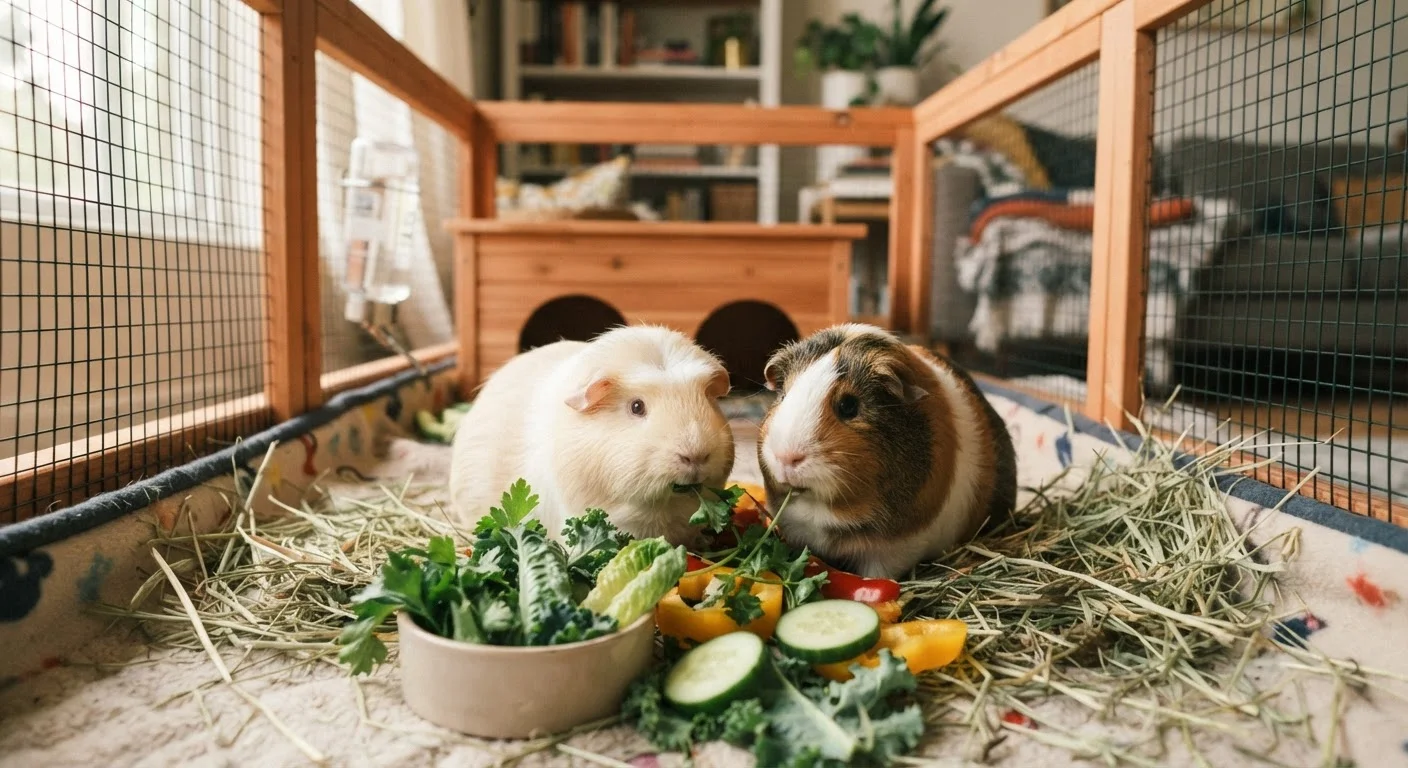
A useful starting point is understanding what these animals actually eat. Feeding small pets well does not require expensive specialty products; it requires knowing what each species genuinely needs. For guinea pigs, that means prioritizing hay and fresh vegetables over pellets and commercial treats.
Vitamin C Deficiency Is a Medical Emergency
Unlike most mammals, guinea pigs cannot synthesize vitamin C on their own. A deficiency leads to scurvy - causing joint pain, lethargy, and internal bleeding. Fresh leafy greens and bell peppers daily are not optional extras; they are a health necessity. If your guinea pig appears weak or reluctant to move, consult a veterinarian promptly.
If you are still in the process of deciding whether a guinea pig is the right fit, matching a small pet to your lifestyle is worth reading first. Guinea pigs thrive with owners who have time for daily interaction and can commit to a consistent routine - they reward that investment with personality, affection, and years of companionship.
This article is for general informational purposes only and does not constitute veterinary advice. Always consult a qualified veterinarian for guidance specific to your pet's health and care needs.