

Key Takeaways
What Rabbits Actually Need From Their Living Space
Rabbits are active, social animals with a natural drive to run, dig, and explore. Unlike the small hutch setups that were once common, current veterinary and animal welfare guidance recommends giving rabbits significantly more room than a typical starter cage allows. Before you build or buy anything, it helps to understand why space and environment design matter so much to a rabbit's wellbeing.
As prey animals, rabbits are acutely sensitive to their surroundings. A cramped, exposed, or noisy environment can cause chronic stress - which can suppress their immune system and lead to behavioral problems. Setting up the space thoughtfully from the start prevents a lot of issues down the road. If you're still deciding whether a rabbit is the right pet for your lifestyle, our guide to matching small pets to your routine is a useful first step.
Two non-negotiables stand out in rabbit housing: adequate square footage and safe flooring. Everything else builds on top of those two foundations.
Think in Terms of Zones, Not Just a Cage
A well-designed rabbit space has distinct zones: sleeping, eating, toileting, and playing. Even within a modestly sized enclosure, arranging these areas intentionally reduces stress and makes cleaning much easier. Rabbits are creatures of habit and feel more secure when their environment is predictable.
What You'll Need Before You Start
Gather the following before setting up your rabbit's space. Having everything on hand makes the process smoother and avoids last-minute compromises.
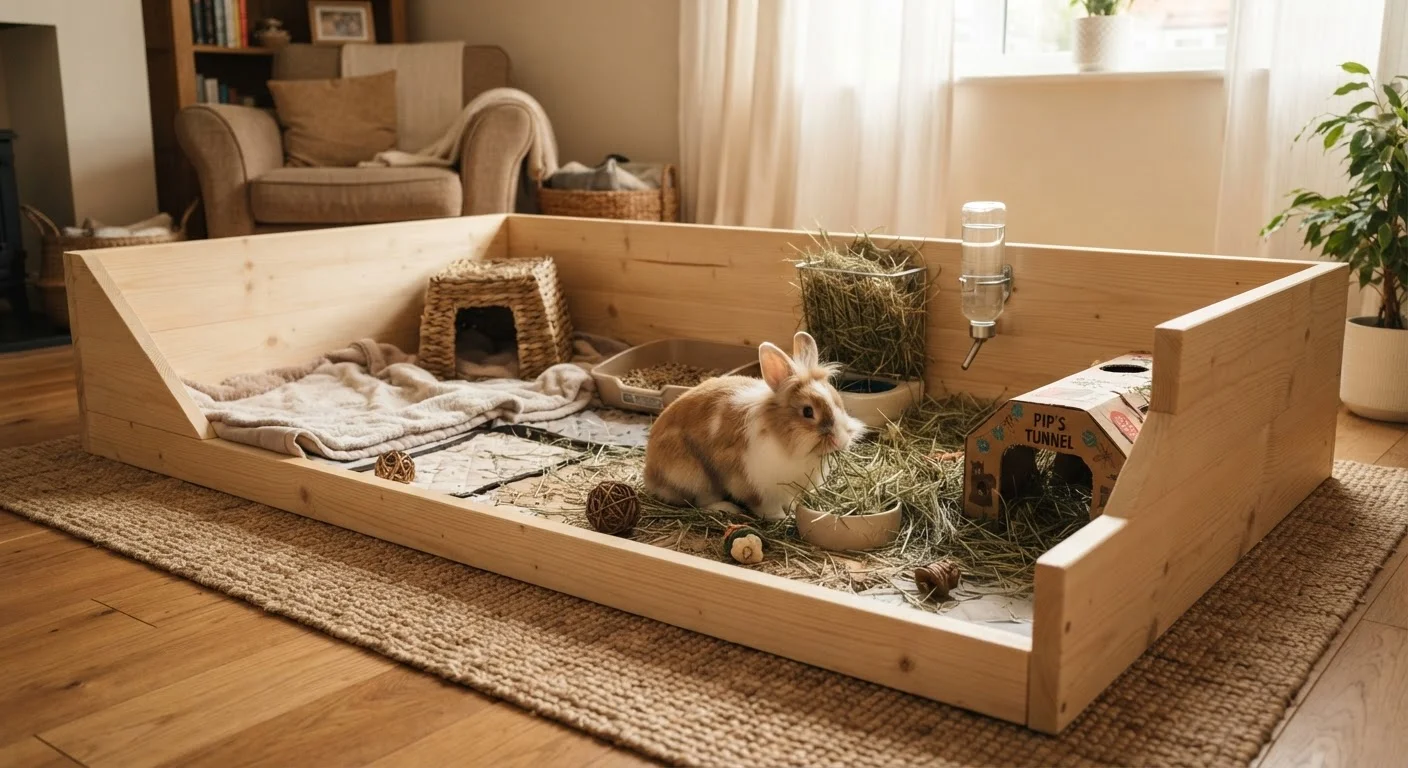
What you will need
Pen-style or modular enclosure
Provides the minimum required floor space (at least 8 sq ft) without wire flooring.
Solid flooring mat (fleece, foam, or rubber)
Protects rabbit's feet from hard or slippery surfaces inside the enclosure.
Litter box
Designates a bathroom area, making cleaning easier and supporting litter training.
Hay rack or feeder
Keeps unlimited timothy or meadow hay accessible and clean throughout the day.
Heavy ceramic or clip-on water bowl or bottle
Provides constant access to fresh water without tipping.
Hideout or enclosed shelter
Gives the rabbit a low-stress retreat, mimicking the burrows they instinctively seek.
Cardboard boxes and tunnels
Provides mental stimulation and satisfies a rabbit's natural urge to explore and chew.
Baby gates or exercise pen extension
Creates a safe, rabbit-proofed exercise zone outside the main enclosure.
Step-by-Step Setup
Choose the right enclosure size and type
Select an enclosure that offers a minimum of 8 square feet of floor space for a single average-sized rabbit - larger breeds need more. Pen-style enclosures made from modular grids or purpose-built rabbit runs are generally better than traditional hutches, which are often too small and too tall relative to their floor area. Avoid enclosures with wire-mesh floors entirely.
Height matters too: your rabbit should be able to fully stand on their hind legs without their ears touching the ceiling - typically a minimum of 2 feet of clearance.
Pick a safe, quiet location in your home
Place the enclosure in a room that stays between roughly 60°F and 72°F, away from direct sunlight, heating vents, and air conditioning units. Choose a spot with consistent, moderate activity - rabbits do best when they can observe household life without being startled by sudden, unpredictable noise. Avoid garages, laundry rooms, or any space that regularly reaches temperature extremes.
Lay down safe, solid flooring
Cover any hard or slippery floor surface with a non-slip mat. Fleece blankets, foam interlocking tiles, or rubber-backed rugs all work well. The covering should span the full footprint of the enclosure with no gaps where a rabbit's foot could catch or slip. Check mats regularly for chewing damage, as rabbits will gnaw on almost anything - replace any heavily chewed sections promptly to prevent ingestion of materials.
Set up the litter box and hay station together
Place a litter box in one corner of the enclosure - rabbits naturally select a bathroom corner, so observe where your rabbit first eliminates and position the box there. Fill it with paper-based or compressed-paper pellet litter (never clumping cat litter). Position the hay rack or feeder directly above or beside the litter box: rabbits eat hay while toileting, so combining these areas encourages both hay consumption and litter box use simultaneously.
For more on nutrition and what to feed alongside hay, see our guide to feeding small pets well.
Add a hideout and enrichment items
Every rabbit setup needs at least one enclosed hideout - a wooden house, a cardboard box with a doorway cut in, or a ceramic tunnel all work. This is where your rabbit will retreat when stressed or tired. Place it toward the back of the enclosure. Add enrichment items - untreated cardboard tubes, wooden chew toys, or foraging mats - and vary them occasionally to keep your rabbit mentally engaged.
Create a safe daily exercise zone
Your rabbit needs a minimum of 3-4 hours outside the enclosure each day for free movement. Before letting them roam, rabbit-proof the area: cover or conceal electrical cords (rabbits chew them readily), block access to houseplants (many are toxic), and remove anything at floor level that could trap or injure them. Baby gates or a pen extension can create a defined safe zone without requiring a fully rabbit-proofed room immediately.
If you're preparing your broader home setup before your rabbit arrives, our pre-arrival checklist for small pets covers safety-proofing in more detail.
Common Mistakes and How to Avoid Them
Even well-meaning new rabbit owners run into a few predictable pitfalls. Wire-bottomed cages were once standard but are now widely discouraged by rabbit welfare organizations - the wire puts constant pressure on a rabbit's hocks (the back of their hind feet), leading to a painful condition called sore hocks, or pododermatitis. If you're inheriting or repurposing an old cage with a wire bottom, covering it fully with solid matting is essential.
Another frequent mistake is placing the enclosure near a heat source, drafty window, or loud appliance. Rabbits are sensitive to temperature extremes and to sudden, unpredictable sounds. A television that blares at random hours can keep a rabbit in a near-constant low-grade stress state.
Rabbits Hide Illness Until It's Serious
As prey animals, rabbits instinctively mask signs of pain or sickness. A rabbit that appears quiet and inactive in a stressful or poorly set up environment may actually be unwell - not just calm. Learning your rabbit's normal behavior baseline early makes it easier to spot changes. If you notice a rabbit that has stopped eating, is hunched and immobile, or hasn't produced droppings in 12 hours, contact a veterinarian promptly. These can be signs of a serious digestive condition called GI stasis.
Finally, don't skip the enrichment. A rabbit left in an empty, unstimulating space for most of the day will often develop destructive behaviors or become withdrawn. Cardboard boxes, untreated wooden chews, tunnels, and foraging opportunities are not extras - they're part of a complete setup. For a broader look at what indoor rabbit care involves beyond housing, see our complete guide to keeping rabbits indoors.