

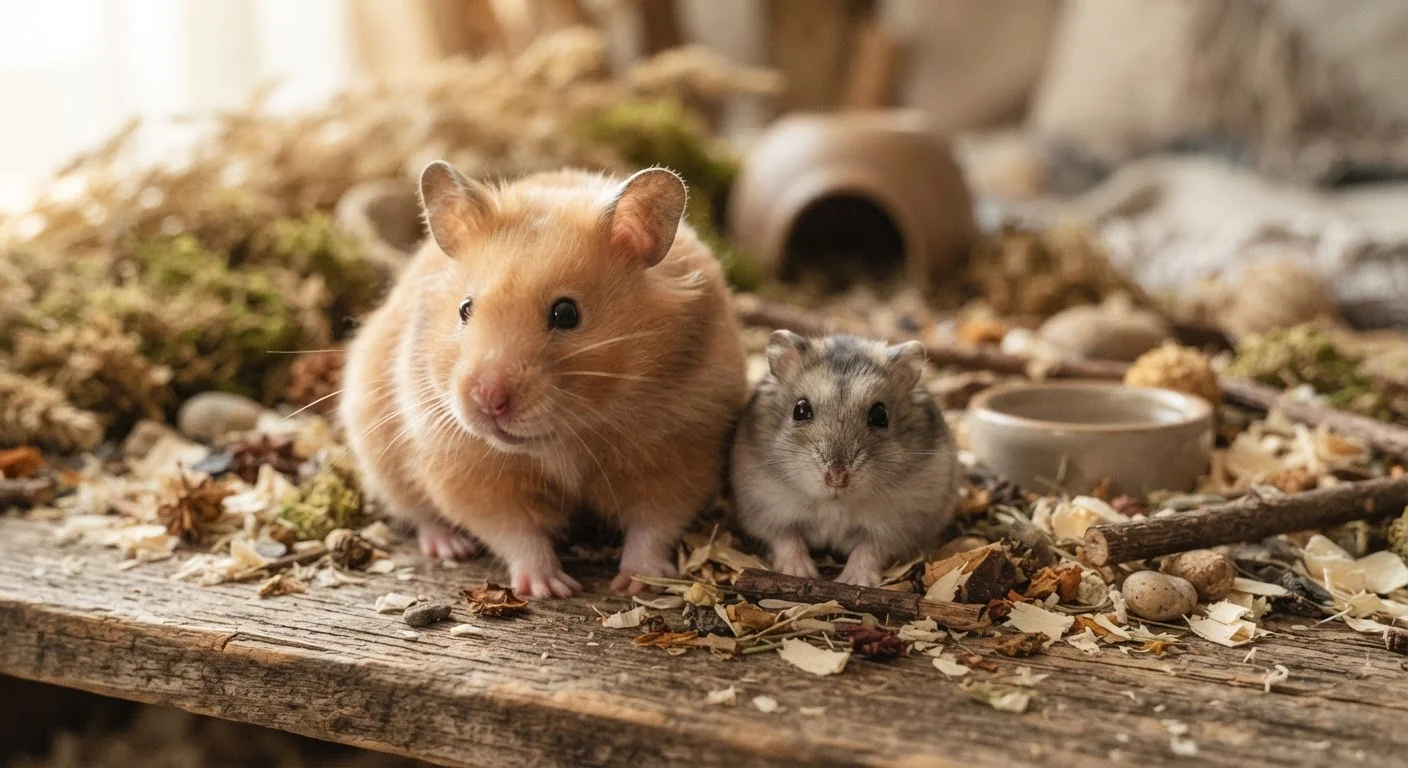
Key Takeaways
Option A
Syrian Hamster
The solitary, easy-to-handle classic.
Best for: First-time owners who want a single, handleable pet that can be tamed with consistent daily interaction.
Option B
Dwarf Hamster
The sociable, fast-moving compact option.
Best for: Owners comfortable with quick, agile animals who may prefer watching natural hamster behaviour over regular hands-on handling.
If you're a first-time hamster owner who wants a pet you can regularly handle
Syrian Hamster
Syrians are larger and slower-moving, making them easier to hold confidently. They typically tame well with daily, gentle interaction.
If you enjoy observing natural animal behaviour more than hands-on interaction
Dwarf Hamster
Dwarf hamsters are highly active and entertaining to watch, especially when housed in enriched environments with tunnels and foraging opportunities.
If you want to keep more than one hamster in the same enclosure
Dwarf Hamster
Certain dwarf species - such as Roborovski and Winter White - may coexist in same-sex pairs if bonded from a young age, unlike Syrians who must live alone.
If you have young children in the household
Syrian Hamster
Their larger size and calmer demeanour make Syrians less prone to nipping when startled, though adult supervision is always recommended.
Size, Speed, and First Impressions
The most immediate difference between Syrian and dwarf hamsters is physical. Syrian hamsters - also called golden or teddy bear hamsters - typically reach 5 to 7 inches in length and weigh between 4 and 8 ounces at adulthood. Dwarf species, including Roborovski, Campbell's, and Winter White hamsters, generally measure just 2 to 4 inches and weigh under 2 ounces.
That size difference translates directly into handling ease. Syrians sit more securely in an adult hand and move at a pace that gives new owners time to react. Dwarf hamsters are extraordinarily quick and agile - a brief moment of inattention can result in a hamster darting across the room. For beginners, especially those with limited small-animal experience, this speed difference is significant.
If you're still deciding whether a hamster is the right fit altogether, our small pet lifestyle guide walks through how hamsters compare to guinea pigs, rabbits, and other compact companions.
| Criterion | Syrian Hamster | Dwarf Hamster |
|---|---|---|
| Adult size | 5-7 inches, 4-8 oz | 2-4 inches, under 2 oz |
| Handling ease | Easier - slower, calmer | Harder - fast and skittish |
| Social housing | Strictly solitary | Some species can be paired |
| Taming difficulty | Generally moderate | Moderate to challenging |
| Typical lifespan | 2-3 years | 2-3.5 years |
| Diabetes risk | Low | Higher (Campbell's species) |
| Minimum wheel size | 8 inches | 6 inches |
Temperament, Sociability, and Housing Rules
Syrian hamsters are strictly solitary animals. In the wild, adult Syrians are highly territorial, and housing two together - even briefly - can result in serious injury or death. This is a firm rule, not a guideline. Every Syrian hamster needs its own enclosure.
Dwarf hamsters have more nuanced social needs. Roborovski and Winter White dwarfs can sometimes live in same-sex pairs bonded from a young age, which some owners find appealing. However, even dwarf hamsters can develop aggression over time, so any shared housing requires close monitoring and a plan for separating them if needed.
In terms of temperament, Syrians tend to become noticeably calmer and more handleable with regular, consistent interaction from a young age. Dwarf hamsters can be tamed, but their natural skittishness means the process takes more patience. Understanding your hamster's stress signals - like freezing, chattering teeth, or flattening against the cage floor - is an important part of building trust. Learning to read small pet body language can help you know when to back off and when to keep going.
775 sq in
Recommended minimum hamster enclosure floor space
Animal welfare organizations and many exotic veterinarians recommend at least 775 square inches of unbroken floor space for hamsters of either type.
2-3 years
Average hamster lifespan (both types)
Most hamsters, Syrian or dwarf, live two to three years; Roborovski dwarfs may reach up to three and a half years under optimal care conditions.
3
Common dwarf hamster species kept as pets
Roborovski, Campbell's, and Winter White (Djungarian) are the three dwarf species most commonly kept as companion animals in the United States.
Lifespan, Health, and What to Expect Long-Term
Both Syrian and dwarf hamsters have relatively short lifespans compared to larger pets, typically living two to three years. Roborovski dwarfs may live slightly longer - up to three and a half years in some cases - while Campbell's dwarfs are genetically predisposed to diabetes, which is worth discussing with a veterinarian if you choose that species.
Common health concerns for both types include dental problems (hamsters' teeth grow continuously and require appropriate chew materials), wet tail - a stress-related bacterial illness most common in young Syrians - and respiratory infections. Neither type requires vaccines, but an annual wellness visit with an exotic or small-animal veterinarian is a sound habit regardless of species.
Enclosure setup matters enormously for both. Veterinary and animal welfare guidance consistently recommends a minimum of 40 gallons or 775 square inches of unbroken floor space for hamsters - significantly larger than what many pet stores suggest. Both types need a deep substrate layer for burrowing, a wheel sized to prevent back arching (8 inches minimum for Syrians, 6 inches for dwarfs), and mental enrichment through foraging and tunnelling opportunities.
This article is for general informational purposes only and does not substitute for advice from a qualified exotic animal veterinarian. Always consult a professional for guidance specific to your pet's health and care needs.