

Key Takeaways
The Budget Traveler's Best-Kept Secret
Here's a truth that changes how you travel: the most memorable moments from any trip rarely come with a ticket price. A slow walk through a neighborhood you stumbled into, a conversation at a street market, watching the sun drop behind a skyline from a public hilltop - these things cost nothing and stick with you for years.
The challenge isn't that free experiences are hard to find. It's that most travelers don't know where to look, or they assume that "free" means "boring." It doesn't. Whether you're heading to a major US city, a coastal town, or an international destination, the framework for finding great no- or low-cost activities is remarkably consistent. This guide walks you through exactly that framework. For a broader picture of managing daily spending on the road, see our complete budget travel guide for first-timers.
Costs and Availability Change
Museum admission policies, free-event schedules, and transit pricing change frequently. Always verify details through official sources - museum websites, government tourism portals, and transit authority pages - before your trip. What was free last year may carry a fee today, and vice versa. Treat any specific examples here as a starting framework, not a current guarantee.
10 Ways to Fill Your Itinerary Without Emptying Your Wallet
Seek Out Free Museum Days and Pay-What-You-Wish Hours
Many world-class museums - including major institutions in New York, Chicago, Washington D.C., and cities across Europe - offer free admission on specific days or evenings, or operate on a suggested-donation model where you genuinely choose what to pay. A quick visit to a museum's official website before your trip reveals these windows. Plan around them, and you can access exhibitions that might otherwise cost $20-$30 per person at zero or minimal cost.
Major museums worldwide offer free admission windows - check official sites before you visit.
Take a Free Walking Tour
Free walking tours operate in hundreds of cities globally and are one of the most efficient ways to orient yourself in a new place. Led by local guides on a tip-based model, these tours typically cover key landmarks, neighborhood history, and cultural context in two to three hours. Beyond the practical value, you'll often get insider recommendations - the kind of local knowledge that travel guides can't replicate. Search for a destination name plus "free walking tour" to find options.
Tip-based walking tours deliver local knowledge and city orientation for whatever you choose to pay.
Explore Public Parks, Beaches, and Natural Areas
National parks, state beaches, urban green spaces, and public waterfront areas are among the most underrated travel experiences available. In the US, many state parks charge modest day-use fees that are significantly lower than ticketed attractions. Internationally, coastlines, hiking trails, and public gardens are often entirely free. These spaces also double as low-cost fitness opportunities - a bonus that daily movement without a gym advocates consistently point to.
Public parks and beaches deliver nature, exercise, and scenery - usually for free or very little.
Browse Local Markets and Public Squares
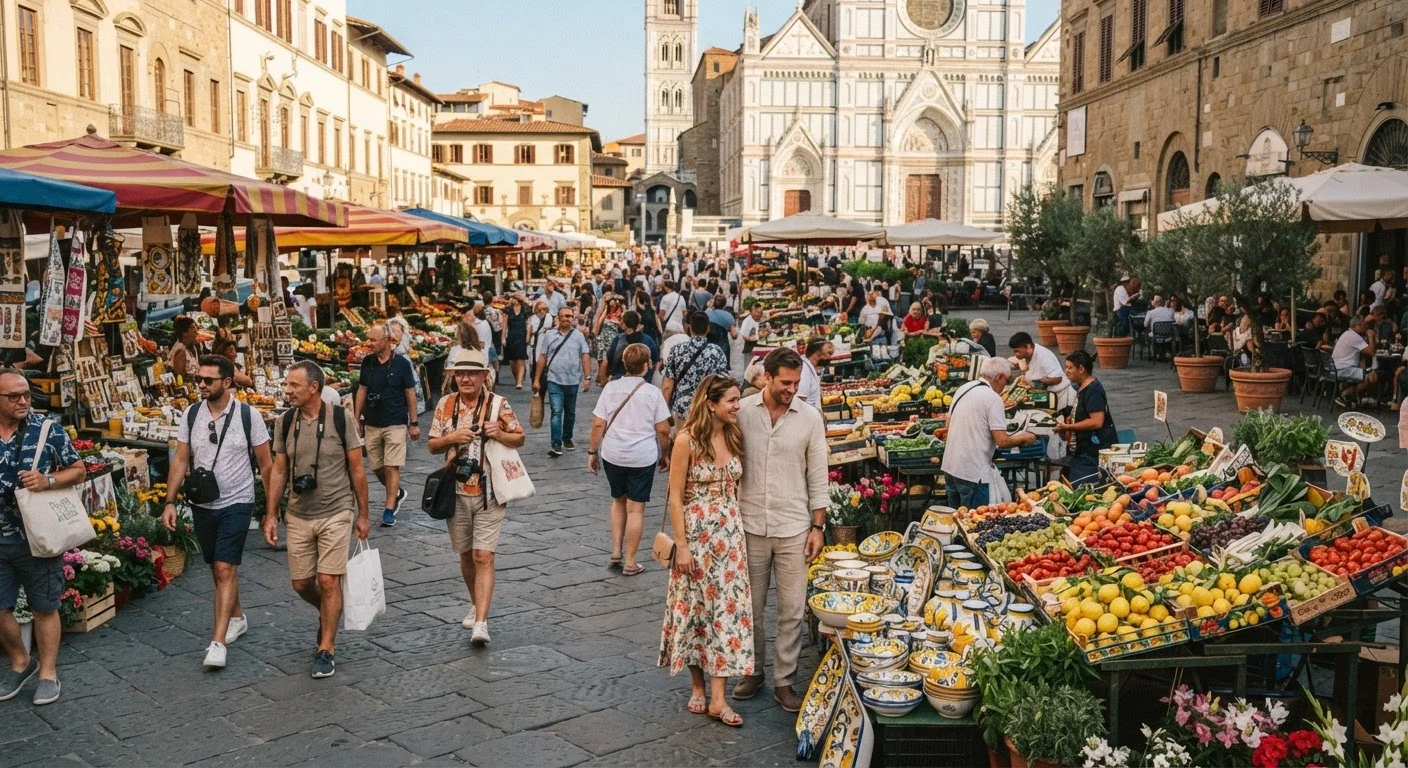
Farmers' markets, craft markets, and weekly street markets are living cultural experiences that cost nothing to wander through. Even if you buy a piece of fruit or a coffee, you're spending far less than at a ticketed attraction and getting something arguably more authentic. Public squares, plazas, and waterfront promenades often become social hubs - especially on weekends - where you can observe local life, hear street musicians, and absorb a city's real rhythm.
Markets and public squares reveal local culture in a way no museum can replicate - and admission is free.
Check Libraries and Community Centers for Events
Public libraries abroad - much like libraries as free learning resources at home - frequently host cultural events, language exchanges, film screenings, and lectures that are open to the public at no charge. Community centers, cultural institutes (like Alliance Française or Goethe-Institut chapters), and local universities also run free programming. These events attract locals rather than tourists, which makes them some of the most genuine experiences available.
Libraries and cultural institutes host free public events that attract locals, not tourist crowds.
Use Official Tourism Websites and Visitor Centers
Most destinations maintain official tourism portals that list current free events, seasonal festivals, and complimentary attractions. Physical visitor centers - often located near transportation hubs - distribute free maps, discount passes, and event calendars. Staff there typically know which experiences are genuinely worthwhile versus heavily marketed. This is a consistently underused resource even among experienced travelers.
Visitor centers hand out free maps, event listings, and local knowledge that most travelers overlook.
Attend Religious and Cultural Ceremonies Respectfully
Houses of worship - cathedrals, temples, mosques, synagogues - are frequently architectural and historical landmarks open to respectful visitors at no cost. Many also host open musical performances, festivals, or ceremonies that welcome the public. Research what's appropriate beforehand: dress codes, photography rules, and visiting hours vary widely. When approached with respect and cultural sensitivity, these visits often become among a trip's most meaningful experiences.
Historic religious sites are often free to visit and architecturally extraordinary - respect local customs.
Follow the Local Meal Schedule
Eating at off-peak hours - lunch specials, early evening menus, or market breakfasts - can cut food spending dramatically without reducing quality. Many restaurants in Europe and Latin America offer fixed-price lunch menus (often called "menú del día" or similar) that include multiple courses at a fraction of dinner prices. Pair this strategy with eating like a local abroad and food costs become one of your smallest daily expenses.
Fixed-price lunch menus and market meals can feed you well for a fraction of dinner restaurant prices.
Use Public Transit as a Sightseeing Tool
A single transit fare on a tram, ferry, or metro line can deliver a moving window onto a city's geography, neighborhoods, and everyday life. Famous examples include the Star Ferry in Hong Kong or tram routes in Lisbon, but almost any city's transit system offers a version of this. Buy a day pass where available - it lets you hop on and off across the city for a flat fee that's usually far cheaper than any organized sightseeing tour.
A day transit pass turns public transport into a city-wide sightseeing tour for a flat, low fare.
Join Free or Low-Cost Skill Exchanges and Language Meetups
Language exchange meetups, skill-share workshops, and cultural exchange events happen in most mid-size cities and larger - often listed on community apps or expat notice boards. These events are typically free or charge only a nominal venue fee. Beyond the social experience, they connect you with residents in a genuinely reciprocal way. Just be aware that cutting corners in other areas (like skipping travel insurance) can undermine even the most well-planned budget trip.
Language meetups and skill-share events connect you with locals authentically - and usually cost nothing.
Search Before You Arrive
Spend 20-30 minutes before each destination researching free events for the specific dates you'll be there. Search the city name plus "free events," check local subreddits, and look at official tourism calendars. Many festivals, open-air concerts, and cultural days are not widely advertised internationally but are easy to find with a targeted search.
Make Every Destination Work for You
The destinations with the richest free offerings aren't necessarily the cheapest countries - they're the ones you've researched well. A bit of pre-trip homework using official tourism websites, local subreddits, and community event boards can uncover festivals, free concert series, gallery openings, and neighborhood tours that never make it into mainstream travel guides.
Pair smart activity planning with smart eating - local markets and street food canteens almost always outperform tourist restaurants on both price and authenticity. And for region-by-region cost context before you book, this cost overview by region is a practical reference. Budget travel done right isn't about sacrifice - it's about choosing experiences that connect you to a place rather than just consuming it.