

Key Takeaways
Why Language Gaps Don't Have to Slow You Down
Arriving in a city where you can't read the signs or hold a basic conversation feels intimidating - until you realize that most of what navigation requires is visual, not verbal. Transit systems use icons and colors. Prices are numbers. Addresses are text you can point to. The language barrier is real, but it's narrower than it first appears.
The travelers who move through foreign cities most confidently aren't necessarily the ones with language skills - they're the ones who prepared the right tools and adopted a flexible, curious mindset before they arrived. That preparation starts well before you land. The research habits that experienced travelers rely on apply just as much to language planning as they do to safety and logistics.
Don't Assume Apps Work Everywhere
Translation and navigation apps require either data or preloaded offline content to function. In areas with poor connectivity or if your SIM card doesn't work as expected, you could be left without digital support. Always download offline maps and language packs before you board your flight, and carry a physical backup.
Below is a practical step-by-step approach that works regardless of which city or language you're navigating.
What you will need
What to Do and What to Expect
Load your phone with offline tools before you fly
Before you board, download an offline map of your destination city and the relevant language pack for your translation app. Confirm both work in airplane mode. This single step removes your dependence on local Wi-Fi and unpredictable SIM cards - the two biggest sources of digital navigation failure abroad.
Learn ten high-value phrases in the local language
You don't need fluency - you need a handful of phrases that open doors. Focus on: hello, thank you, excuse me, where is...?, how much?, I don't understand, and do you speak English? Pronunciation matters less than effort; locals in most destinations respond warmly to genuine attempts. Use audio recordings on your translation app to practice before arrival.
Decode the transit system visually
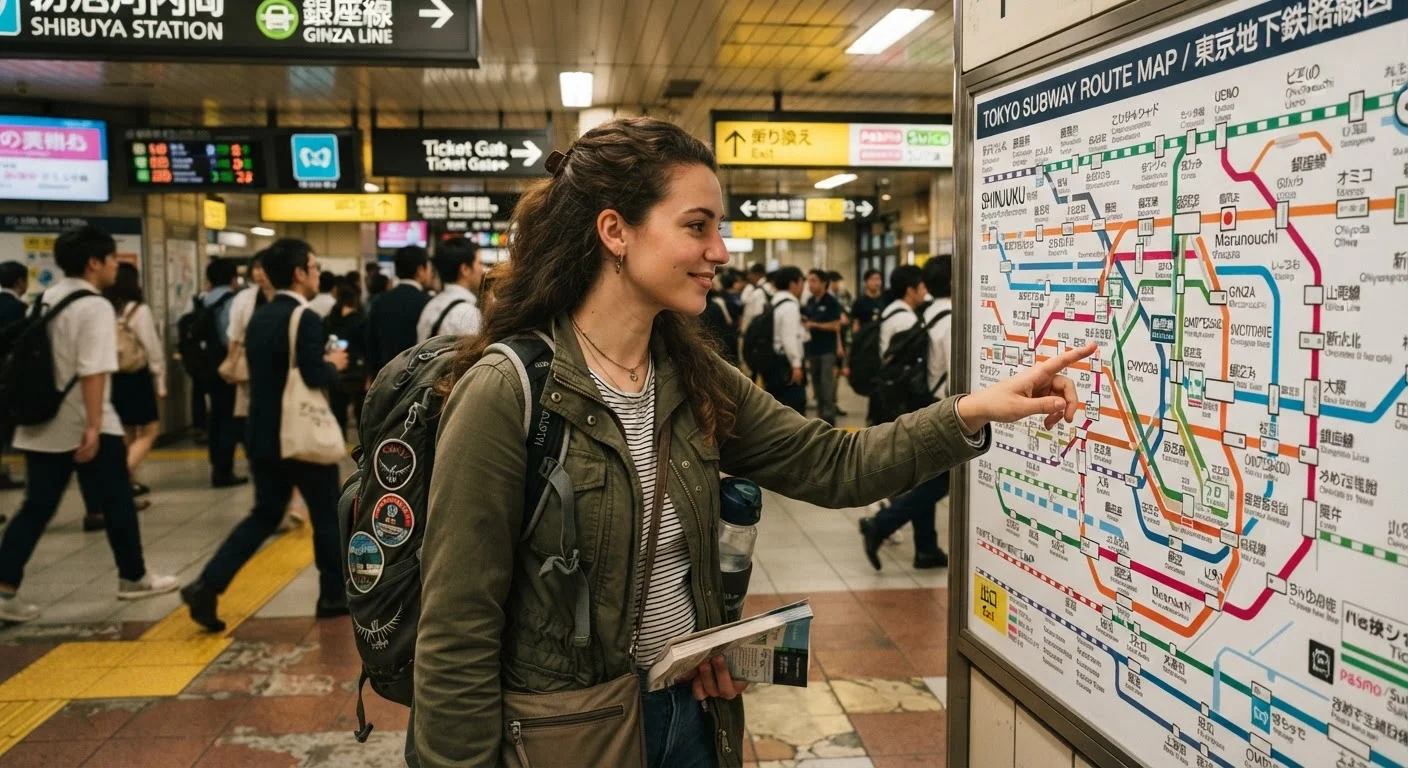
Most urban transit systems worldwide use consistent visual logic: color-coded lines, numbered stops, and directional arrows. Study the metro or bus map before you travel your first route. Look for the terminus station name - on most systems, that's how you identify which direction you're heading. If you're uncertain, match the map color on signage rather than trying to read the text.
For a broader overview of global transport options and cost norms, see the Ground Transport Decoded guide.
Use visual and gestural communication confidently
Pointing at a map, holding up fingers for numbers, or showing a photo on your phone are universally understood. If you need to ask for directions, show your offline map with your destination marked - most people will point or trace the route even if they can't explain it verbally. Smile and be patient; frustration on your end shuts down helpful responses.
[tip_callout]Identify safe fallback locations in each area you visit
Before wandering into a new neighborhood, note at least one reliable fallback point: a hotel lobby, a large transit station, or a recognizable landmark. These give you a known anchor if you get disoriented. Understanding neighborhood variation before you arrive matters - the destination safety landscape guide walks through how to assess this effectively.
Ask for help strategically
Approach younger travelers, staff at chain coffee shops, or hotel concierges when you need verbal assistance - English proficiency is generally higher in these contexts. If a local doesn't understand you, don't repeat the same words louder; switch to showing your map or using your translation app's camera function to scan text around you. Staying calm makes the interaction easier for everyone.
Once you've mastered getting around, the next adventure is eating well without overspending. Street food and local markets are often the most affordable - and most rewarding - way to eat abroad, and most vendors communicate through pointing and pricing boards. See how to eat well abroad without tourist prices for practical guidance on finding and using local food spots confidently.
If your destination involves driving - for example, picking up a rental car and navigating unfamiliar roads - road sign literacy becomes its own challenge. Our Mexico City primer covers local transport context as a good example of what destination-specific research looks like in practice.
This article provides general travel information and education. Always verify entry requirements, local laws, and safety conditions through your government's official travel advisory service and the destination country's official sources before traveling.