

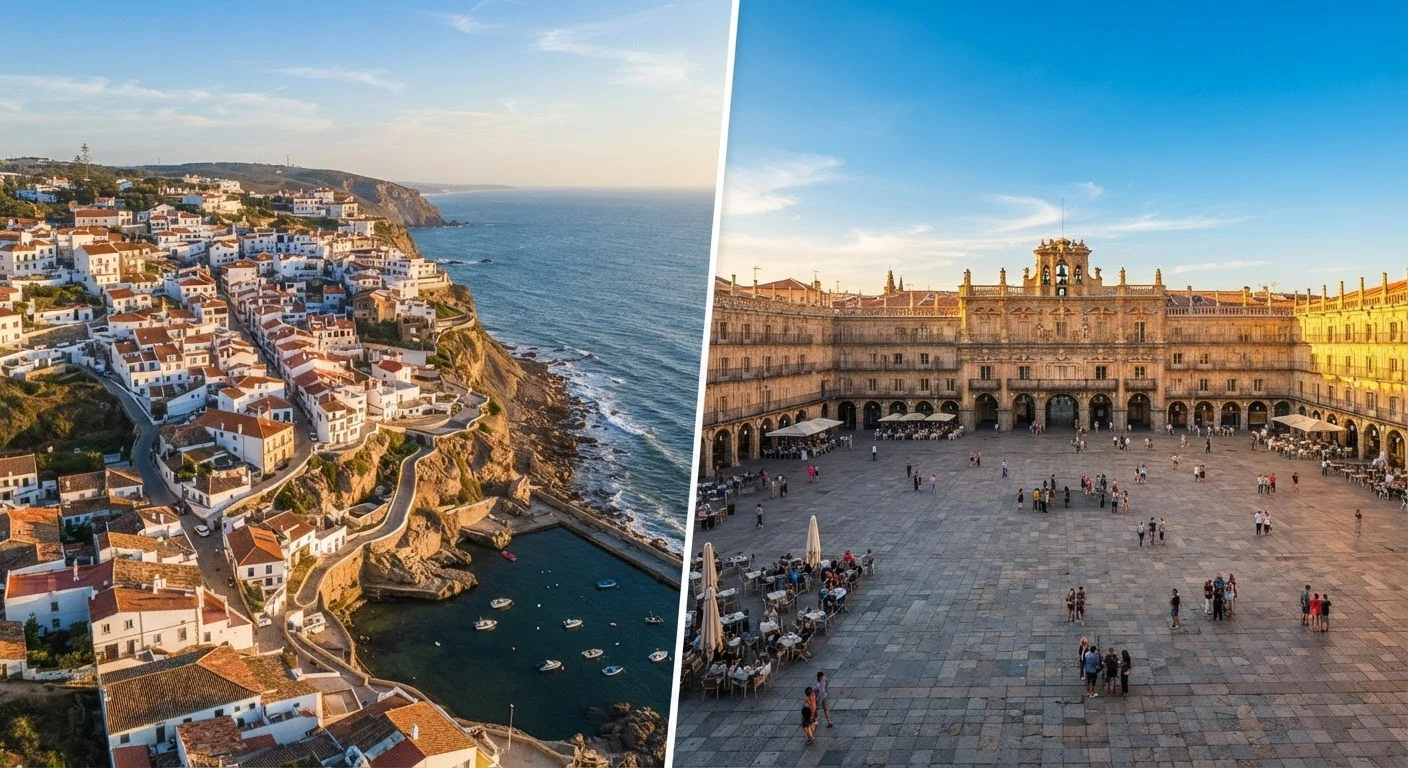
Key Takeaways
Option A
Portugal
The intimate, unhurried Iberian gem.
Best for: Travelers who want dramatic coastal scenery, a relaxed pace, and a budget-friendlier experience without sacrificing culture or food.
Option B
Spain
The bold, diverse powerhouse of Europe.
Best for: Travelers seeking world-class cities, vibrant nightlife, iconic art and architecture, and a wide range of regional experiences in one country.
If you're prioritizing a lower-cost trip without sacrificing charm
Portugal
Outside Lisbon and Porto, Portugal remains one of Western Europe's most affordable destinations, with lower accommodation, food, and activity costs than comparable Spanish cities.
If you want maximum variety - beaches, mountains, cities, and history - in one trip
Spain
Spain's size and regional diversity let you experience dramatically different cultures, climates, and cuisines without crossing a border.
If slow travel and coastal atmosphere are your priorities
Portugal
Portugal's compact size, relaxed pace, and stunning Atlantic coastline make it ideal for travelers who want to linger and soak in one region deeply.
If nightlife, festivals, and urban energy are central to your plans
Spain
Spanish cities like Barcelona, Madrid, and Seville are globally renowned for their late-night culture, festivals, and social energy.
If you're a first-time solo traveler looking for manageable logistics
Portugal
Portugal's smaller footprint makes it easier to plan and navigate, with a well-connected train and bus network between its main destinations.
The Core Difference: Scale, Pace, and Personality
Portugal and Spain sit side by side on the Iberian Peninsula, share Mediterranean sunlight, and both offer stunning food, history, and coastline - yet traveling in each feels surprisingly different. Understanding why helps you choose the right one for your specific travel style.
Spain is roughly five times larger than Portugal and contains what are effectively distinct mini-countries within its borders. Catalonia, the Basque Country, Andalusia, and Galicia each have their own language dialects, cuisines, and cultural identities. That diversity is thrilling if you want variety, but it also means more planning and higher costs as you move between regions.
Portugal, by contrast, is compact and cohesive. A single two-week trip can meaningfully cover the Algarve coast, Lisbon, Porto, and the Douro Valley without feeling rushed. The cultural tone is quieter and less performative than Spain's - which suits travelers drawn to understated authenticity over spectacle. As geography shapes destination feel, Portugal's Atlantic-facing position gives it a cooler, windswept coastal character that differs from Spain's more sun-drenched Mediterranean interior.
| Criterion | Portugal | Spain |
|---|---|---|
| Country size | ~35,600 sq mi (compact) | ~195,000 sq mi (large) |
| Average daily travel cost | Lower, esp. outside Lisbon | Moderate; higher in major cities |
| Rail network | Good between cities; sparse rurally | Excellent high-speed connections |
| Cultural diversity | Cohesive national identity | Highly diverse by region |
| Coastline character | Atlantic - dramatic, windswept | Mediterranean + Atlantic mix |
| Nightlife & social pace | Relaxed, early-to-bed culture | Very late; vibrant urban nightlife |
| Language | Portuguese | Spanish (+ regional languages) |
Cost, Logistics, and Getting Around
Budget is often where Portugal wins outright - especially once you leave Lisbon, which has seen notable price increases in recent years. Mid-sized Portuguese cities like Évora, Coimbra, or Braga offer charming stays at lower daily costs than equivalent Spanish cities. Restaurant meals outside tourist zones, local wine, and accommodation all trend more affordable.
Spain isn't expensive by global standards, but popular destinations like Barcelona, San Sebastián, and the Balearic Islands can rival Western European pricing. The tradeoff is that Spain's rail network - particularly the high-speed AVE trains - is one of Europe's best, making it easy to cover large distances efficiently.
5x
Spain's land area relative to Portugal
Spain covers approximately 195,000 square miles compared to Portugal's roughly 35,600, making regional diversity a defining feature of Spanish travel.
~350km/h
Top speed of Spain's AVE high-speed trains
Spain's high-speed rail network is one of the most extensive in Europe, connecting Madrid to Seville in under three hours.
300+
Ways bacalhau is traditionally prepared in Portugal
Portugal's deep culinary tradition with salt cod - bacalhau - is frequently cited in food culture references as a symbol of national identity.
Portugal's rail and bus connections are solid between major cities but can thin out in rural areas. If you're planning to explore the Alentejo countryside or northern mountain villages, a rental car becomes a practical consideration. For a deeper look at how your movement strategy affects your budget, the comparison in slow travel vs. multi-destination trips is worth reading before you finalize your itinerary.
Food, Culture, and What to Expect on the Ground
Both countries take food seriously - but in different registers. Spanish cuisine is expressive and regionally assertive: pintxos in the Basque Country, paella in Valencia, jamón ibérico throughout. Dining is social and often extended, with lunch being the cultural main event and dinner rarely starting before 9 p.m.
Portuguese food is more understated but deeply satisfying - bacalhau (salt cod) prepared dozens of ways, fresh grilled fish, hearty stews, and the world-famous pastel de nata custard tarts. The pace of life is gentler, and the saudade (a Portuguese concept of wistful longing) that defines the country's music and art also shapes its general emotional tone.
Culturally, Spain rewards travelers who enjoy bold energy - festivals like Semana Santa or La Tomatina, packed tapas bars, and a pride in regional identity that makes every destination feel distinct. Whether you explore independently or with a group matters here too; group tours versus independent travel each have real advantages depending on how confidently you navigate unfamiliar urban environments.
Portugal suits those who find joy in quieter discovery - a fado performance in a tiny Alfama restaurant, a near-empty beach in October, or a wine tasting in a family-run Douro quinta. Neither approach is better; they simply serve different travel personalities.
Visa and Entry: Both Are Schengen
Both Portugal and Spain are members of the Schengen Area, meaning US travelers can visit both countries on the same 90-day visa-free allowance (within any 180-day period). If you're combining both countries in one trip, your days in each count toward the same 90-day total. Always verify current entry requirements with the official US State Department and each country's consulate before traveling, as rules can change.