

Key Takeaways
Travel Budget
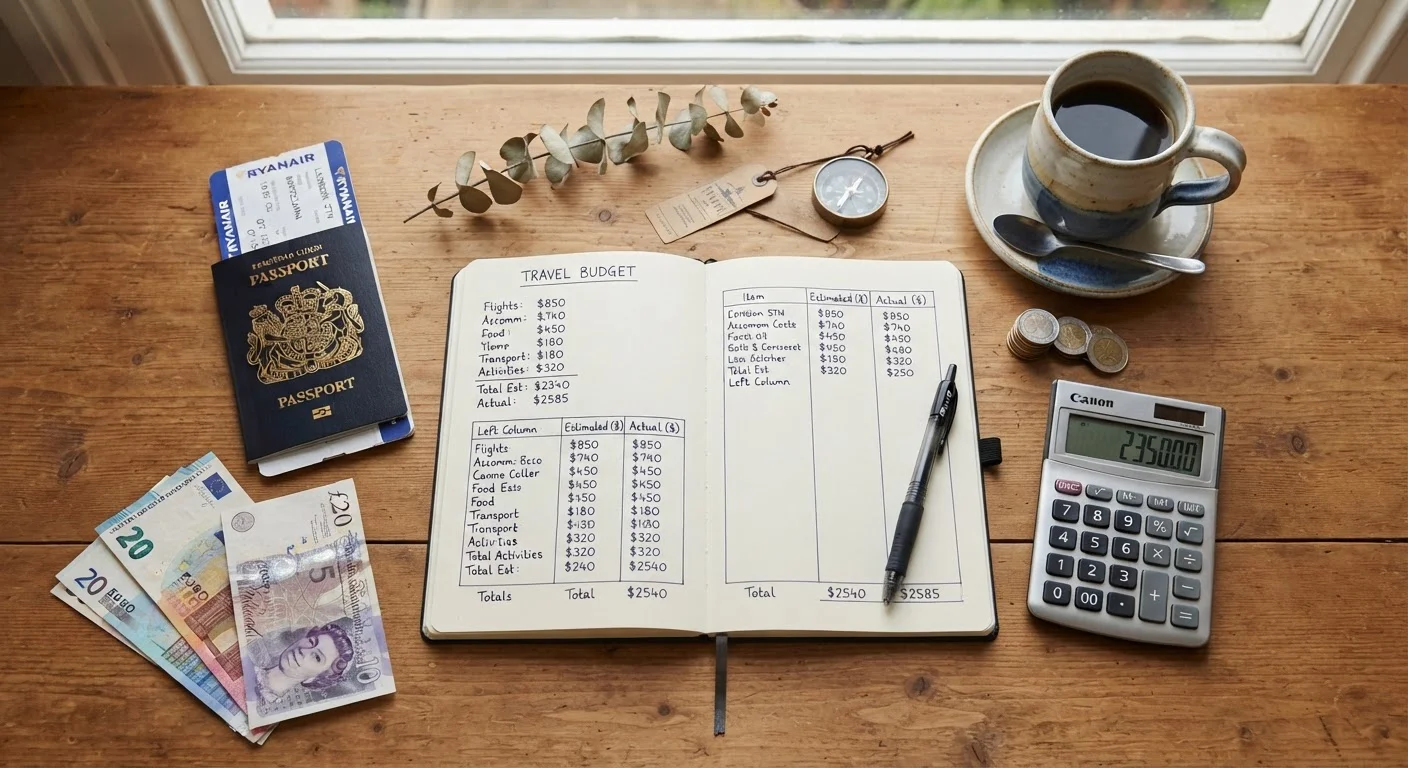
A travel budget is a complete estimate of every cost you expect to incur before, during, and after a trip - not just the headline expenses like flights and hotels, but also meals, local transport, activities, visas, travel insurance, currency conversion fees, and incidentals. Building one means mapping out all spending categories so you know the full financial commitment before you commit to booking anything.
Travel budgets are typically organized into fixed costs (flights, accommodation, insurance) and variable costs (food, activities, daily transport), because each category requires a different planning strategy and carries different risk of overrun.
Why Most First-Time Trip Budgets Fall Short
The most common budgeting mistake travelers make is treating a trip budget as just two line items: flights and accommodation. In reality, those two categories might account for 40-60% of total trip spend - sometimes less. Everything else, the costs people tend to underestimate or forget entirely, fills in the rest.
Understanding how a travel budget actually works means recognizing it as a layered system of fixed costs and variable costs. Fixed costs are the ones you commit to upfront: your flight, your accommodation booking, your travel insurance premium, and any visa or entry fees. Variable costs are what you spend day-to-day: food, local transport, activities, and incidentals. Both layers need planning, but they require different strategies.
For a deeper look at how to structure your planning from the ground up, see our first-timer's guide to budget travel.
~50%
Of trip budgets spent before departure
Flights, accommodation, insurance, and visas typically consume roughly half of a trip's total cost, leaving the rest for in-country spending.
10-15%
Recommended contingency buffer
Travel finance guides commonly advise adding this margin on top of your estimated total to absorb unplanned costs.
3-8%
Extra cost from currency fees
Foreign transaction fees and unfavorable exchange rates at airport kiosks can add this percentage to purchases when using unprepared payment methods.
The Hidden Costs That Derail Travel Budgets
Beyond the obvious, several cost categories consistently catch travelers off guard:
- Airport transfers: Getting to and from airports - especially at odd hours - can cost as much as a night's accommodation in some cities.
- Baggage fees: Low-cost carriers in particular strip these out of the base fare, meaning a "cheap" flight can become significantly more expensive once you add a checked bag.
- Currency exchange and transaction fees: Foreign transaction fees from your bank card plus unfavorable exchange rates at airport booths can quietly add 3-8% to purchases. Using a fee-friendly account or card matters, but verify your specific account's terms before you travel.
- Meals and drinks: Food spending is highly variable and one of the easiest categories to underestimate, especially in tourist-heavy areas where prices are inflated.
- Activities and entrance fees: A single museum, national park, or guided tour can run $20-$100 or more per person. Multiple activities over a week-long trip add up fast.
Our article on why cheap trips often cost more goes deeper on the hidden financial traps that undercut even well-intentioned budgets.
Track spending by category, not just total
When building your budget, keep fixed and variable costs in separate columns rather than one lump sum. This makes it much easier to see where overruns happen and which categories have room to adjust without affecting the whole trip.
How Destination Choice Shapes the Entire Budget
Where you go matters more than almost any other budgeting decision. A week in Western Europe or Australia will carry fundamentally different cost expectations than a week in Southeast Asia or Central America - not just for accommodation, but for every variable spending category. Meals, local transport, beer, museum tickets: all priced relative to the local economy.
This is why comparing destinations early, before you fall in love with one, is a practical habit. Looking at realistic daily-spend estimates for different regions helps you find where your specific travel style can stretch furthest. Our region-by-region cost overview gives a useful reference point for this kind of comparison.
Trip structure also plays a role. Moving between multiple cities involves more transport costs and more transition-day expenses than staying in one place longer. If you're weighing options, slow travel versus multi-destination trips lays out the real cost difference between those two approaches.
Building a Budget That Actually Holds
A functional travel budget has three phases: pre-trip fixed costs, in-trip variable costs, and a contingency buffer. Start with what you can lock in early - flights, accommodation, insurance, and any required visas. Then estimate your daily spend based on research into your specific destination, multiplied by the number of trip days. Finally, add 10-15% to your total as a buffer for the unexpected.
Travel insurance deserves its own line in the budget rather than being treated as optional. It's a genuine cost - one that can prevent a medical bill, a cancelled trip, or a missed connection from becoming a financial crisis. Understanding what coverage types matter most for your kind of trip is worth doing before you buy anything. See our guide on travel insurance on a budget for what to think through.
Before you finalize any bookings, running through a structured pre-trip checklist helps catch overlooked costs and last-minute budget surprises. The pre-trip planning checklist is a solid place to start.
“The budget is the trip plan. If you haven't figured out where the money goes, you haven't actually planned the trip - you've just booked a flight.”
— Travel & Adventure Editorial Team, Budget travel researchers and writers
This article is for general informational purposes only. Travel costs vary widely based on individual circumstances, destinations, and market conditions. Verify all pricing, entry requirements, and fee structures with official sources before booking.