

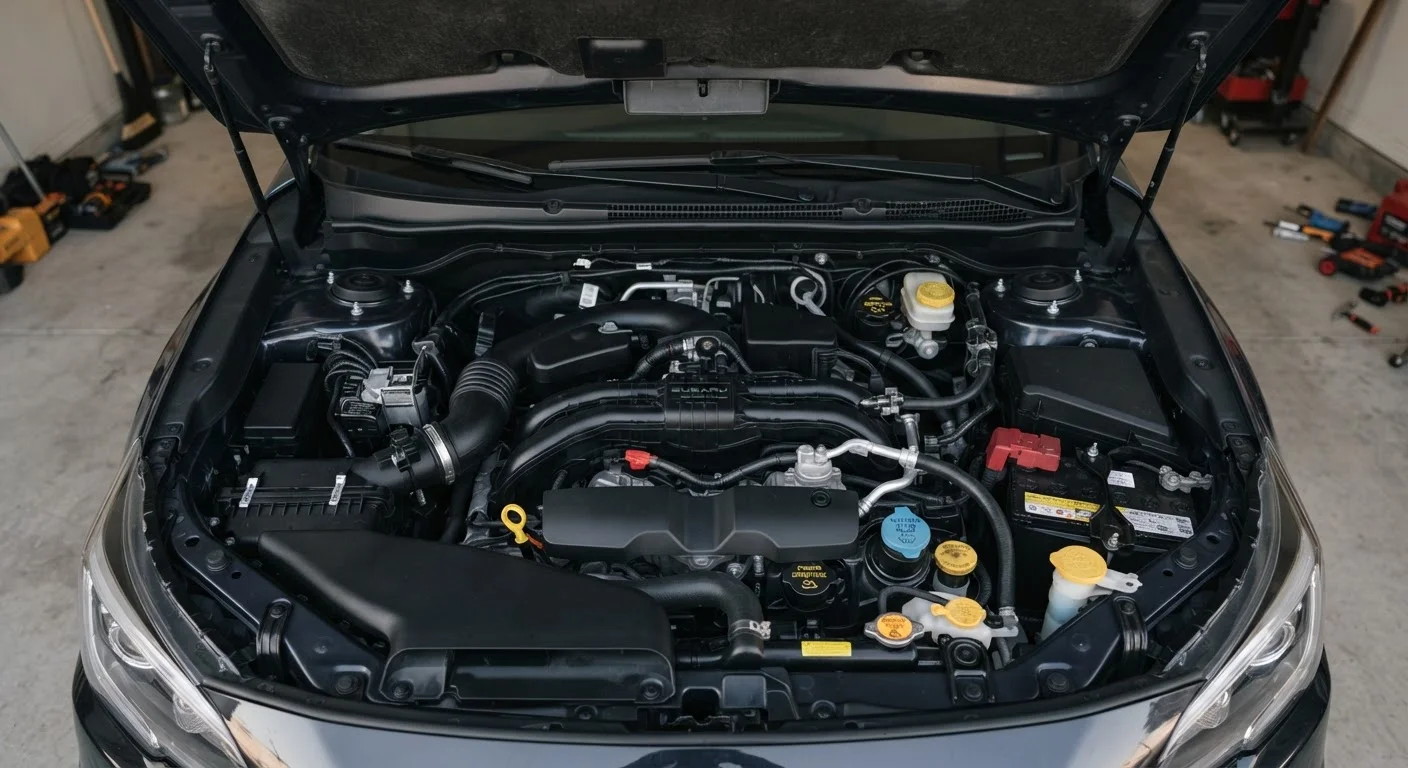
Why Vehicle Fluids Deserve Regular Attention
Every fluid in your car serves a specific mechanical purpose - lubricate, cool, pressurize, or clean. When any one of them falls low, degrades, or becomes contaminated, the resulting damage can be far more expensive than the fluid itself. For first-time owners especially, understanding what each fluid does and when to check it is the foundation of preventive care. See the complete preventive maintenance roadmap for a broader schedule that ties fluid checks into your regular routine.
Most fluid checks take under five minutes and require nothing more than a clean rag and a parked, cool engine. The seven fluids covered below account for the vast majority of fluid-related breakdowns and warranty voiding that new drivers encounter.
The Seven Fluids You Need to Know
Engine Oil
Engine oil lubricates moving metal parts and carries heat away from the engine. Check it monthly with the dipstick - oil should sit between the MIN and MAX marks and appear amber to dark brown (not milky or gritty). Change intervals vary widely by vehicle and oil type; consult your owner's manual rather than relying on the old "every 3,000 miles" rule, which is outdated for most modern engines. See your car's maintenance schedule explained for guidance on interpreting those intervals.
Coolant (Antifreeze)
Coolant circulates through the engine and radiator to regulate operating temperature and prevent freezing. Check the translucent overflow reservoir - never open the radiator cap on a hot engine, as the pressurized fluid can cause burns. Most manufacturers recommend a full coolant flush every 30,000-50,000 miles, though extended-life coolants may last longer. Color varies by formulation; mixing types can cause chemical breakdown, so always use the specification listed in your manual.
Brake Fluid
Brake fluid transfers the force of your foot on the pedal through hydraulic lines to the brakes at each wheel. It absorbs moisture over time, which lowers its boiling point and can cause brake fade or failure. Check the reservoir under the hood - if it's consistently low, have a mechanic inspect for leaks rather than simply topping it off. Most manufacturers suggest replacing brake fluid every two years regardless of mileage.
Power Steering Fluid
On vehicles with hydraulic power steering, this fluid pressurizes the steering rack. A whining noise when turning or heavy steering feel are early warning signs of low or degraded fluid. Check the reservoir dipstick or markings. Note: many newer vehicles use electric power steering and have no fluid reservoir at all.
Transmission Fluid
Transmission fluid lubricates gear sets and acts as a hydraulic medium in automatic transmissions. It degrades under heat. Some transmissions are sealed and marketed as "lifetime fluid," though many mechanics and manufacturers still recommend changes between 60,000 and 100,000 miles depending on driving conditions. Hard shifts or slipping gears are red flags worth investigating promptly.
Windshield Washer Fluid
The only fluid here with no mechanical consequence if it runs out - but a dirty windshield is a genuine safety hazard. Use a washer fluid rated for your climate; plain water can freeze in the lines and crack the reservoir in cold weather.
Differential and Transfer Case Fluid
Relevant for all-wheel-drive (AWD) and four-wheel-drive (4WD) vehicles, these fluids lubricate gears in the front and rear differentials and transfer case. They are often overlooked because they don't have a dashboard warning light. Check your owner's manual - many manufacturers recommend inspection every 30,000-60,000 miles.
Hydraulic system
A mechanical system that uses pressurized liquid to transmit force. Brakes and hydraulic power steering both rely on this principle - fluid pressure converts your physical input into mechanical action.
Viscosity
A measure of a fluid's resistance to flow. Engine oil viscosity ratings (e.g., 5W-30) indicate how the oil behaves at cold start versus operating temperature. Using the wrong viscosity can reduce lubrication effectiveness.
Coolant flush
The process of draining old coolant from the cooling system, flushing residue, and refilling with fresh coolant to the correct concentration. It removes contaminants that can corrode hoses and the radiator.
Brake fade
A temporary reduction in braking effectiveness caused by overheated brake fluid or brake pads. Moisture-contaminated fluid with a lowered boiling point is a leading contributor to brake fade under heavy use.
Differential
A gear assembly that allows the wheels on an axle to rotate at different speeds, which is necessary when turning. The differential requires its own lubricating fluid, separate from engine oil.
Dipstick
A long, thin metal probe inserted into the oil pan or transmission housing that allows you to check fluid level and condition without opening a sealed system.
Warning Signs and When to Act
Fluid problems often telegraph themselves before causing serious damage. A dashboard warning light related to temperature, oil pressure, or brake systems should be treated as urgent - pull over safely and investigate rather than pushing on. Our dashboard warning lights guide explains which lights allow limited continued driving and which demand immediate attention.
Puddles under your parked car are also meaningful. A clear, thin puddle is usually just air-conditioning condensate (harmless). Bright green or orange liquid near the front suggests coolant. Dark brown or black near the engine points to oil. A clear to light yellow slick near any wheel warrants urgent brake-system inspection.
Fluid condition matters as much as fluid level. Engine oil that looks gray or milky may indicate coolant contamination - a potentially serious head gasket issue. Brake fluid that's very dark brown has likely absorbed too much moisture. When in doubt, have a qualified mechanic evaluate the fluid and the system it serves. Seasonal car checks are a useful natural trigger for inspecting all seven fluids at once, particularly before winter and summer extremes.
This article is for general informational purposes only. Always consult your vehicle's owner's manual and a qualified mechanic for advice specific to your car's make, model, and condition.