

Key Takeaways
Tyre Tread Depth
Tyre tread depth is the vertical measurement from the top of a tyre's rubber to the bottom of its deepest grooves. These grooves channel water away from the contact patch between your tyre and the road, maintaining grip in wet conditions. As the tread wears down, that water-clearing ability decreases - raising your stopping distance and the risk of hydroplaning.
Tread depth is measured in 32nds of an inch in the US. New tyres typically start at 10/32" to 11/32"; the federal legal minimum is 2/32", though safety experts widely recommend replacing tyres at 4/32".
Why Tread Depth Is a Safety Issue, Not Just a Legal One
Most drivers learn about tyre tread when a mechanic mentions it during an oil change - or when they fail an inspection. But tread depth is far more than a box to tick for registration. It's the primary factor determining whether your tyres can move water out of the way fast enough to keep rubber in contact with the road surface.
At highway speeds in wet conditions, each tyre must displace roughly a gallon of water per second. New tread grooves do this efficiently. As the rubber wears down, that capacity shrinks - and the risk of hydroplaning (where the tyre rides on a film of water rather than gripping the road) increases sharply.
That's why safety researchers draw a distinction between the legal limit of 2/32" and the practical safety threshold of 4/32". The difference between those two numbers can mean an extra 100 feet of stopping distance on a wet road. See how tread depth connects to overall stopping performance in our explainer on the stopping distance myth most drivers believe.
2/32"
Federal legal minimum tread depth in the US
Below this threshold, tyres are legally required to be replaced in most states; fines and inspection failures can result from non-compliance.
4/32"
Recommended safety replacement threshold
Safety organizations and tyre industry guidance widely advise replacing tyres at this depth, well before hitting the legal minimum.
~100 ft
Additional wet-road stopping distance at 2/32" vs 4/32"
Testing by safety researchers has demonstrated that tyres at the legal minimum can require significantly more distance to stop than tyres with 4/32" of tread remaining at highway speeds.
How to Measure Tread Depth at Home
You don't need a garage or special equipment for a basic tread check. Here are your two practical options:
- Quarter test (4/32" indicator): Insert a quarter into the tread groove with Washington's head facing down. If the top of his head is visible, your tread is at or below 4/32" - consider scheduling tyre replacement soon.
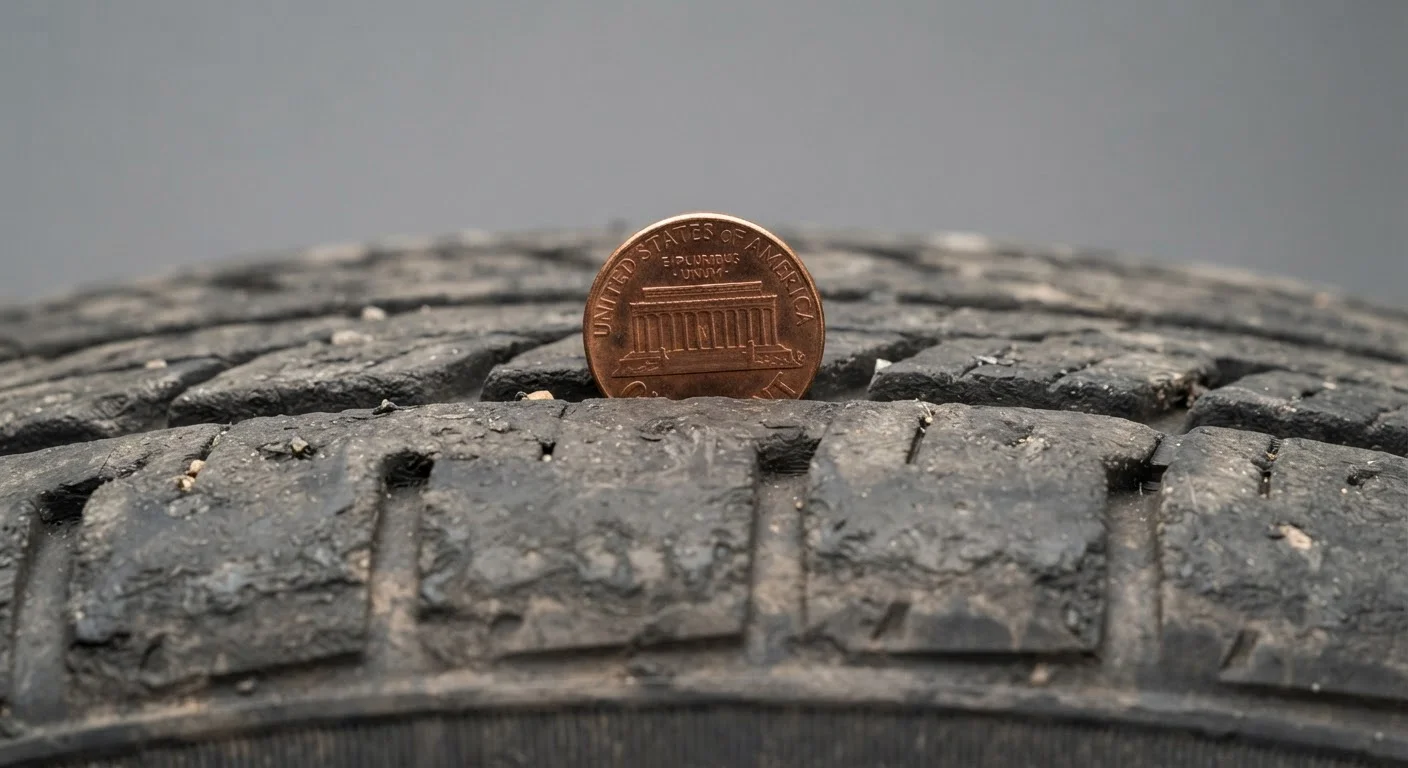
- Penny test (2/32" legal minimum): Use a penny with Lincoln's head down. If you can see all of Lincoln's head, your tyres are at or below the legal limit and should be replaced immediately.
- Tread depth gauge: A metal or digital gauge costs a few dollars at an auto parts store and gives a precise reading in 32nds of an inch. Check at least three spots across the tread width on each tyre, since uneven wear can hide localized low spots.
Check all four tyres - wear rates differ by axle position and whether your vehicle is front-, rear-, or all-wheel drive.
Build Tread Checks Into Your Routine
Link tread checks to your oil change schedule - typically every 5,000-7,500 miles - so they happen automatically. Keep a cheap tread depth gauge in your glove box. It takes less than two minutes to check all four tyres and gives you a precise reading rather than a rough estimate from a coin.
Reading Wear Patterns: What Your Tyres Are Telling You
Where a tyre wears matters as much as how much it wears. Uneven wear is often a symptom of another problem:
- Center wear: Tyre has been consistently overinflated, causing the middle to bear most of the load.
- Edge wear: Chronic underinflation spreads load to the shoulders. If you've been neglecting tyre pressure, read our guide on why tyre pressure matters more than you think.
- One-sided wear: An alignment problem. The tyre is running at an angle, scrubbing rubber off one edge faster than the other.
- Cupping or scalloping: Irregular, patchy wear often linked to worn shock absorbers or struts.
If you notice any of these patterns, address the root cause before replacing the tyre - otherwise the new rubber will wear the same way.
When to Replace and What to Expect
The conservative recommendation is to replace tyres when any point on the tread reaches 4/32". At that depth, wet-weather grip has declined enough that the risk-reward calculation shifts clearly toward replacement.
Tyre costs vary widely by size and type, but think of replacement as a safety expense rather than a maintenance one - bald tyres in wet conditions are a meaningful crash risk. Getting tyre rotation done every 5,000-7,500 miles can help even out wear and extend the overall life of your set.
Also account for age. Even if tread depth looks acceptable, rubber compounds degrade over time. Check the DOT code on the sidewall: the last four digits show the week and year of manufacture (e.g., 2319 = 23rd week of 2019). Tyres older than six years warrant extra scrutiny regardless of tread depth.
Safe tyres are one layer of the broader picture of road preparedness. Pair this habit with the principles covered in our overview of what defensive driving actually means for a more complete approach to staying safe on the road.