

Key Takeaways
Defensive Driving
Defensive driving is a set of skills and habits that help you anticipate hazards before they become emergencies. Rather than simply reacting to what's directly in front of you, defensive drivers actively scan for risks, maintain space buffers, and adjust their behavior based on road conditions and other drivers' actions. The goal is to reduce your exposure to collisions - even when someone else makes a mistake.
Defensive driving is formally taught in NHTSA-recognized driver improvement courses and is a core component of advanced driver training programs used by commercial fleet operators across the U.S.
More Than Staying Cautious
Most people assume defensive driving just means being careful - signaling, obeying speed limits, keeping hands at ten and two. That's table stakes. The actual concept goes further: it's a proactive mental framework for managing risk in an environment where other drivers, pedestrians, road conditions, and your own vehicle can all create hazards with little warning.
The National Highway Traffic Safety Administration (NHTSA) describes defensive driving as techniques that allow drivers to address identified hazards in a predictable manner. In practice, that translates to three core habits: scanning well ahead of your current position, maintaining space buffers around your vehicle, and continuously adjusting speed and position to match conditions.
For new drivers especially, this distinction matters. Research consistently shows that inexperience - not recklessness - accounts for much of the elevated crash risk among young drivers. If you want to understand why, the research on new driver crash rates breaks that down in detail.
Start With One Habit at a Time
Trying to overhaul your entire driving style at once is overwhelming and counterproductive. Pick one principle - such as consciously extending your following distance on every trip - and practice it until it's automatic. Layer additional habits gradually. Incremental change builds durable skills more reliably than wholesale attempts at transformation.
The Four Principles That Define It
Defensive driving isn't a single technique - it's a layered approach. These four principles work together:
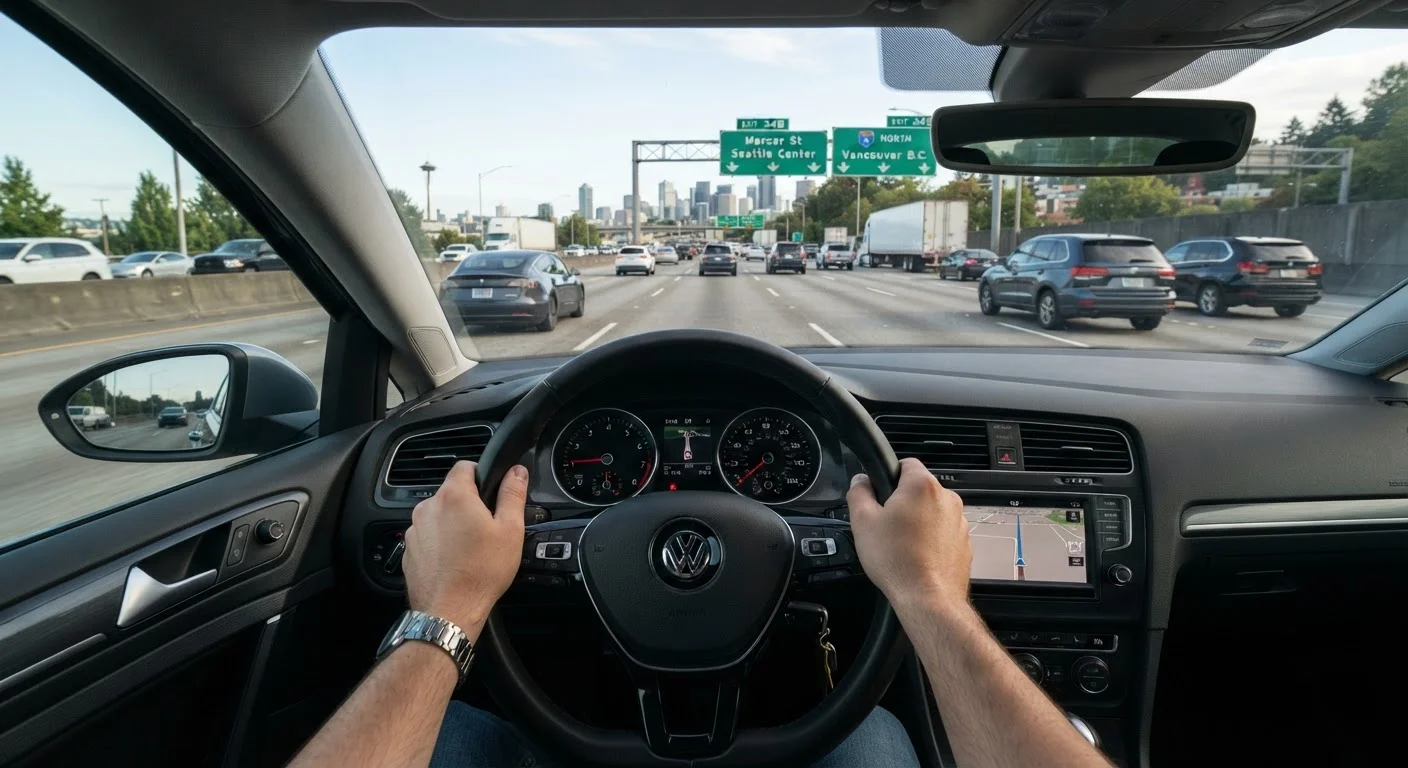
- Scan further ahead. Most new drivers focus on the car immediately in front of them. Experienced defensive drivers look 12-15 seconds ahead on city roads and further on highways - watching for brake lights, merging vehicles, or lane changes that haven't happened yet. Situational awareness on the road is a skill that develops with deliberate practice.
- Manage your following distance. Rear-end collisions are among the most common crash types in the U.S. The 3-second rule (or longer in bad weather) gives you reaction time that closing gaps eliminate entirely. For context on how deceptively short stopping distances really are, the stopping distance myth most drivers believe is worth reading.
- Expect the unexpected. A defensive driver assumes other road users may run red lights, cut across lanes, or stop suddenly. Positioning your vehicle to have an escape route - a gap, a shoulder, an open lane - is the practical application of this assumption.
- Minimize distractions and fatigue. Even perfect technique is undermined by impaired attention. Distracted driving is a factor in a significant portion of U.S. crashes each year, according to NHTSA crash data.
~43,000
U.S. traffic fatalities annually
NHTSA data shows that tens of thousands of people die on U.S. roads each year, with human behavior - speeding, distraction, impairment - cited as a factor in the vast majority of crashes.
87%
Crashes involving human error
A frequently cited NHTSA analysis attributed approximately 94% of serious crashes to human choice or error, underscoring why behavioral skills like defensive driving matter more than vehicle technology alone.
3 seconds
Minimum recommended following distance
Traffic safety guidelines in the U.S. recommend at least a 3-second gap between vehicles under normal conditions, with greater distances advised at higher speeds or in poor weather.
Why Your Vehicle Condition Is Part of the Picture
Defensive driving doesn't stop at your behavior behind the wheel. The vehicle itself is a factor. Worn tyres, faulty brakes, or underinflated tyres directly extend your stopping distance and reduce steering response - undermining every defensive technique you apply.
Understanding your vehicle's roadworthiness is part of the same safety equation. Similarly, tyre safety basics directly affect how the car responds when you need it most. You can't out-drive physics - and a defensive driver accounts for the mechanical reality of their car, not just the traffic around it.
Routine maintenance ties into this too. See Car Maintenance 101 for practical habits that keep your vehicle responsive and safe.
This article is for general informational and educational purposes only. Always comply with applicable traffic laws and consult qualified driving instructors or road safety authorities for personalized guidance.