

Key Takeaways
Roadworthiness
A vehicle is considered roadworthy when it meets the minimum safety and mechanical standards required to be legally driven on public roads. This includes working brakes, lights, steering, tires, and other systems that directly affect safety. In the US, what counts as roadworthy is defined by a combination of federal standards and individual state vehicle inspection requirements.
Federal Motor Vehicle Safety Standards (FMVSS) set baseline requirements, but state-level inspection programs - which vary significantly - determine how and when compliance is checked.
Roadworthiness Is a Legal Standard, Not a Feeling
Plenty of drivers think of their car as roadworthy if it starts reliably and doesn't make alarming noises. That's understandable - but it's not the legal definition. Roadworthiness refers to a specific set of mechanical and safety standards your vehicle must meet to be legally driven on public roads in the US.
These standards exist at two levels. Federal Motor Vehicle Safety Standards (FMVSS) establish baseline performance requirements built into vehicle manufacturing. State-level inspection programs then check whether individual vehicles continue to meet safety minimums over time. About half of US states require periodic safety inspections - typically annual or every two years - while others focus on emissions or have no mandatory program at all.
The practical implication: your car could feel fine to drive and still fail an inspection. A brake light that's been out for weeks, tires worn below legal tread depth, or a cracked windshield that obstructs your sightline can all constitute a roadworthiness failure - regardless of how the car drives day to day.
State Requirements Vary Significantly
Not all states inspect for the same items, and some exempt older or newer vehicles. Your state's Department of Motor Vehicles (DMV) website is the authoritative source for what's required where you're registered. If you've recently moved, your previous state's standards may not apply.
What Roadworthiness Actually Covers
State inspection checklists differ in detail, but the core areas are consistent across the country:
- Brakes: Pads, rotors, and hydraulic components must function correctly. Worn pads or a spongy pedal are common failure points.
- Tires: The minimum legal tread depth in most states is 2/32 of an inch, but safety organizations typically recommend replacing tires at 4/32. Tyre safety basics covers how to check tread depth and pressure at home.
- Lights: All exterior lights - headlights, brake lights, turn signals, reverse lights - must work. A single burned bulb can fail an inspection.
- Steering and suspension: Excessive play in the steering wheel or worn suspension components affect vehicle control and are safety failures.
- Windshield and mirrors: Cracks or chips that fall within the driver's field of vision, and missing or broken mirrors, are typically fail items.
- Exhaust system: Beyond emissions, a damaged exhaust can allow carbon monoxide to enter the cabin - a serious safety risk.
- Safety equipment: Seat belts must be functional in all seating positions in most jurisdictions.
Understanding these categories also gives you a clear framework for your own monthly checks. See your car's maintenance schedule explained for how routine servicing maps to these areas.
Build a Simple Monthly Check Habit
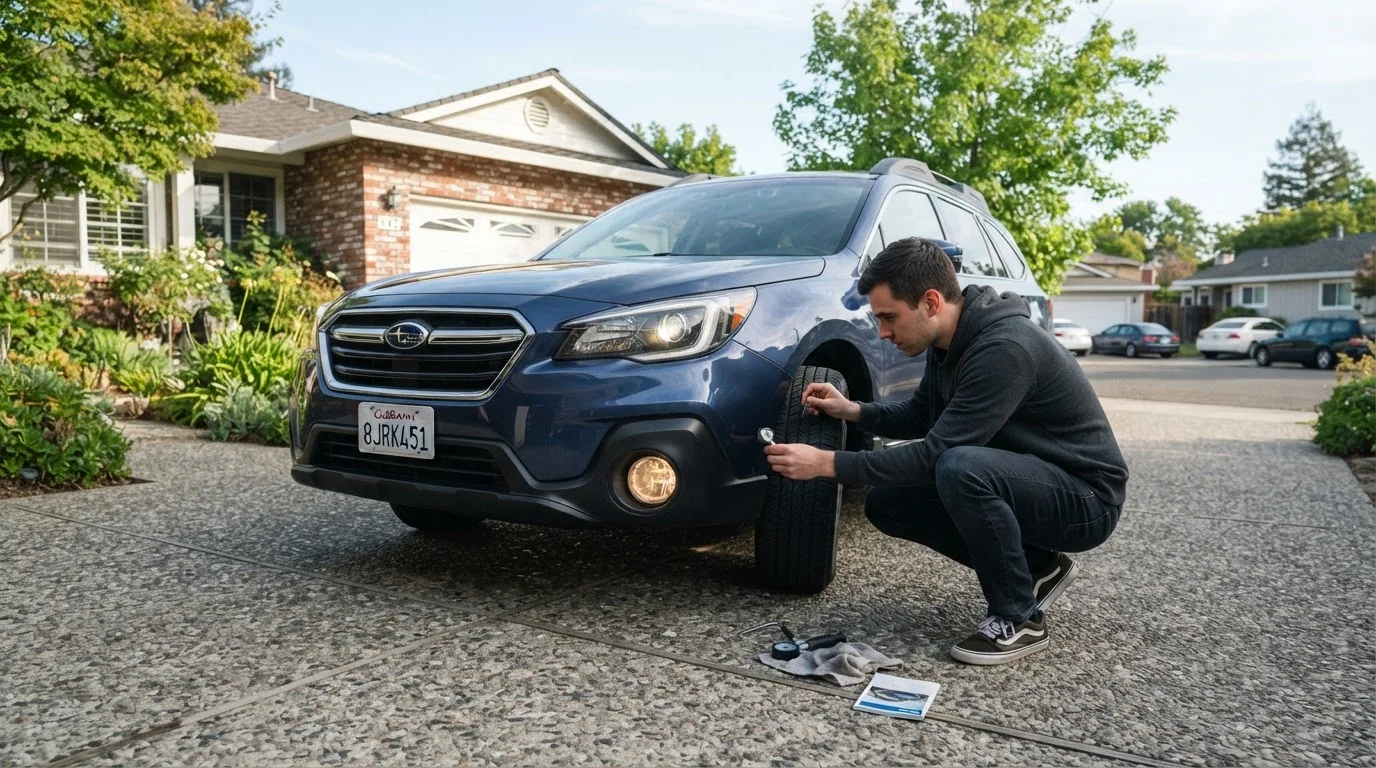
Walk around your car once a month with the engine running: check that all lights are working, look at tire condition and pressure visually, and listen for unusual sounds. This takes under five minutes and catches most common roadworthiness issues early - before they become inspection failures or safety risks.
Why the Responsibility Falls on You
This is the part many new owners don't fully absorb: once you own or operate a vehicle, keeping it roadworthy is your responsibility. Not the previous owner's, not the dealer's, and not your mechanic's - unless you've specifically contracted them to maintain it.
Practically, this has three consequences. First, if your vehicle is stopped by law enforcement and found to have safety defects, you can be cited - even if you were unaware of the fault. Second, if a mechanical failure contributes to an accident, you may be held liable. Third, car insurance can be complicated or denied if the insurer determines your vehicle was in a knowingly unsafe condition.
None of this is designed to alarm you - it's meant to clarify the baseline that comes with car ownership. The good news is that staying roadworthy doesn't require expensive or frequent professional intervention. It requires consistent attention: checking your lights monthly, monitoring tire condition, following your maintenance schedule, and not deferring repairs you know need doing.
Safe, roadworthy driving also connects to broader habits behind the wheel. Defensive driving principles complement a well-maintained vehicle - because anticipating hazards matters a lot more when you know your brakes and tires are actually up to the task.