

Key Takeaways
Start here
Why Solo Driving Feels Different
Next
What to Do Before You Leave
Then
Handling the Road Alone
Finally
Building Confidence Over Time
Why Solo Driving Feels Different
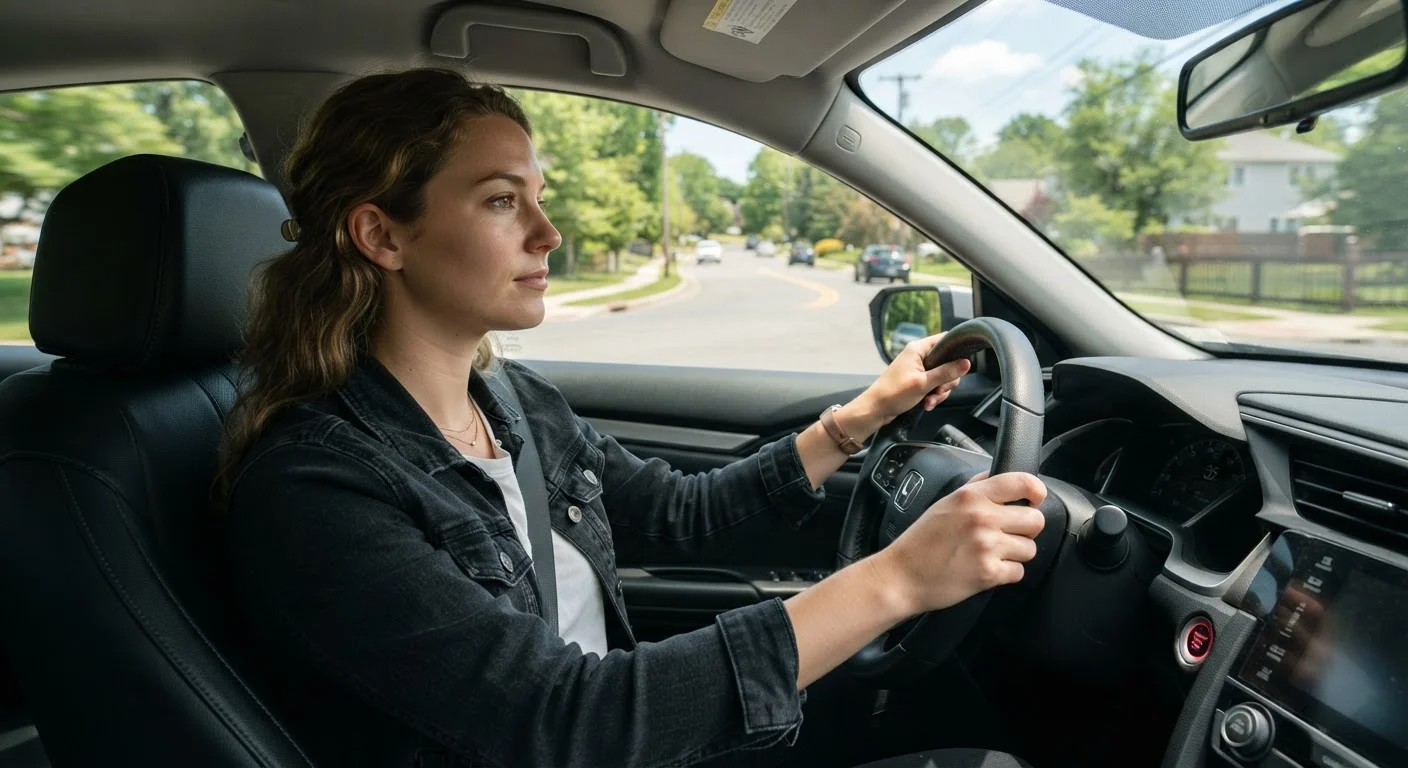
During lessons, an instructor manages the background stress - they monitor blind spots, prompt you before tricky junctions, and can intervene if something goes wrong. The moment you drive alone, all of that disappears. You become the sole decision-maker, and that shift is real and significant.
The car may also feel physically different. Without a passenger, weight distribution changes slightly. Silence can feel unfamiliar. Some new drivers notice heightened awareness of every sound the vehicle makes. This is normal - your brain is processing more information than it's used to handling without a safety net.
Understanding that the nervousness is situational, not a sign you're a bad driver, is the first step. The transition to more complex roads comes later - your first solo priority is simply getting comfortable being in charge.
Following distance
The gap between your car and the vehicle ahead, typically measured in seconds. A larger gap gives you more time to react to sudden stops or hazards.
Defensive driving
A style of driving focused on anticipating potential hazards and staying prepared to respond, rather than simply reacting to problems as they happen.
Mirror cycle
A regular habit of checking your rearview and side mirrors every few seconds to maintain awareness of surrounding traffic at all times.
Proof of insurance
A document confirming your vehicle is covered by an active auto insurance policy. Most US states legally require you to carry and present this while driving.
What to Do Before You Leave
A pre-drive routine is the single most practical thing you can build early. Experienced drivers do it automatically; new drivers need to make it deliberate. Our quick pre-drive safety check covers the key steps - mirrors, tires, lights, and fuel - in under two minutes.
Before your first solo trip specifically, also confirm:
- Your route is loaded on a mounted GPS device or phone before you move.
- Your documents are in the car - license, registration, and proof of insurance.
- Someone knows your plan - your route and expected return time.
- Your phone is out of reach or connected hands-free if you need audio navigation.
Pick a Low-Pressure First Route
For your first solo drive, choose a route with light traffic, familiar roads, and a clear destination - a nearby grocery store or a quiet residential loop works well. Avoid rush hour, highways, and multi-lane merges until you've had a few successful shorter trips under your belt.
Plan a route you've already driven as a passenger or during lessons. Familiarity with the road reduces the number of new variables you're managing at once.
Handling the Road Alone
Once you're moving, a few specific habits will help keep things manageable. First, give yourself more following distance than you think you need - a gap of at least three to four seconds behind the vehicle ahead gives you time to react without pressure. New drivers tend to underestimate how much this reduces stress.
Second, resist the urge to rush. Speed limits are ceilings, not targets. Driving slightly below the limit on unfamiliar stretches is legal and sensible. Other drivers will go around you if needed.
Third, use your mirrors on a regular cycle - every five to eight seconds is a common benchmark. Knowing what's around you at all times is the foundation of defensive driving, and it's a habit that needs deliberate practice early on.
If something unexpected happens - a wrong turn, a sudden lane closure, a vehicle behaving erratically near you - your first response should always be to slow down and create space. Most driving problems get worse when drivers react too fast rather than too slow.
When you're ready to expand beyond familiar streets, a calm approach to parking challenges will also reduce the anxiety of navigating unfamiliar areas.
Building Confidence Over Time
Confidence behind the wheel comes from accumulated, varied experience - not from one perfect drive. Structure your early solo trips to gradually introduce new elements: a busier road, a new neighborhood, an unfamiliar parking lot. Stack small wins rather than attempting too much at once.
Keep a loose mental note of situations that felt uncomfortable. A tricky merge? A confusing intersection? Those are exactly the scenarios worth returning to in low-stakes conditions - with time to observe, not react.
As you log more miles, use our first-year car ownership checklist to stay on top of the maintenance and administrative tasks that run alongside your driving development. Knowing your car is properly insured and serviced removes one more background worry so you can focus on the road.
Progress isn't always linear - a stressful drive after several good ones doesn't mean you're going backward. It means you drove in harder conditions. That experience counts too.