

Key Takeaways
Paint Finish (Sheen Level)
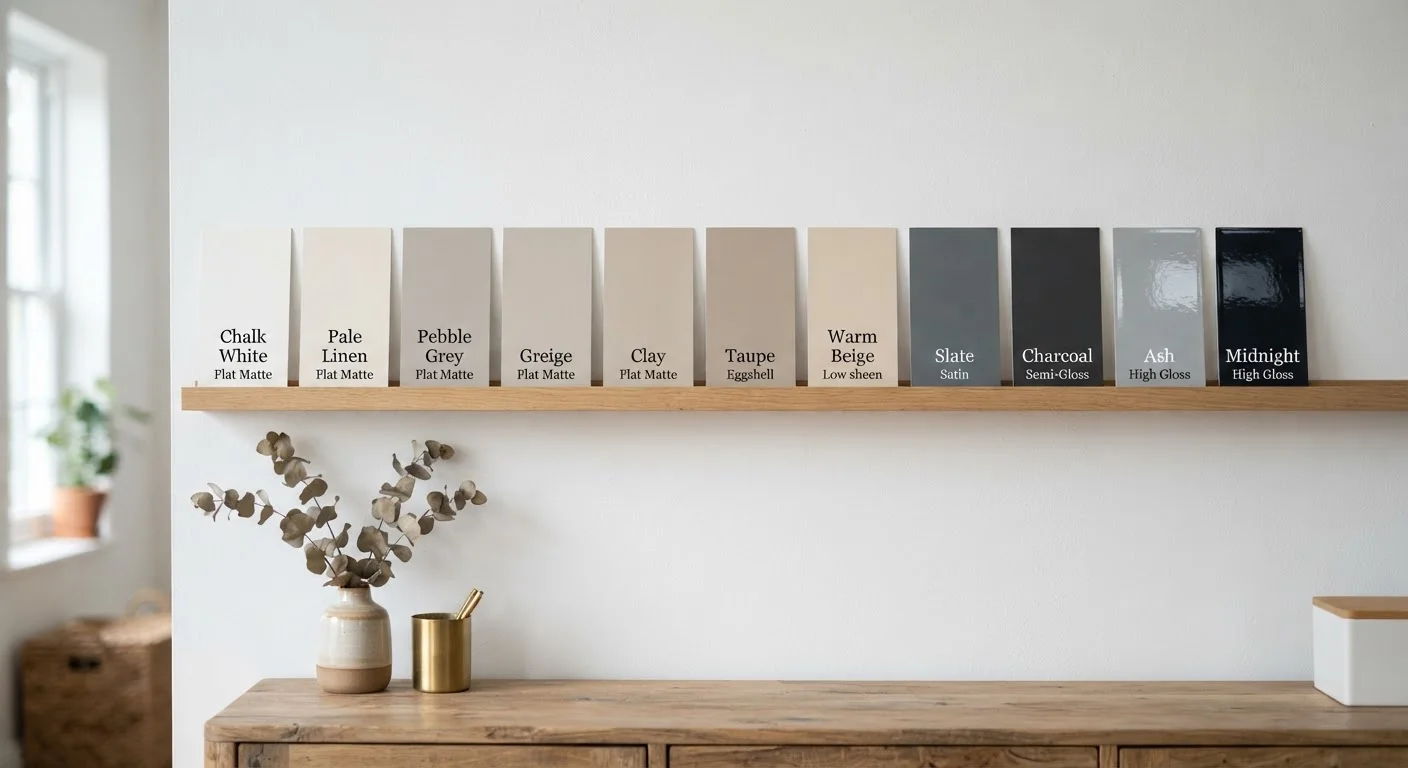
Paint finish refers to how reflective or shiny a paint's surface appears once it dries. It is determined by the ratio of pigment to binder in the paint formula. The more binder relative to pigment, the shinier and more durable the finish tends to be. Common finishes - from least to most reflective - are matte, eggshell, satin, semi-gloss, and gloss.
Sheen is measured by the degree of light reflection at a fixed angle; higher sheen values indicate more light is reflected, which corresponds to increased surface hardness and washability.
Why Paint Finish Is More Than an Aesthetic Choice
When most people shop for paint, they focus almost entirely on color. But the finish - sometimes called sheen level - plays an equally important role in how a room looks, how easy it is to maintain, and how long the paint job lasts. Choosing a finish that doesn't match how a room is actually used is one of the most common (and avoidable) first-timer mistakes.
Before picking up a brush, it helps to understand what finish means in practical terms. A paint's sheen is determined by the amount of light it reflects once dry. Finishes with more resin or binder in the formula dry harder, reflect more light, and are easier to clean. Finishes with less binder - the flat or matte end of the spectrum - absorb more light, hide wall texture beautifully, but are more prone to staining and difficult to wipe down without damaging the surface.
For the full picture on how surface preparation affects any finish's performance, see our guide to prep steps most people skip.
~70%
Interior walls painted in eggshell or satin finishes
Industry paint usage surveys consistently show eggshell and satin account for the majority of interior wall applications in residential settings.
3-5×
More washable: gloss vs. matte surfaces
Paint manufacturers' technical data generally indicates that gloss and semi-gloss surfaces withstand significantly more scrub cycles than flat or matte finishes before showing surface degradation.
The Four Main Finishes: What Each One Does
Matte
Matte (also called flat) has no perceptible shine. It excels at concealing surface imperfections - uneven drywall, old nail holes, or patched spots - because it scatters light rather than reflecting it. This makes it a strong choice for ceilings and for bedroom or dining room walls with minor surface flaws. The trade-off: matte paint is the least washable finish. Scrubbing can remove the paint itself, not just the dirt.
Eggshell
Eggshell has a faint, low-level sheen - similar to the surface of an actual eggshell. It retains much of matte's ability to soften imperfections while being noticeably easier to wipe clean. This makes it one of the most widely used finishes for living rooms, hallways, and adult bedrooms. It's a practical middle ground for spaces that see moderate use.
Satin
Satin has a smooth, velvety sheen that's visible in direct light without looking overtly shiny. It's more durable and moisture-resistant than eggshell, which makes it well-suited for kitchens, bathrooms, children's rooms, and laundry areas - any space where walls may need frequent cleaning. One consideration: satin shows roller marks and brush strokes more readily, so applying it with care matters.
Semi-Gloss and Gloss
Semi-gloss reflects light noticeably and dries to a hard, scrubbable surface. It's the standard finish for trim, baseboards, window casings, and doors. Full gloss is the most reflective and durable option available - often reserved for furniture, cabinetry, and surfaces requiring maximum wear resistance. Both finishes highlight surface imperfections clearly, so thorough prep is essential before application.
Matching Finish to Room: A Practical Framework
Rather than memorizing rules, it helps to think about two questions: How much traffic or moisture does this surface get? and How noticeable are the surface imperfections? Surfaces with heavy use or humidity need a higher sheen; surfaces with visible flaws benefit from lower sheen to mask them.
- Ceilings: Flat or matte - minimal contact, benefits from light diffusion.
- Living and dining rooms: Eggshell - low-to-moderate traffic, occasional cleaning.
- Kitchens and bathrooms: Satin or semi-gloss - moisture exposure, frequent wiping.
- Children's rooms: Satin - washable surface handles crayon marks and sticky fingers.
- Trim, doors, and baseboards: Semi-gloss or gloss - high contact, needs durability.
If your walls have started peeling after a previous paint job, the finish choice may not be the only issue. Our article on why painted walls peel covers the underlying causes worth ruling out before repainting.
Test Before You Commit to a Full Room
Paint a sample patch - at least 12 inches square - and observe it at different times of day under both natural and artificial light. Sheen levels look noticeably different in morning sun versus evening lamplight. This small step can prevent costly repainting later.