

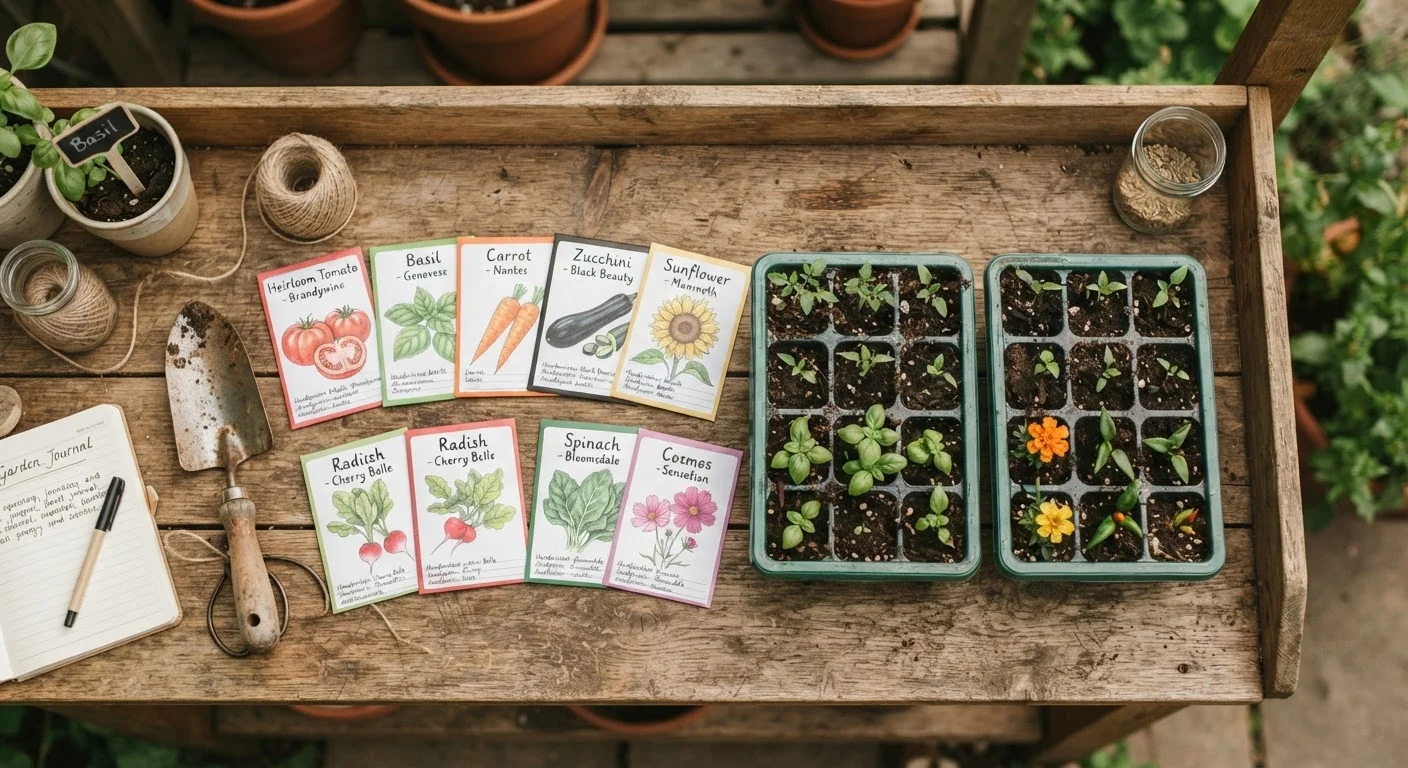
Key Takeaways
Our Verdict
Neither seeds nor seedlings are universally superior - the right choice depends on your crop type, schedule, and comfort level. Seedlings reduce early frustration for beginners, while seeds unlock greater variety and lower cost once you've built confidence.
| Best for | Recommended |
|---|---|
| Complete beginners or those with a short growing season | Seedlings |
| Gardeners growing large quantities or specialty varieties | Seeds |
| Crops like carrots, beans, squash, and radishes | Seeds (direct sown) |
| Tomatoes, peppers, and other long-season crops in short-summer climates | Seedlings |
What You're Actually Choosing Between
When you stand in front of a garden center display, you're making a decision about far more than price. Starting from seed means you control every stage of a plant's life - from germination to harvest - but you'll invest weeks of attention before anything goes in the ground. Buying seedlings (also called transplants or starts) means skipping that early work and placing an already-established young plant directly into your garden.
Each approach suits different plants, different schedules, and different gardening goals. If you're working through your first season, see our first-timer's complete garden roadmap for the broader picture before committing to either method.
| Seeds | Seedlings | |
|---|---|---|
| Upfront cost | Low (cents per plant) | Higher (dollars per plant) |
| Variety selection | Very wide - hundreds of options | Limited to nursery stock |
| Time to plant in garden | 6-10 weeks of indoor prep (most crops) | Ready to plant immediately |
| Skill required | Moderate - germination care needed | Low - minimal early management |
| Equipment needed | Grow lights, trays, seed-start mix | None beyond garden basics |
| Best for which crops | Root veg, beans, direct-sown crops | Tomatoes, peppers, long-season crops |
| Risk of early failure | Higher - germination can fail | Lower - plant already established |
The Case for Starting from Seed
Seed starting offers genuine advantages that compound over time - much like small, consistent habits in other areas of life. The most obvious benefit is cost: a packet of 50 tomato seeds typically costs less than a single transplant at a garden center. Scale that across a full vegetable bed, and the savings are real.
Seeds also give you access to a far wider range of varieties than what nurseries stock. Heirloom tomatoes, unusual pepper types, and heritage squash cultivars are almost exclusively available as seeds. If you care about flavor diversity or specific plant characteristics, seed starting is the path.
The tradeoff is time and infrastructure. Most warm-season vegetables - tomatoes, peppers, eggplant - need to be started indoors 6-10 weeks before your last frost date, which means grow lights or a reliable sunny windowsill, seed-starting mix, and consistent watering. Germination problems are also common for beginners; for a breakdown of why seeds sometimes fail to sprout, see why seeds fail to germinate.
Some crops, however, prefer to be started as seeds directly in the garden. Root vegetables like carrots, parsnips, and beets form misshapen roots when transplanted. Beans, peas, and cucumbers also establish better when sown directly into soil.
Start with One Tray of Seeds
If you're curious about seed starting but not ready to commit fully, try starting just one crop indoors this season - basil or lettuce are forgiving choices. You'll learn what germination requires without risking your whole garden plan. Once you're comfortable with moisture management and light needs, scaling up in subsequent seasons becomes straightforward.
The Case for Buying Seedlings
Purchasing transplants removes the most technically demanding phase of gardening - germination and early seedling care. For beginners, this dramatically lowers the barrier to a successful first harvest. You start with a resilient young plant that has already cleared the fragile early weeks.
Seedlings are especially valuable when your growing season is short. In northern climates, starting tomatoes or peppers from seed at home without proper equipment can mean plants go in the ground too late to produce well. A nursery transplant that's already 6 weeks old gives you those weeks back.
The downsides are cost and limited variety. Transplants can cost several times more per plant than the equivalent seed, and nurseries typically stock only a handful of popular varieties. If you're growing vegetables in a small space and want realistic yield expectations, our guide on growing vegetables in a small garden will help you plan how many plants you actually need.
One practical note: seedlings need a period called hardening off - a gradual acclimatization to outdoor conditions over 7-10 days - before being planted outside. Skipping this step can shock the plant and set back growth significantly.
How to Decide: A Practical Framework
Rather than choosing one method for your entire garden, consider a crop-by-crop approach:
- Direct sow these crops: carrots, beets, radishes, turnips, beans, peas, squash, cucumber, and corn. These either don't transplant well or germinate so quickly that the head start from a seedling is unnecessary.
- Buy seedlings for these crops (especially in year one): tomatoes, peppers, eggplant, broccoli, cauliflower, and celery. These have long growing seasons and are genuinely harder to start indoors without experience.
- Either method works well for: basil, lettuce, kale, and herbs like parsley. Start from seed if you want variety; buy a transplant if you want instant results.
Your setup also matters. If you have a raised bed or an in-ground plot, both methods work - but raised beds tend to have better drainage and soil warmth, which can give direct-sown seeds a stronger start.
Finally, consider your schedule honestly. Seed starting requires checking soil moisture daily and monitoring for leggy growth under lights. If two weeks of travel or a demanding work period falls during your seed-starting window, buying transplants that season is the practical call - not a failure.
6-10 weeks
Indoor head start needed for warm-season crops
Most university cooperative extension guides recommend this window before the last frost date for crops like tomatoes and peppers.
7-10 days
Hardening-off period for purchased transplants
Gradual outdoor acclimatization over this period helps reduce transplant shock, according to general horticultural guidance.