

Key Takeaways
Why Cats Scratch - and Why You Can't Stop Them
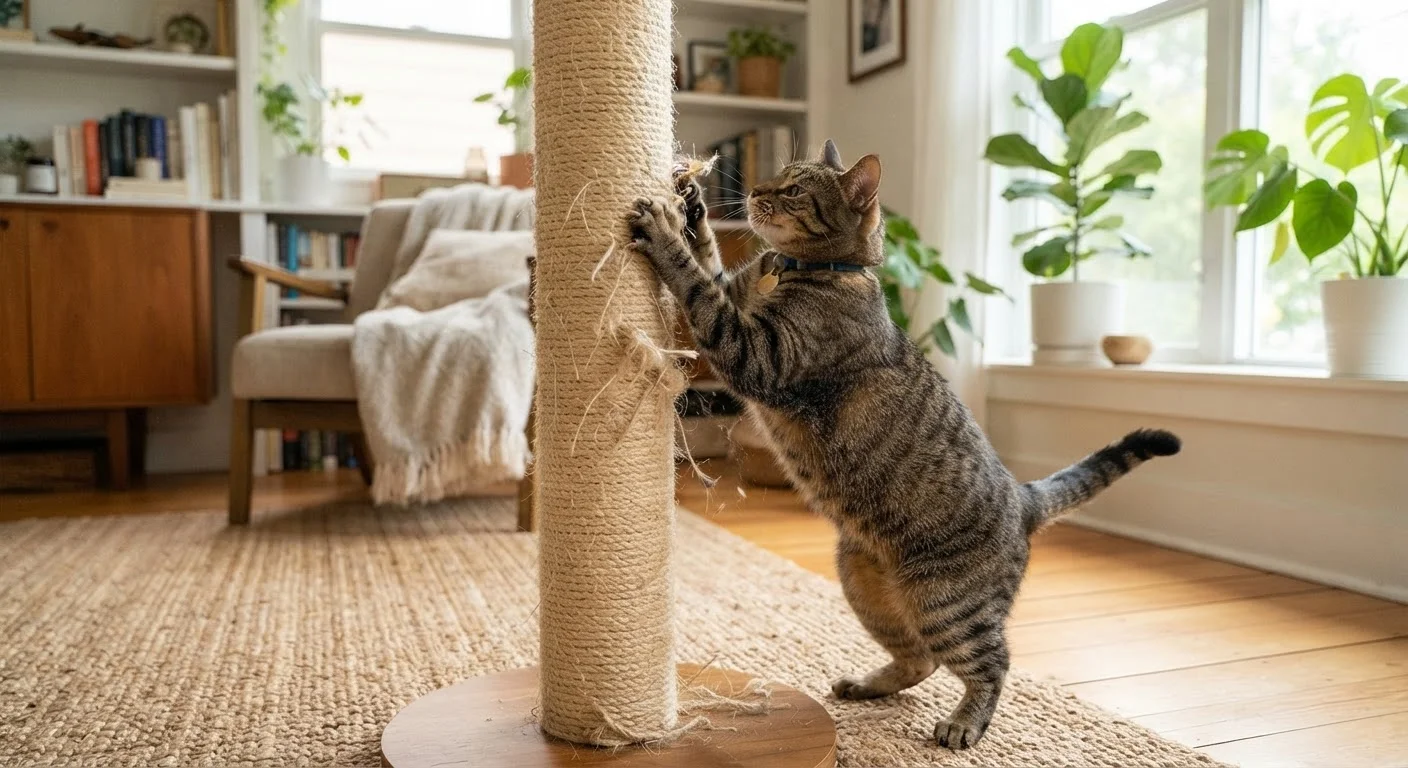
Scratching isn't defiance. For cats, it serves at least three essential functions: it removes the outer sheath of worn claws, it stretches the muscles of the shoulders, spine, and forelimbs, and it deposits scent from the glands between the paw pads - marking territory in a way that feels necessary and satisfying to a cat.
Understanding this matters because it reframes the goal. You're not trying to stop scratching; you're trying to give your cat a better target. If you've just brought a new cat home, this is worth knowing early - see our guide for first-time cat owners for other behaviour fundamentals that help in those first weeks.
Scratching Increases During Stress
If your cat has suddenly started scratching more than usual, consider whether something in the environment has changed - a new pet, a move, a shift in routine. Increased scratching can be a stress response. Addressing the underlying cause is as important as providing the right post. If the behaviour escalates or is accompanied by other changes, consult your veterinarian.
Best Practices for Redirecting Scratching Behaviour
The following practices reflect guidance from veterinary behaviourists and feline welfare organizations. Consistency and timing are key - cats learn through repetition and association, not through scolding.
Choose scratching posts that match your cat's natural preferences for texture and orientation.
Cats have strong preferences - some prefer vertical surfaces, others horizontal ones. Sisal rope and corrugated cardboard are commonly favored textures. A post that wobbles or is too short will be ignored, because cats need to fully extend while scratching.
Position scratching posts directly next to the furniture your cat currently targets.
Cats scratch specific locations partly for scent-marking reasons - they return to the same spots repeatedly. Placing an alternative directly at that spot intercepts the habit at its source rather than hoping the cat will travel across the room.
Use positive reinforcement to reward your cat for using appropriate surfaces.
Cats respond well to reward-based learning. Marking the moment a cat uses the post with a small treat or enthusiastic praise creates a positive association that accelerates the habit.
Trim your cat's nails regularly to reduce damage during the redirection period.
Shorter claws cause less surface damage and make the transition period more manageable. Most cats can be safely trimmed at home once the owner is comfortable with the process, though a vet or groomer can demonstrate technique.
Apply cat-safe deterrents to furniture surfaces you want to protect.
Double-sided tape, commercially available deterrent sprays, or textured covers make targeted furniture surfaces unpleasant to scratch. This works best when combined with an attractive alternative nearby - deterrence alone doesn't redirect the drive.
Provide multiple scratching options throughout your home.
Cats scratch in multiple locations, especially after waking or during play. Having options near sleeping spots, near entry points, and in social areas of the home covers the full range of moments when scratching urges arise.
Quick Wins You Can Act On Today
Even while you work on long-term habits, there are a few things you can do immediately to reduce furniture damage without stressing your cat.
For a broader look at equipping your home before or alongside these changes, the cat-friendly home setup checklist covers vertical space, safe surfaces, and supply essentials in detail.
What Actually Works - and What Doesn't
A common mistake is punishing a cat for scratching furniture - clapping, spraying water, or raising your voice. Cats don't connect delayed punishment to a specific behaviour, and these reactions often increase stress, which can increase scratching as a self-soothing mechanism.
Declawing - the surgical removal of the last bone of each toe - is condemned by the American Veterinary Medical Association (AVMA) as a non-therapeutic procedure associated with chronic pain and behavioural changes. It does not solve the underlying drive to scratch. Many US states and municipalities have moved to restrict or ban the practice.
What does work is environmental management: the right post, in the right spot, introduced at the right time. Scratching behaviour is also a window into your cat's emotional state - cats experiencing boredom or stress scratch more. Keeping an indoor cat mentally engaged directly reduces problem scratching. Our article on mental stimulation for indoor cats covers enrichment strategies grounded in feline instinct.
~90%
Cats that scratch household furniture
Scratching is among the most commonly cited reasons owners contact feline behaviour consultants, according to veterinary behaviour literature.
2-3 weeks
Typical redirection timeline with consistent effort
Animal behaviour specialists generally note that consistent redirection to appropriate surfaces produces noticeable improvement within a few weeks for most cats.
This article provides general pet care information and is not a substitute for guidance from a licensed veterinarian or certified animal behaviourist.